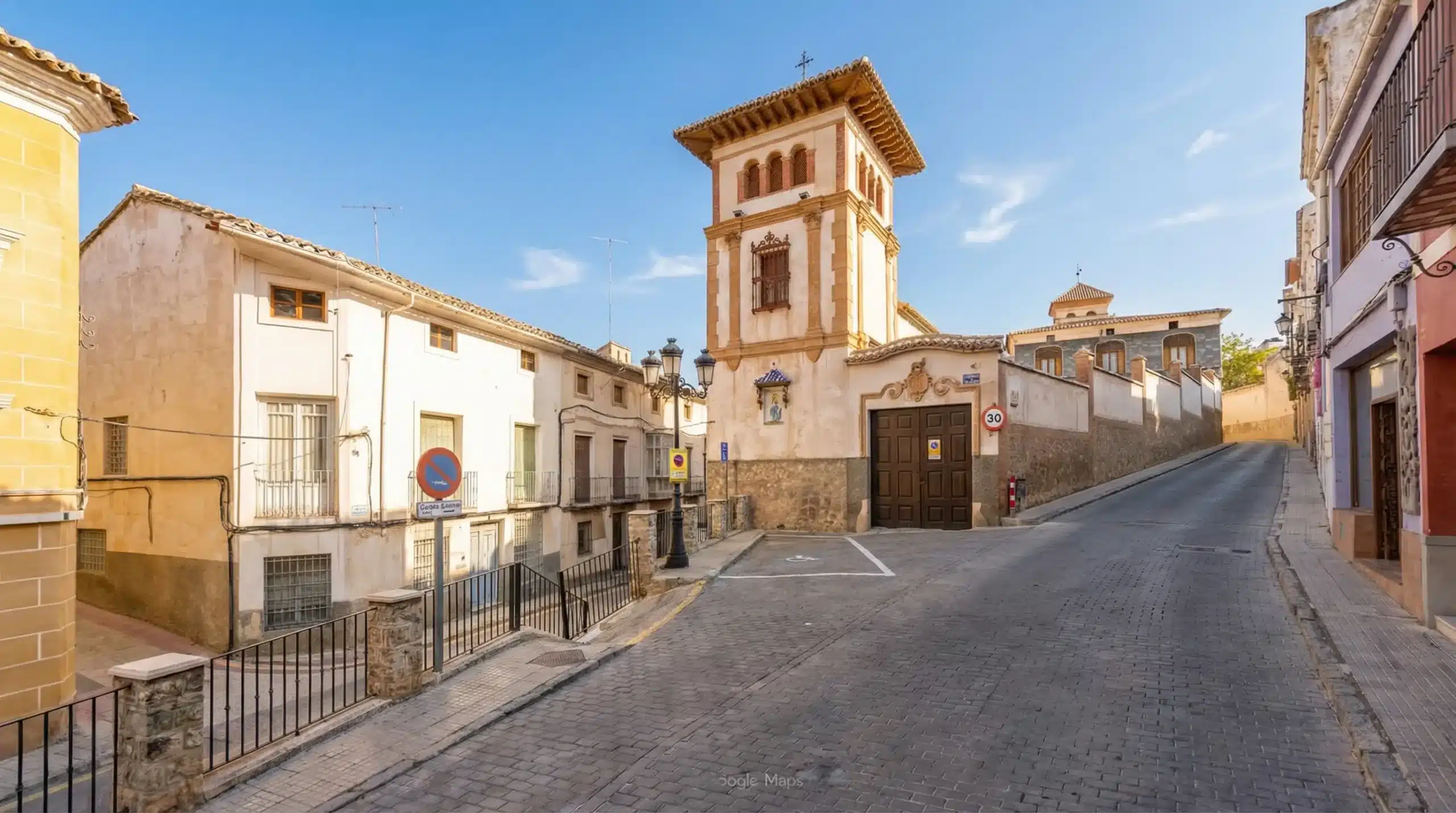
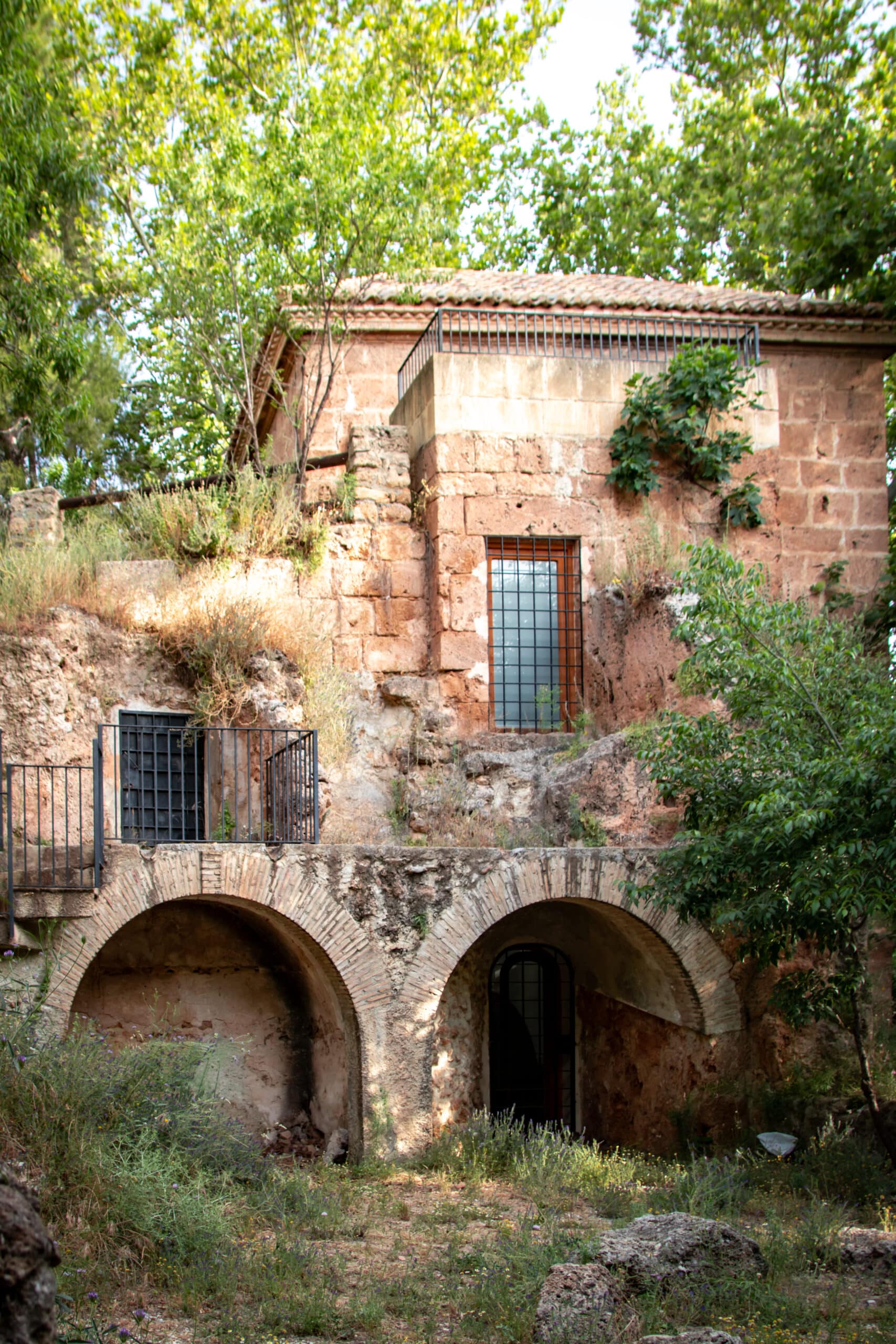
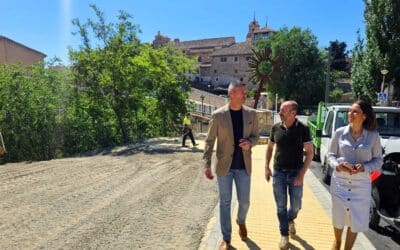
Located on the slope leading up to the Castle, in the former church of La Soledad (the first parish the town had, founded in the 16th century). It is the place to discover who walked this land before us: from Paleolithic remains and the Argaric culture to the Roman and Islamic traces found at sites such as La Encarnación.
We encourage you to visit one of the most important cave painting sites in the Region. This shelter holds paintings over 6,000 years old, including Levantine figures (such as an archer and female figures) and schematic ones (with symbolic-religious motifs).
The Aceniche plateau is part of the intramountain depressions of Bullas. These are areas of gentle relief where traditional dryland crops such as vineyards, olive groves, and almond trees dominate, arranged in a mosaic pattern that showcases the cultural and traditional character of these lands.
It can be considered one of the most important inland wetlands in the Region of Murcia, as it is home to a large number of waterbirds that live among the reservoir’s vegetation. Very close by, the La Ramona Salt Flats, a highly saline wetland, date back to Roman times. Both the reservoir and the surrounding area are designated as LIC and ZEPA.
A winding, narrow street, very typical of the town, distinguished by the display of flowerpots and flowers cared for by the residents themselves.
A natural area carved by the Segura River featuring vertical walls that reach 150 meters at some points. It preserves valuable remnants of riverside forest and serves as a refuge for species such as the eagle owl, short-toed snake eagle, and otter. It is a place of singular beauty ideal for river walks by boat or kayak and where the Rock Art Shelters or Abrigos del Pozo are located.
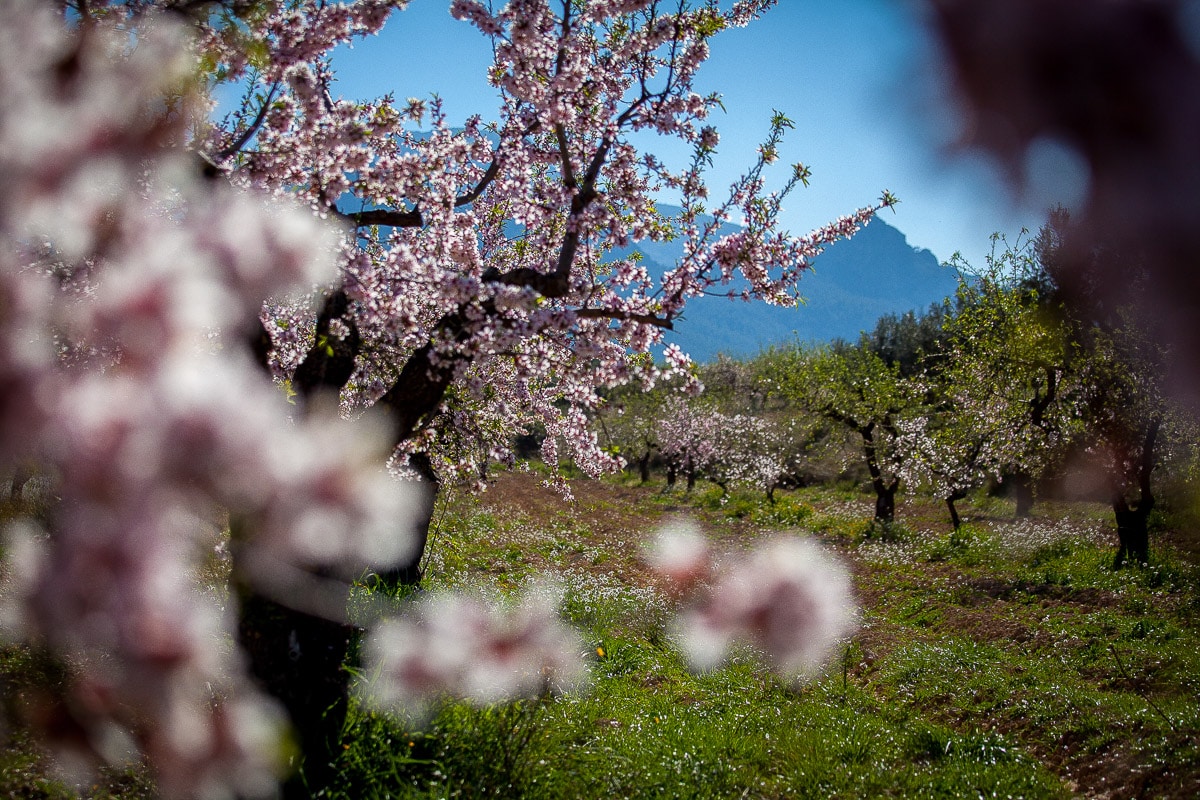
One of the top experiences in Mula is witnessing this spectacle in the Umbría de Sierra Espuña, near the village of Casas Nuevas. The best time to visit is in February, when you can see a sea of white and pink petals announcing the end of winter.
This monument, located at one of the main roundabouts leading into Cehegín, is a heartfelt tribute to one of the most traditional and important artisan trades in the town's history: the hemp and espadrille industry.
The sculpture depicts an "espadrille maker" at work, recalling a not-so-distant past when this activity was the economic engine for thousands of families in Cehegín. It is a symbol of local identity, hard work, and the ingenuity of its people, welcoming visitors while honoring the town's industrial and artisan roots.
The Calasparra Archaeological Museum, located in the historic 18th-century Casa Granero, a former Commandery of the Order of St. John of Jerusalem, offers a journey through the municipality's history from the Paleolithic era to 13th-century Muslim Calasparra. Its nearly 700 pieces include significant Islamic finds from the Villa Vieja site, as well as a rich collection of fossils and minerals that complete the look into the territory's past.
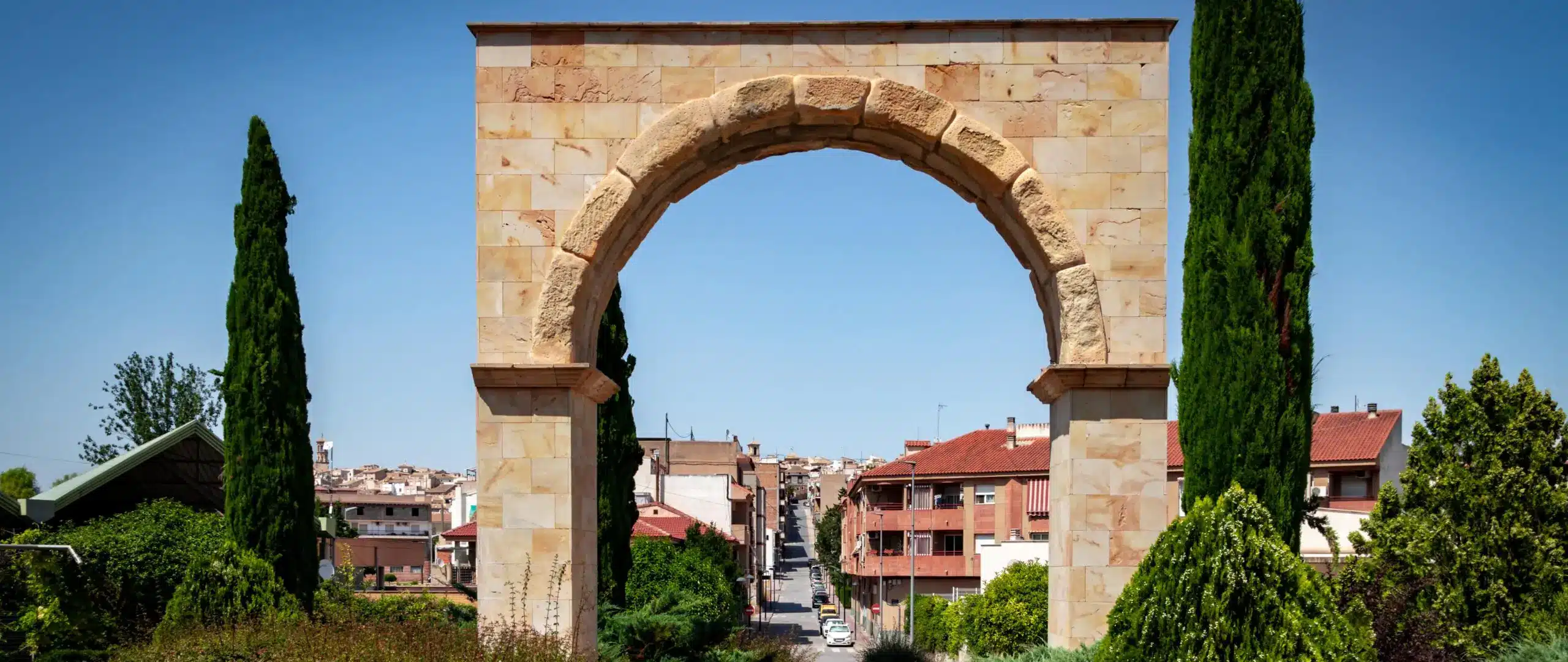
Although it is popularly known as the "Roman Arch," this structure is actually one of the gates of the old medieval wall that surrounded the town in the 15th century. Known as the Canara Gate, it was one of the main entrances to the walled enclosure.
Located in the heart of the old town, this semicircular arch framed by stone blocks is an evocative vestige of Cehegín's defensive past. Walking through it is like symbolically entering the historic city—a small but significant monument that connects directly with the town's medieval past.
Just 3 kilometers from the town center, Begastri is one of the most important Late Roman and Visigothic archaeological sites in the country. Begastri reached its peak when it became an episcopal see during the Visigothic era (until the 8th century AD). It housed a large Basilica that guarded the Monogrammatic Cross of Cehegín, today a symbol of the city.
After its abandonment in the 8th century, the acropolis was converted into farmland.
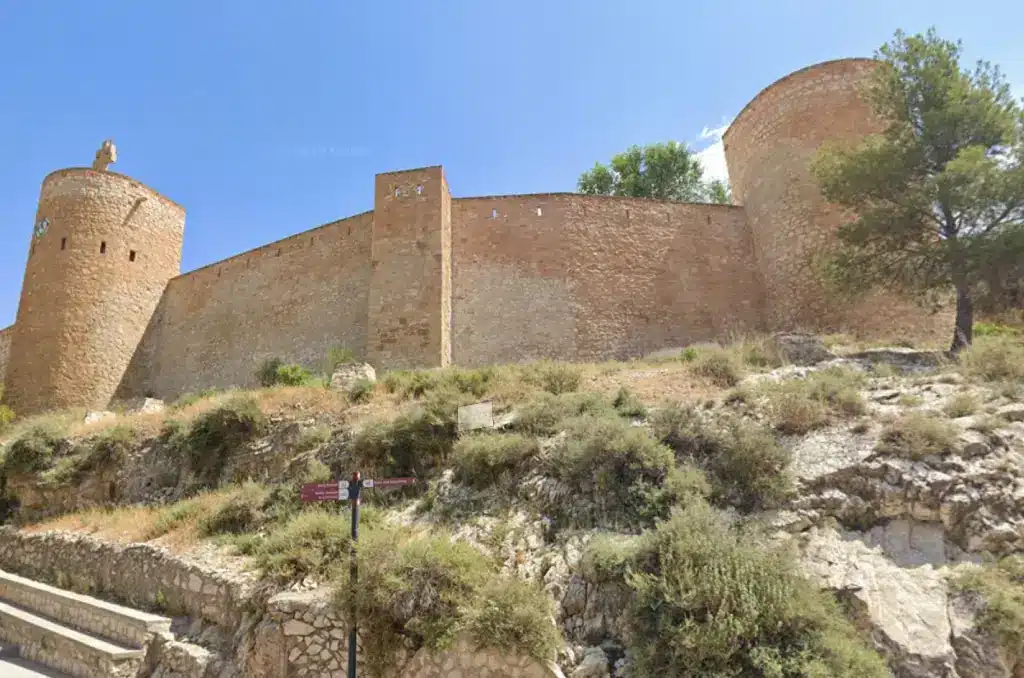
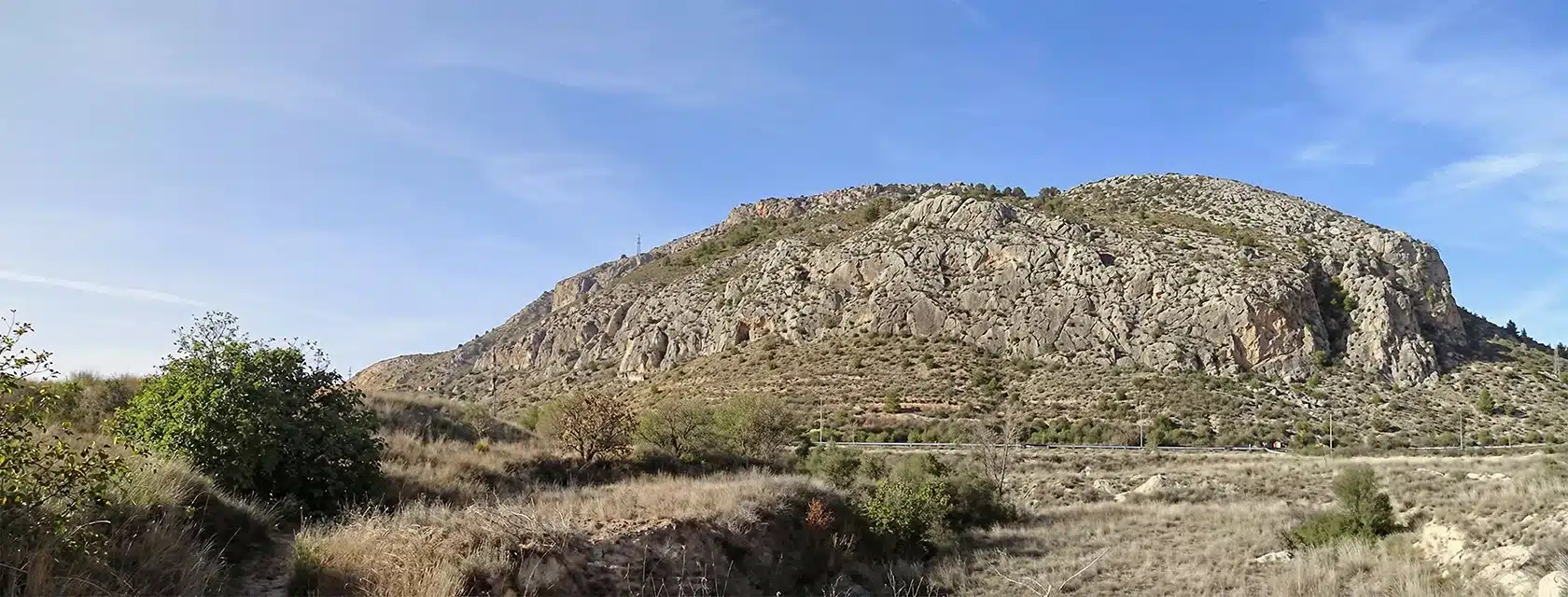
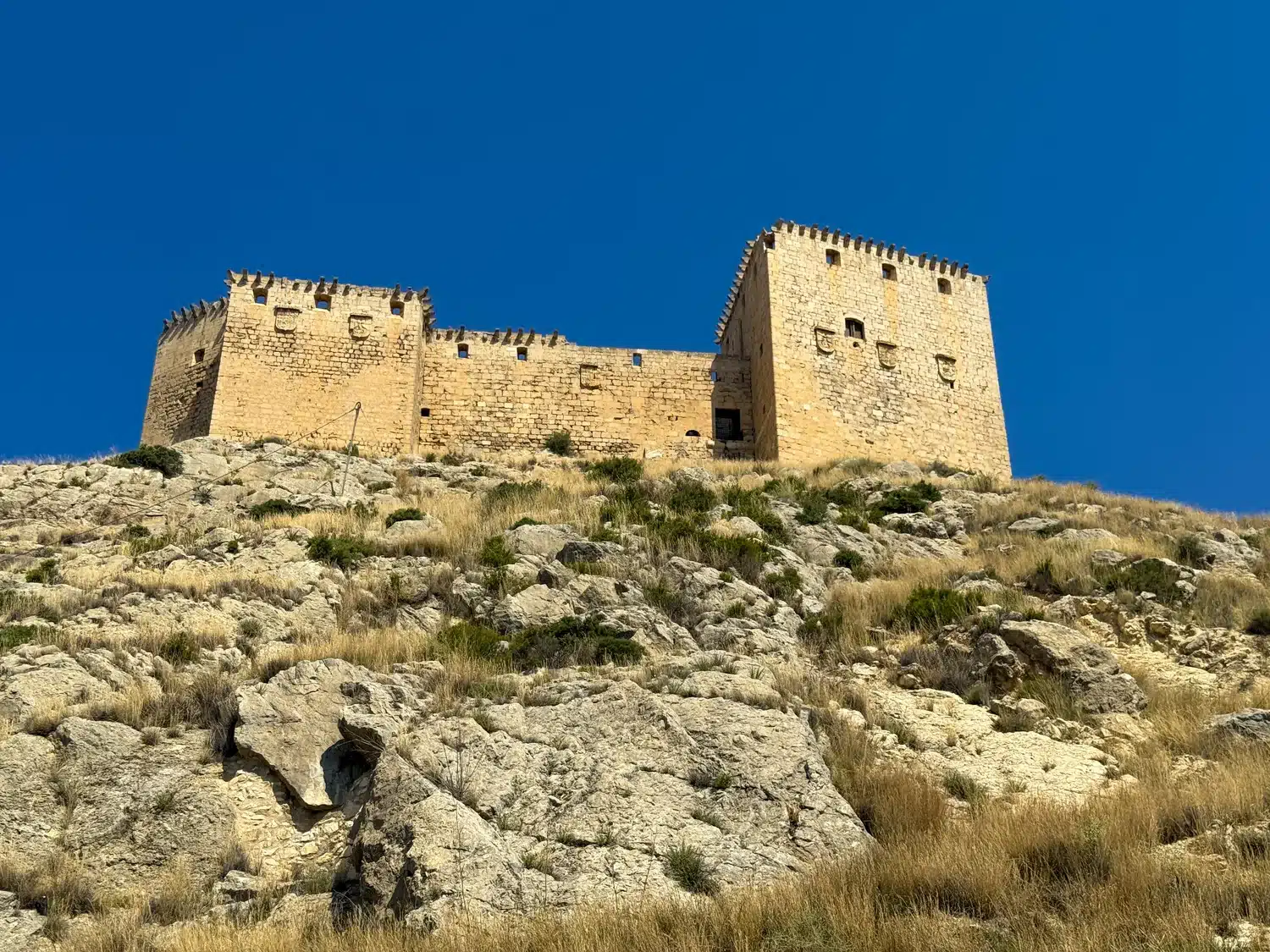
This is a place of legend. Benizar Castle stands on a huge crag overlooking the entire valley, serving as a lookout and guardian. It dates back to the Islamic period, specifically the 12th century, and due to its location it was a strategic, hard-to-reach point during the frontier era.

This is a family winery founded in 1998 and located among its own vineyards in the Aceniche Valley—a valley declared of natural landscape interest and an area of high ecological value. It is located 10 kilometers from Bullas. At Balcona, they are winegrowers and select their best grapes to produce wines that express their terroir naturally, with minimal intervention in the winery. The estate was bought in the 1940s by the family grandmother: Josefa, nicknamed "la Balcona" because her house had a balcony. Over the years, the family transformed the traditional cereal crop into vineyards.
In 1997, after a conference attended by Josep Lluis Pérez Verdú, one of the fathers of Priorat, they decided to start producing long-lived bottled wines, such as their "Partal de Autor 2006," which still shows perfectly for enjoyment today. In addition to the red wines Mabal, 37 Barricas, and Partal, over the years the productions evolved into organic and natural wines, also expanding the range to white and rosé wines. They have been conducting guided tours of the vineyards and winery since 1998.
En 2007 estrenan la sala de catas y, desde entonces, han ido mejorando la experiencia a los amantes del vino que los visitan con otras actividades, como las Cenas Entreviñedos a la luz de la luna llena, que se celebran en julio y agosto en colaboración con los restaurantes de la Ruta del Vino de Bullas.
Bodega Balcona es autenticidad y honestidad en botella.

Hydria is a family winery that began operations in 2012, searching for a distinctive terroir in an environment favorable for producing quality wines with a unique character. In 2013, they discovered the “La Hoya de los Hermanos” estate, located on the northern slope of the Sierra de Lavia, at an altitude of 850m, a property that had been abandoned for 6 years. They decided to restore it, and after two years, it became what is now their hallmark. Most of their vines are around 50 years old and are of the Monastrell variety. They also have other varieties such as Syrah, Garnacha, Tempranillo, and Macabeo. Surrounded by mountains and vegetation, the vineyards enjoy a special microclimate that is ideal for cultivating quality grapes, a microclimate that provides good acidity and structure to the fruit. They produce different types of wines: wines without wood aging or with minimal time in wood, such as “7 sostenidos”; single-varietal wines from Monastrell, Syrah, or Garnacha; wines with prolonged barrel aging, such as “12 compases”; Monastrell and Tempranillo blends like “88 teclas” and “1000 acordes”; single-varietal Monastrell wines and white wines like “4 cuerdas” without barrel aging, with barrel aging, and under flor yeast. They offer vineyard and winery tours, as well as tastings. They also have two event rooms with capacity for 90 people where they organize all types of events, including catering.
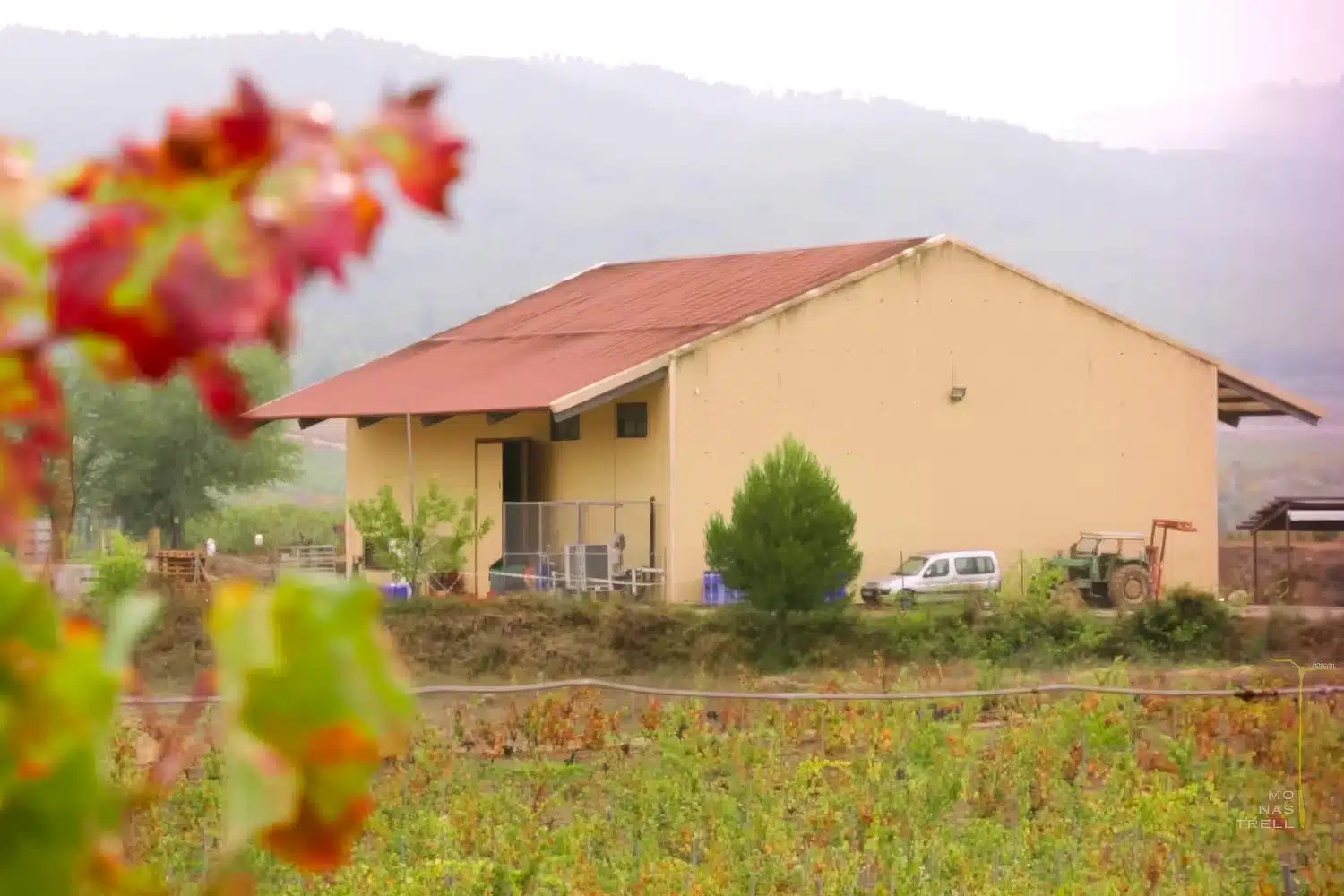
In the incomparable Aceniche Valley, at over 800 meters altitude, at the confluence of the municipalities of Bullas, Cehegín and Mula, you'll find the modern facilities of the winery built with an intelligent design for optimal use of sunlight. Own vineyards, passion and a well-designed solid project are the foundations of this winery that vinified its first harvest in 2005. Bodega MONASTRELL was born as a personal project of the couple formed by Alfonso and Mavi, natives of Bullas and heirs to a long family agricultural tradition, where love for the land has become passion and enjoyment for making well-crafted products. Joining the work team is winemaker José Jiménez who, little by little, has developed a winemaking style that optimizes the exquisite production of red wines from the Monastrell variety, one of the varieties best adapted to this unique natural environment. From the very beginning, grapes have been produced under the guidelines and philosophy of Organic Agriculture. Since the 2011 harvest, both the viticultural production and the wines of Bodega MONASTRELL are also protected and certified by the Organic Agriculture Council. Their red wines are the result of a long and carefully nurtured winemaking process that begins each year in the vineyard and, after passing through the glass, ends up delighting the consumer.
Privileged environments for making the freshest and most elegant Monastrell in the world. We currently work on 8 hectares of vineyards, acquiring vineyard plots in strategic areas to develop viticulture in line with our ideas and to interpret our wines through the differences in orientation, climate, and soil found in our valleys. These valleys are areas with an altitude that provides, among other things, one of the most privileged environments.
All our production is done by hand with very low yields between 52% and 56% of the cluster. No yeast seeding, letting indigenous yeasts act over ten days of maceration and spindle press. Use of multi-use barrels to blend the wines with their lees without much racking, clarification with egg white, and very light filtration only to remove the coarse lees in suspension. Natural malolactic fermentation finishing in spring.

The origins of Bodega Tercia de Ulea date back to the 13th century. With the conquest of Moratalla, the Encomienda de Moratalla was created by the Order of Santiago. The order reserved the lands of the Ulea estate for the enjoyment of its commanders, developing and enhancing the existing vineyards and winery.
The Encomienda's records bear witness to the significant production and quality of its wines from the 15th to the 19th century. After the phylloxera epidemic in the early 19th century, most of Moratalla's vineyards were lost, and almost all the wineries in the area disappeared. After the death of the last commander, Infante Don Francisco De Paula –father-in-law of Isabel II–, Tercia de Ulea, along with its winery, passed to the Chico de Guzmán family, who have continued the winemaking activity for three generations. In 2004, due to growth needs, the winery moved to the adjacent agricultural building.
The relocation of the winery to La Casa de Labor allowed for an update in machinery and production technology while maintaining the artisanal character of the production. Production is carried out differently according to grape varieties and plots, ensuring that the distinct microclimate and terrain characteristics are kept under control. The tanks have a maximum capacity of 10,000 liters, which allows for the differentiated production of the various wines. Our wine “Tercia de Ulea Crianza” was awarded as Best Spanish Wine in Asia's most important wine competition in 2019, which, as every year, took place in Hong Kong.
Founded in 1950, Bodega del Rosario is the oldest cooperative in the Bullas Designation of Origin and brings together the majority of local winegrowers.
This winery combines tradition with modern technology to produce high-quality wines, especially from the Monastrell grape, the quintessential native variety. They offer guided tours of their facilities, from the winemaking area to the barrel room and the bottling plant, finishing with a guided tasting of their most representative wines.
It is a perfect opportunity to get an up-close look at the production process and the passion behind every bottle.
The Bolvonegro Gorge is a stunning river-carved gorge in Moratalla, renowned for its significant geological value and marine fossils. It offers an easy walking route through vertical rock faces, pools of water and riverside vegetation. It is a unique natural setting that combines scenic beauty and tranquillity in the heart of the Region of Murcia.
Folleto sobre el Sendero del Estrecho de Bolvonegro
The Los Molinicos site is one of the most important Iberian settlements in the Region of Murcia. Although most of the visible structures date from the Iberian period (which began in the 5th century BC), the hill witnessed several phases of occupation starting in the Neolithic.
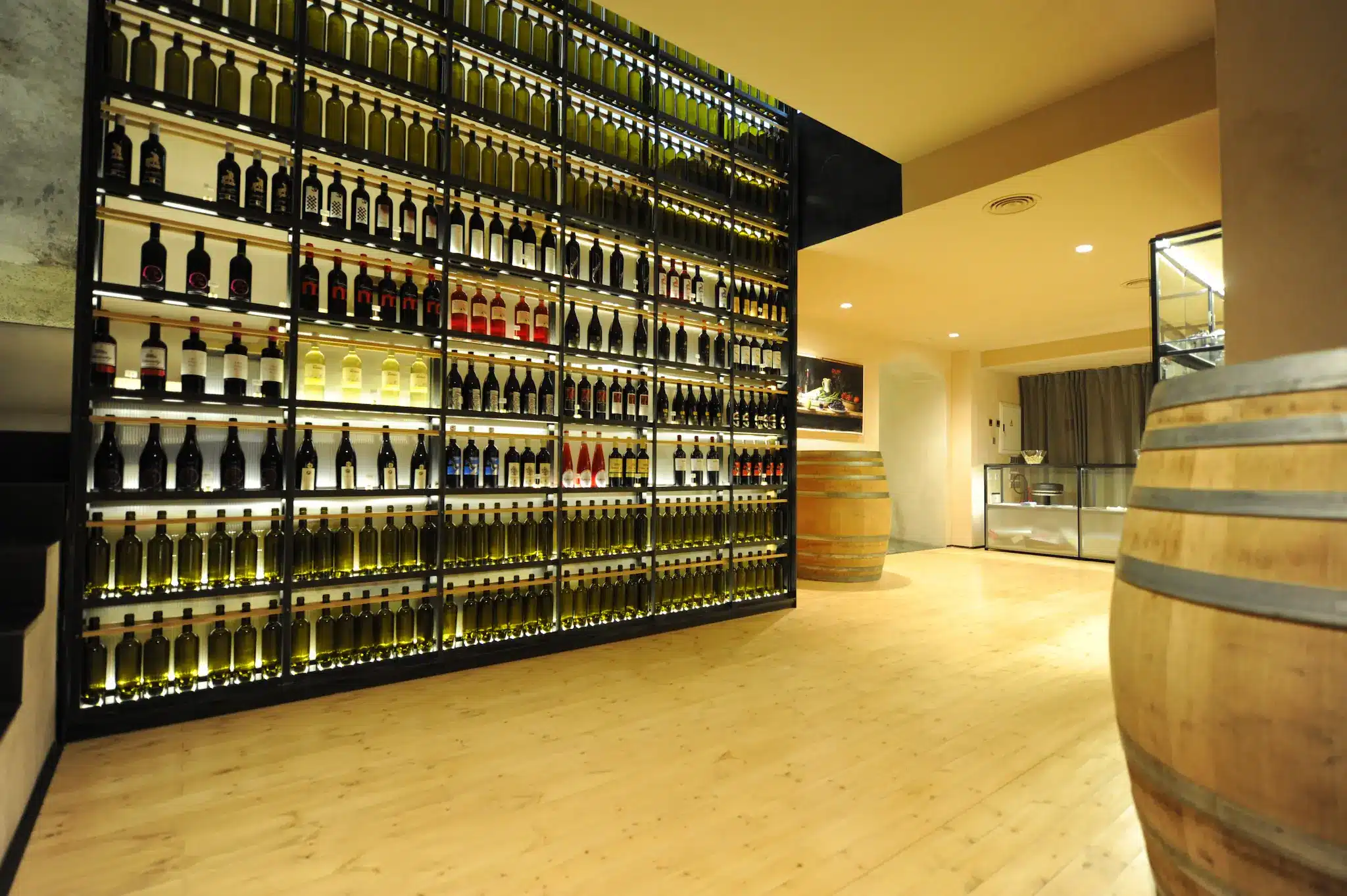
Our Wine Museum is the authentic benchmark and starting point of the Wine Route. It is located in an old 19th-century winery that initially belonged to the Melgares de Aguilar family and was, at the time, one of the largest wineries in the old Kingdom of Murcia. Throughout its rooms, visitors discover the historical relationship of this land with viticulture since Roman times and the wine-making process in its traditional and modern forms.
This geological site features an outcrop of lamproite rocks, making it one of the most representative lipolite-type volcanic chimneys. It is accessible via a trail with a viewpoint and interpretive panels.
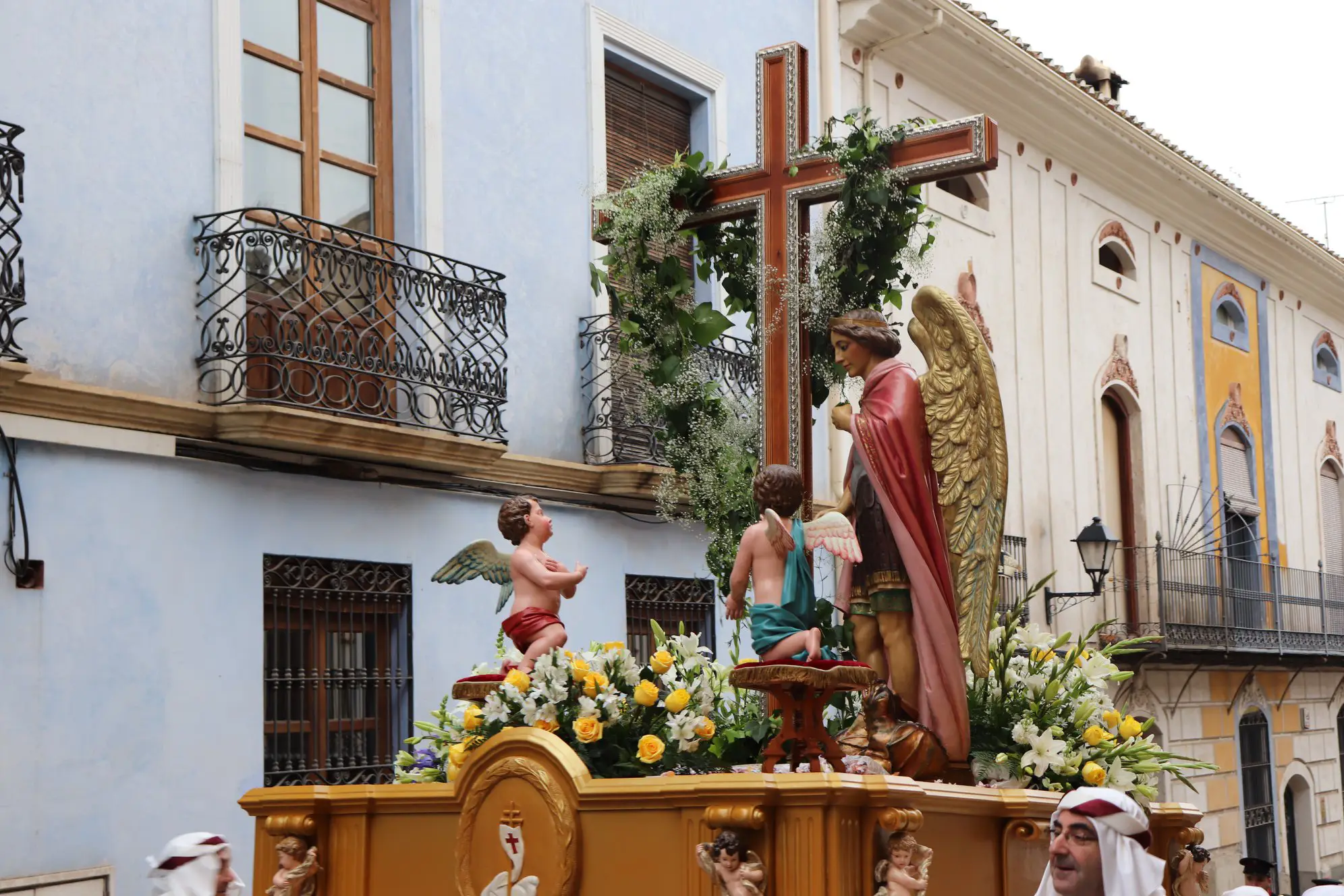
Calasparra's Holy Week is one of the municipality's most deeply rooted celebrations. It is characterized by its highly visual nature and by the processions that depict the most significant scenes of the Passion, Death, and Resurrection.
One of its most unique moments is Holy Wednesday, with the commemoration of the Arrest of Jesus in the Parque de los Olivos. This event has been declared of Regional Tourist Interest.

The quality of its varieties is known worldwide. It’s Spain’s first rice with a Designation of Origin. Its cultivation is unique, as it isn’t grown in stagnant water, but in clean, cold water that flows continuously, giving the grain a high level of quality.
The Calasparra Rice Growing Area, located in a very mountainous and sunny area, is made up of lands irrigated by the Segura River and its tributary, the Mundo River, as they pass through the municipalities of Calasparra, Moratalla, and Hellín.
Its ecological environment is clearly different from other rice-growing areas, as it is cultivated in a very mountainous and sunny area, located in the Northwest of the Region.
The quality and prestige of these rice varieties are due to the climate, the coldness and purity of their waters, the inclination of the plots which allows for drainage, preventing water stagnation, the crop rotation, and the use of selected seeds.
Its quality characteristics are reflected in its flavour and firmness. It has dehydrated grains that absorb more water during cooking, swelling more than other rices. And when you click, it gives you more information.
Calasparra Town Hall, known as the Casa Consistorial, is located in a historic building in Plaza de la Corredera. The original building stands out for its sober and functional architecture, presiding over one side of the town's most important square. As the administrative center of the municipality, it is where decisions governing local life are made. Its privileged location makes it a landmark in the daily life of Calasparra's residents.
The rock paintings at La Cañaica del Calar, located in El Calar de la Santa, are situated in a landscape dominated by an extensive juniper forest and rock shelters that preserve valuable examples of prehistoric art. In Shelter II, more than forty figures have been identified, including quadrupeds, caprids and cervids, forming one of the most outstanding collections in the site. Declared a UNESCO World Heritage Site, a prior booking is required to visit them at the Casa de Cristo Rock Art Interpretation Centre.
A natural reserve that exemplifies sustainable development, combining the conservation of endangered species like the otter and the Mediterranean pond turtle, with the traditional cultivation of Calasparra Rice and pilgrimages to the Sanctuary of La Esperanza.
This protected natural area, shared with the municipality of Calasparra, protects one of the best-preserved riverside forests in the Region of Murcia, along the upper course of the Segura River.
The Moratalla section is characterized by a more rugged and mountainous environment. The river narrows to form landscapes of great beauty, with a rich biodiversity that includes the otter as an iconic species. It is an exceptional spot for hiking, fishing, and observing flora and fauna in a highly ecological and well-preserved setting.
The Bullring was built in the second half of the 19th century on the site of the Franciscan monastery of Santa María de Gracia, after it was abandoned by the friars following the Mendizábal confiscation.
It was inaugurated on September 28, 1880, coinciding with that year's Fair, and has undergone several subsequent renovations. Specifically, in 1926 the capacity was increased and the monumental neo-Mudéjar façade that makes such an impression today was erected.
Between 1995 and 1999 the building underwent a rehabilitation process.
Before entering the Basilica, pause to look at the walls. Their origins are Islamic (10th–11th centuries), and later they became a stronghold of the Order of the Temple and the Order of Santiago. The fortress has 14 towers that have protected the city for centuries. Walking through the walled enclosure is a journey into our frontier past.
Located on the ground floor and in the basements of an old house from the first quarter of the 17th century that belonged to Don Luis de Gadea Sahajosa, which served as a Guardia Civil barracks for many years. Sculptor José Carrilero Gil was born here in 1928, and in this very place the Town Council of his hometown has honored him by creating a monographic space that contains part of his acclaimed work.
José Carrilero’s artistic work is characterized by a constant focus on the human figure, treated in a voluminous way but with soft modulations and delicate textures; cuts; grooves; and drawings that, applied to the volume, achieve a highly original bronze sculpture. Among the works on display, the female torsos stand out, as do the large figures seated or in motion such as The Catwalk and The Balcony, the sketches and anatomical studies of the head and face, as well as the magnificent trio of musicians located on the façade of the Museum itself.
A Baroque building built in the 17th century to house the administrative offices and storage for the income generated by the Order of Santiago in Cehegín. It has an enormous wine cellar. Today, this cellar has been restored to host the Wine School, a training and cultural centre.
It is a three-story neoclassical building with 19th-century artistic elements. The title of Count of Campillos is linked to major charitable works in the town, such as the restoration of the Hermitage of the Conception and support for the creation of the Hospital of the Royal Mercy.
A neoclassical-inspired building completed in 1808. Today it houses the Municipal Tourist Office and the Town Museum, which includes the Rice Museum, the Archaeological Museum and the Emilio Pérez Piñero Foundation. It also includes an exhibition and trades room.
Construction began in 1890 and it was inaugurated on September 14, 1901 with a charity bullfight. Since 1936 it has belonged to the Town Hall, and it stands out for an unusual feature: you access the stands at street level, without stairs, thanks to the excavation carried out in the hillside where it sits. Throughout its history it has welcomed figures such as El Gallo and Juan Belmonte, and it has also hosted bullfighters’ “alternatives” such as Guerrita (1975), El Rubio (2003), and Alejandro Talavante (2006).
Cehegín's Carnivals fill the municipality with color, music, and community participation, making them one of the most lively celebrations of the year. For several days, the streets are transformed with parades of troupes, creative costumes, and a festive atmosphere that brings together families, young people, and visitors.
The museum’s rooms are spread across three buildings, two of them historic: the Casa del Concejo and the Palacio de los Fajardo. The museum has 12 exhibition rooms that trace history from the Neolithic to the Modern Age, with an emphasis on Chalcolithic sites and Begastri. Admission is currently free.
This historic quarter is considered one of the most beautiful in the region. Declared a Historic-Artistic Site in 1982, its streets and alleyways offer abundant examples of traditional architecture from the 12th to the 19th centuries. It’s a museum in its own right, with manor houses, palaces, churches, viewpoints, and more than 116 coats of arms.
The arcades of Plaza del Castillo date back to 1725. Their original function was to house private boxes for wealthy individuals to comfortably watch spectacles, such as bullfights or ceremonies, held in the square. In the 19th century, they were covered with walls, transforming into rooms dedicated to selling meat and fish.
The Ermita de Santa Ana was built around 1614, following the foundation of its brotherhood in 1607. Later, between 1760 and 1796, the presbyter D. Joaquín Conejero directed and co-financed a major rebuilding that provided the temple with key elements such as the tower and the facade.
After being looted during the Civil War and losing its decoration, the hermitage was repaired. However, the constant humidity of the enclosure and the passage of time caused severe structural deterioration, forcing it to close for worship in 1988.
In 1994, a profound restoration began to consolidate it and adapt it to the Second Vatican Council. During the works, it was discovered that the humidity came from an underground spring, over which the new Tabernacle was placed, renewing the interior with murals and an Altar based on Hebrew numerology.
It is the only one of Caravaca’s hermitages that still serves the purpose it was built for: providing religious services to one of the most populous neighbourhoods of Caravaca de la Cruz. Every first Friday in March, the solemn kissing of the foot takes place before the image of Our Father Jesus the Nazarene.
Construction most likely began in the first quarter of the 17th century, as there are references to it around 1632, and it was completed in its current form throughout the 18th century, when it underwent numerous extensions. It is located next to the traditional Plaza de los Caballos del Vino (popularly known as Plaza del Hoyo), where there is a monument to the Caballo del Vino.
El Cristo del Carrascalejo is an image of Christ on the cross located in the spot of the same name, next to the Carrascalejo wine kiosk and the oldest wine cellar in Bullas, dating back to the mid-19th century.
The image stands on a pedestal. It is a place of pilgrimage and devotion, surrounded by nature, very close to the Barranco de la Regidora walkway, and also an ideal stop on hiking routes.
One of the most beautiful and delicate examples of religious architecture in Cehegín. It was declared a Historic-Artistic Monument in 1982. It is a three-nave Renaissance church built in 1595 by the Brotherhood of Our Lady of Sorrows, one of the oldest penitential brotherhoods in the region.
A small church built in the 16th century and dedicated to the Holy Martyrs Abdón and Senén, patron saints of the town. Its square offers one of the best views of the rice-growing plain and the surrounding hills.
This church is one of the main points of interest in our hamlet of La Copa.
Its origins are almost as old as the village itself, having been established as a Parish in 1904.
A National Monument since 1982, this temple presides over the Plaza de España. Its first phase was completed in 1723 and it was later expanded and remodeled between 1800 and 1804. The remodeling gave it its current appearance, with the striking Baroque-style tower. The patron saint, the Virgin of the Rosary, occupies the center of the main altarpiece.
Located in the Plaza del Ayuntamiento, this is the municipality's main parish church. Its construction began in the 16th century and took two centuries to complete. It is known for its extensive collection of paintings donated by the Canal-Blaya family, spanning from the 16th to the 20th century.
A Renaissance-style building, considered the prototype of a Santiagist church in the Kingdom of Murcia. La Magdalena served as the town’s main parish during the influence of the Order of Santiago (14th–19th centuries). It was remodelled and expanded in the second half of the 16th century.
This is the oldest temple in the area, as it was built on an ancient mosque by order of Alfonso X. It features a Renaissance façade and a Baroque interior.
Located on the highest hill in the historic quarter, it was declared a National Monument in 1980. Its construction is believed to date back to the late 15th or early 16th century, and it stands out for its clear Mudéjar influence. Its most spectacular treasure is the polychrome Mudéjar coffered ceiling, crowned by an impressive muqarnas pinecone in the presbytery.
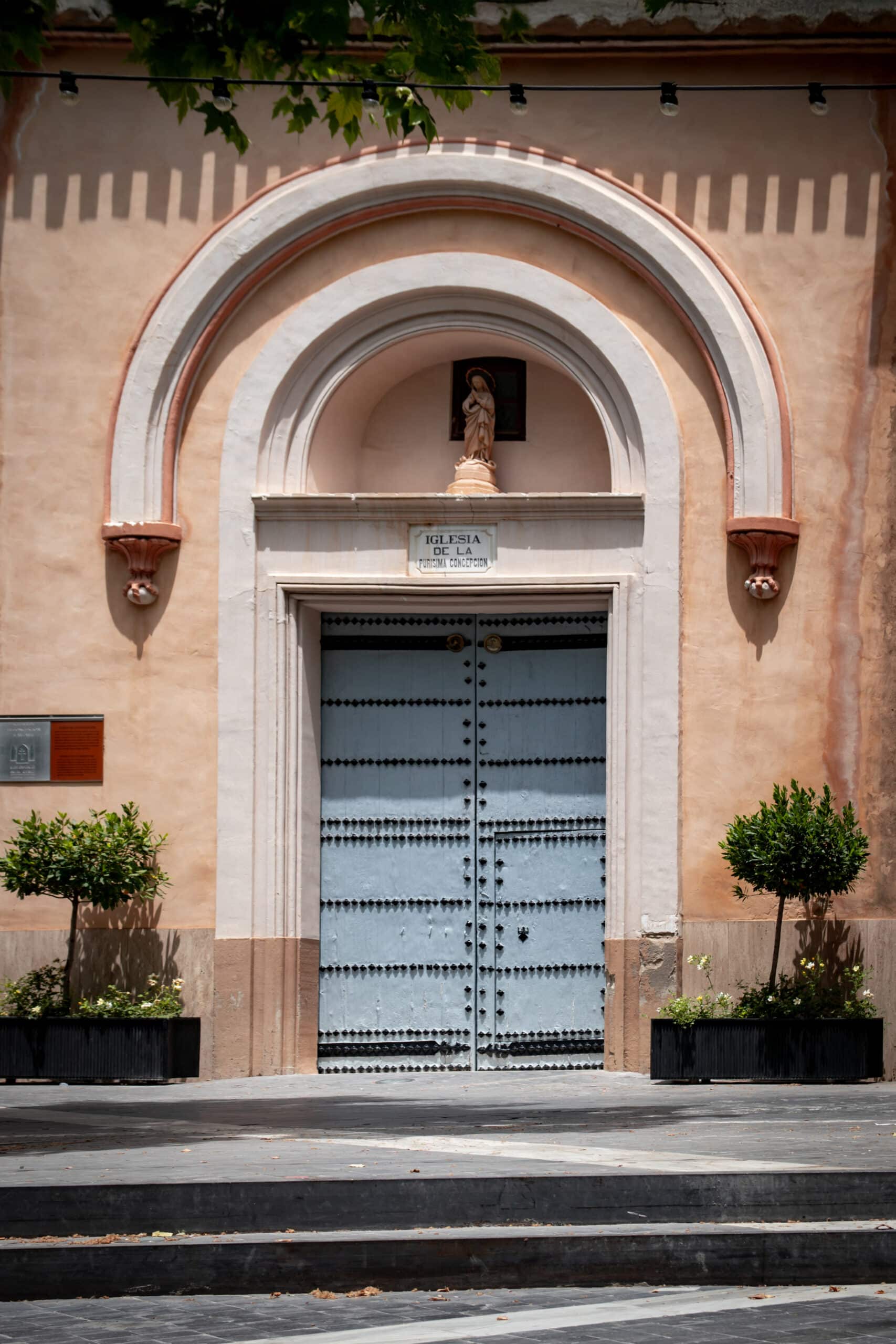
Built in the 16th century over an old chapel, the Church of the Purísima Concepción is a beautiful example of Renaissance architecture. Its Mudejar coffered ceiling stands out as one of the most important in the Region of Murcia, covering the entire main nave and the presbytery. The interior, of great beauty and peacefulness, also houses valuable Baroque altarpieces.
The tower dates back to the 17th century; it rises at the head of the church and consists of four sections.
Church Square is the true heart of Moratalla's old town and the center of its social and religious life. This monumental space is dominated by the imposing Renaissance facade of the Church of Nuestra Señora de la Asunción.
It is a beautiful and harmonious square, surrounded by historic buildings and offering spectacular views of the valley. Some of the most important local festivals and traditions are celebrated here. Sitting on one of its benches allows you to enjoy the peaceful atmosphere and contemplate centuries of history reflected in the stone.
The Calasparra Clock Tower, right on Calle Mayor, is one of the town center's icons and an essential stop on any walk through the heart of town. The first known documentary mention appears in a chapter record from 1609, although its current appearance is due to the new construction from 1905.
It stands proudly in the Town Hall Square, and its chimes mark the daily life of Mula. It is unique, as towers built exclusively to house a clock are not very common.
Built in 1900, the Clock Tower is one of the most distinctive elements of Bullas' urban skyline. It was erected through the private initiative of the then-mayor, D. Joaquín Carreño Góngora, to regulate irrigation shifts in the nearby Calderón orchard.
For lovers of religious history, this place is special: it was founded in 1576 during the lifetime of Saint Teresa of Jesus. Its church, built later in the 18th century, is a jewel of Rococo Baroque. Caravaca is part of the "Footprints of Teresa" route thanks to this legacy.
Plaza de la Corredera is the heart of social and cultural life in Calasparra. This large, arcaded space is the setting for the town's main events, markets, and festivals. In the center of the square stands the iconic Fuente de la Corredera, a monumental 18th-century fountain representing the Segura and Mundo rivers.
The fountain is not just an ornamental feature, but also a symbol of the importance of water in a land defined by its rice fields. Surrounded by historic buildings like the Convento de la Merced, it is the ultimate meeting point.
The Jardín del Coso is a charming and centrally located green space that serves as one of the main meeting points in Cehegín. It was formerly the site of bullruns, which is where its name comes from.
This garden, remodeled over time, combines walking areas with flower beds, benches, and a central fountain. It is a place for rest and leisure for all ages, hosting various cultural and social events. Its location at the gateway to the old town makes it the ideal starting point for exploring the city's monumental heritage, offering a peaceful retreat in the heart of urban life.
An artistic interpretation center that showcases the career of the celebrated artist from Mula, Cristóbal Gabarrón. Located in Casa Pintada, a palace-house from 1770, it exhibits over 150 pieces, including sculptures and paintings.
Known as the “Jewel of Underground Tourism”, it’s the cave with the longest horizontal route in the region, with nearly 5 km mapped. It is the only one in the Region of Murcia adapted for tourist visits.
It offers an 800-meter illuminated and acoustically enhanced tourist route, and stands out for its Luminous Mineral Room, unique inside a cave in Europe.
Located behind the parish church, this noble house of the Marsilla Melgares family was remodeled in 1900. Since 2006, it has housed a museum that recreates the lifestyles of the late 19th and early 20th centuries. The building is divided into its residential part (with modernist decoration) and its work area, highlighting its large, perfectly preserved cellar.
Considered the best exhibition of Iberian art on the peninsula and an international reference for its study, the museum occupies the former Palace of the Marquis of Menahermosa. Its halls display more than 80 funerary trousseaus from the Iberian necropolis of El Cigarralejo.
This Iberian site, located 3 kilometers from the urban center, features a settlement, its necropolis, and a sanctuary spanning 3,000 square meters. Archaeologists consider it a unique architectural complex in the world.
Located in the Celadilla area, it dates back to the 16th century. It belonged to the Counts of the Valle de San Juan and is one of the clearest examples of Renaissance civil architecture in Calasparra. It currently houses the Municipal Historical Archive and was declared a Site of Cultural Interest (BIC) in 1983.
This hexagonal Baroque building is one of the most beloved by the people of Caravaca. Built in the 18th century, it marks the place where every May 3rd, since 1384, the ritual of the Bathing of the Cross takes place—the act that blesses our waters and gives rise to our patron saint festivities.
El Zacatín is a key tourist attraction, being the pioneering market of its kind in the Region of Murcia, and the only one that operates year-round.
It is held on the first Sunday of each month from 9:00 AM to 2:00 PM, in the picturesque setting of Plaza Vieja and Plaza del Castillo. It offers an exhibition and sale of typical products and handicrafts, as well as artisan demonstrations, tastings, and wine sampling of D.O. Bullas wines.
The Emilio Pérez Piñero Foundation aims to promote and showcase the work of this distinguished architect from Calasparra. Established through the initiative of his family and the Calasparra Town Council, the foundation fosters cultural, artistic, and professional activities linked to his legacy, introducing his figure to new generations.
Located in Plaza del Alpargatero, this sculpture commemorates Cehegín's industrial past. It pays tribute to the residents who emigrated after the decline of the espadrille industry, which once supplied all footwear to the French army during World War I.
Festivals celebrated in honor of the Virgin of Hope, Patron Saint of Calasparra.
The main event is the traditional Pilgrimage to the Sanctuary, held on the night of September 7 to 8, and has been declared of Regional Tourist Interest.
During these festivities, the Rice Bullfighting Fair takes place, featuring young bull fights and traditional bull runs held during the first week of September, from the 3rd to the 8th.

These are the main festivities in Moratalla, declared of Regional Tourist Interest, and represent one of the town's most iconic events. Held in honor of the Santísimo Cristo del Rayo, they commemorate the miracle that occurred in 1621, when a bolt of lightning struck the image of the crucified Christ without harming any of the faithful present. This historical event gave rise to a deeply rooted tradition, which today is experienced with intensity and pride.
Popularly known as the "fiestas de la vaca," they are famous for the spectacular nature of their traditional Encierros por Vereda (bull runs), which fill the streets with excitement, adrenaline, and a unique festive atmosphere. The celebration begins on June 15 with the feast of the Stmo. Cristo del Rayo, featuring a traditional "huertano" parade, floral offerings, and a religious service.
The festivities continue from July 11 to 17, a period during which Moratalla is completely transformed to host bull runs and celebrations integrated into a wide program of events that combine tradition, devotion, and community. Each year, locals and visitors come together to enjoy an experience that is an essential part of the municipality's cultural heritage.
The old hermitage of San Sebastián, built in the late 15th century and ceded to the Franciscan monks in 1574, underwent major expansions in subsequent centuries until a severe fire devastated the vast complex in 1833.
Its architecture stands out for its Baroque portal decorated with colored jasper and its tower. Today, only the foot of the nave, the tower, and the upper choir—which has been rehabilitated as an Exhibition Room—survive from the old temple.
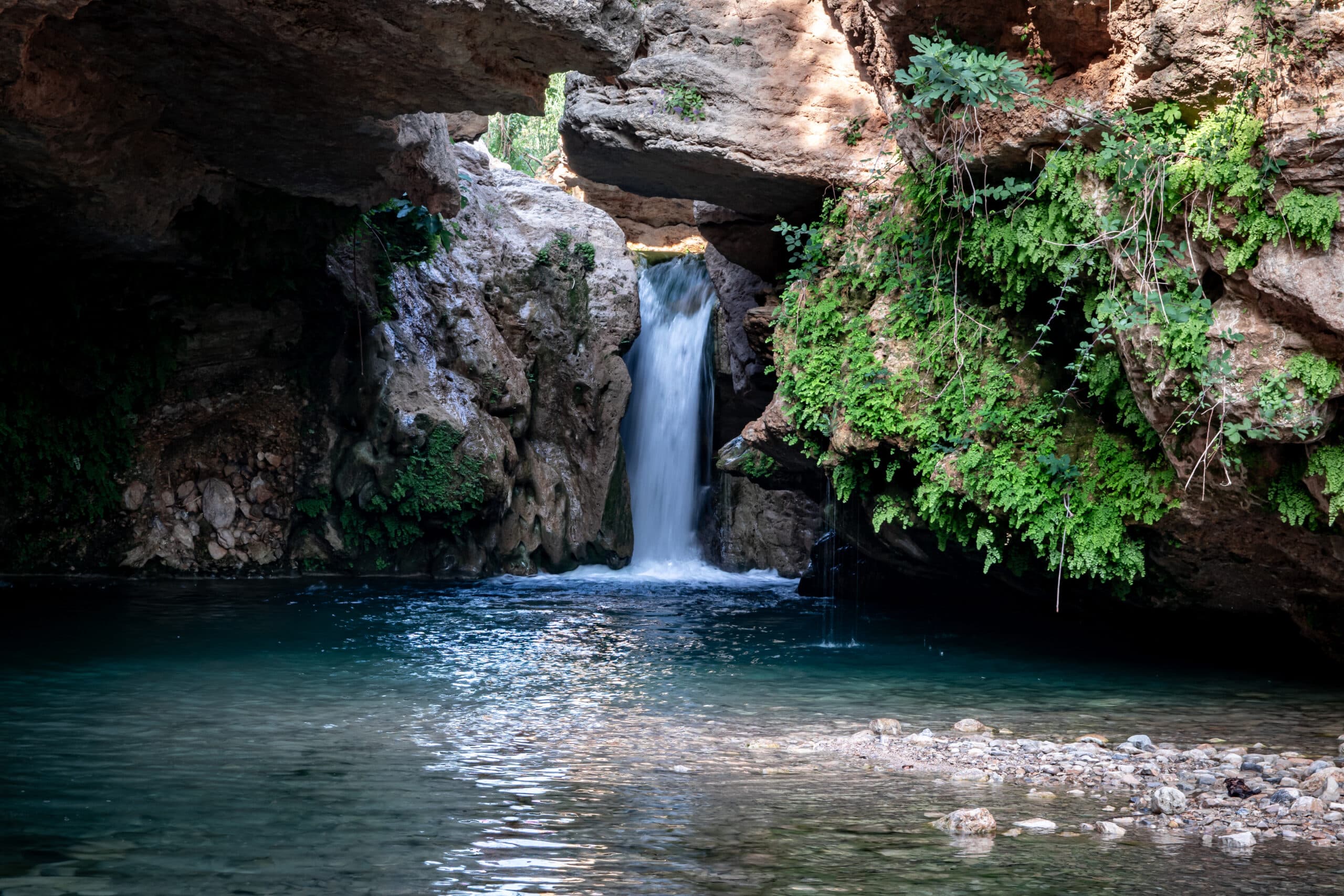
Known as one of Mula's best-kept secrets, this site of Roman origin is a system of pools and small waterfalls that spring from a natural source. It's ideal for a refreshing walk and an invigorating swim surrounded by riverside vegetation.
Fuente del Sabuco is a rock art site where the paintings are well preserved. In Shelter I, more than 70 figures have been identified, including archers, quadrupeds, and male and female human figures.
The Hermitage of San Blas is a small chapel in the Barrio de la Cruz, next to the Barranco de la Perdiz, linked to the popular devotion to San Blas. It is a brief and charming visit, a common passing point on routes and events like the Trail del Romero.
Holy Week in Moratalla is experienced in a unique way, being the most diverse, free, and distinct. Here, the main star is the Drum, a tradition that turns the sound of drumming into the city's soundtrack during Maundy Thursday, Good Friday, and Easter Sunday, from very early in the morning until dusk. And for good reason—this celebration is a source of pride for the municipality, recognized as Intangible Cultural Heritage of Humanity by UNESCO and a Festival of Regional Tourist Interest.
There’s also room for the majestic processions held year after year with great passion, including: Cristo de la Sangre, El Prendimiento, Silencio, Santo Entierro, and the act of Jesucristo Aparecido, patron saint of the town, accompanied by the drums.
It is a festival celebrated with great religious devotion. Its importance stems from the splendor of its processions, the spectacular setting offered by its old town, the ancient origins of its brotherhoods (some over 400 years old), and the beauty of its religious images. It has been declared a Festival of Regional Tourist Interest.
An iconic local institution, founded in 1891 by Don Pedro Mª Chico de Guzmán, 3rd Count of La Real Piedad, with the aim of replacing the old Hospital de Caridad de la Concepción. The two-story building features a corner coat of arms that immortalizes the Chico de Guzmán family.
Built in 1927 by the Melgares de Aguilar family of landowners, it is a modernist-style construction. Currently, it is the municipal House of Culture, and this building houses various services such as the Auditorium, the radio station, the youth information center, the equality agency, local development, an exhibition hall, and a library, among others.
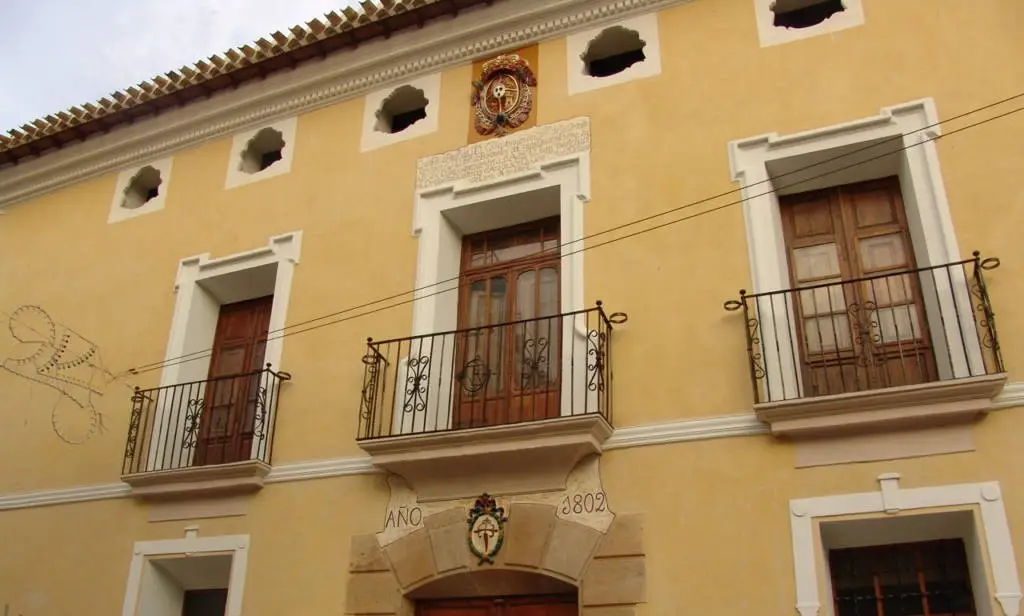
A Baroque-style mansion whose current facade dates back to the 18th century, though it originated in the 15th century. Its main portal is carved from sandstone and framed by noble coats of arms.
One of the standout manor houses in the Old Town. It is an 18th-century Rococo building and currently serves as the Town Hall.
Situated near Calasparra Castle, this outdoor space is part of the Old Town Route. It offers wonderful views of the town and its rice fields, and hosts evening concerts during the summer.
The keep of Moratalla Castle, built by the Military Order of Santiago in the 15th century, is the dominant feature of the town’s skyline. Standing 22 metres high and 9 metres wide, this jewel of Levantine military Gothic architecture rises as a mighty defensive tower overlooking the entire Moratalla region. Its imposing presence, visible from every point in the valley, makes the castle a symbol of identity and an essential visit for anyone wishing to discover the history and strength that have shaped these lands.
Located north of the town, it collects the waters flowing from the Fuente Caputa springs. Its name honors Juan de la Cierva y Peñafiel, who was Minister of Public Works and a deputy for Mula since 1896.
Built in the 14th century, it has served various historical purposes: it was an inn and granary for the Order of Saint John of Jerusalem, and was part of the Commander's Palace-Houses complex.
Today, it houses the Municipal School of Music.
Functionally, this is a farmstead tower built during the repopulation of the area. The tower served as a center of autonomous management for the farming community, in this case Moorish. Later, the tower was used as a place of worship, which is why locals know it as the "Old Hermitage." The transformation of the tower into a hermitage occurred after the expulsion of the Moriscos in 1613. Therefore, from the 17th century onward, the tower took on the function of a hermitage dedicated to Our Lady of Solitude.
The La Puerta Natural Area is one of the most idyllic and popular spots in Moratalla, especially during the summer. It is centered around the Alhárabe River, where clean, cool waters create natural pools perfect for swimming.
The area is surrounded by lush riverside vegetation and rock formations that create a stunning landscape. It features camping areas, picnic spots, and restaurants, making it an ideal place to spend a day with family or friends, enjoying nature at its purest.
It is our green lung and the favorite place for locals to go for a walk. Located just 2 km from the town center, it is a natural area listed as a Historic Site full of springs and irrigation channels.
Inside the area you will find:
· The "Sartenes": The crystal-clear water springs.
· Torreón de los Templarios: A 17th-century building (built on a possible Templar base) that today houses the Nature Interpretation Center, ideal for understanding the local flora and fauna.
· Cuevas del Marqués: Artificial caves from the Arab period excavated into the rock.
Known as the "Balcony to the Rice Fields." From this viewpoint, you can take in the richness of this natural environment on the banks of the Segura, where you can see the rice paddies and the Segura River.
It's the best way to understand the importance of the Segura's upper valley and is especially stunning at sunset.
The Mirador de Las Torres, located in the upper part of the old town, offers one of the most impressive and comprehensive panoramic views of Moratalla and its surroundings.
From this point, you can enjoy a 360-degree view that encompasses the labyrinth of the town's rooftops, the silhouette of the Castle Fortress, and the vast mountain ranges that make up the municipality. Its name refers to the medieval watchtowers that once existed in the area. It is a perfect spot to understand the territory's topography and to take spectacular photographs, especially at sunset.
The current building, renovated in 1982, reclaims the name of the town's first stable theater, which dates back to 1846. It maintains a long theatrical tradition that goes back to sacred performances in atriums and squares.
Famous thermal spring waters, declared medicinal, located 5 km from the town and used since Roman times. Designed for relaxation and rheumatic conditions, some accommodations offer small private thermal pools for the most privileged.
This archaeological site, occupied from the 1st century AD to the 5th century, is a large agricultural complex consisting of a pars urbana (residence), a thermal complex, and an industrial sector. It is the discovery site of four sculptures of children made of white marble, including the famous "Niño de las Uvas" (Boy with Grapes), which represents a seasonal genius of autumn.
The Monument to Esparto Grass represents part of the area’s history and tradition of artisan trades. Working with esparto grass has always been deeply rooted in people’s lives, and this is a tribute to a craft that, fortunately, some still keep alive.
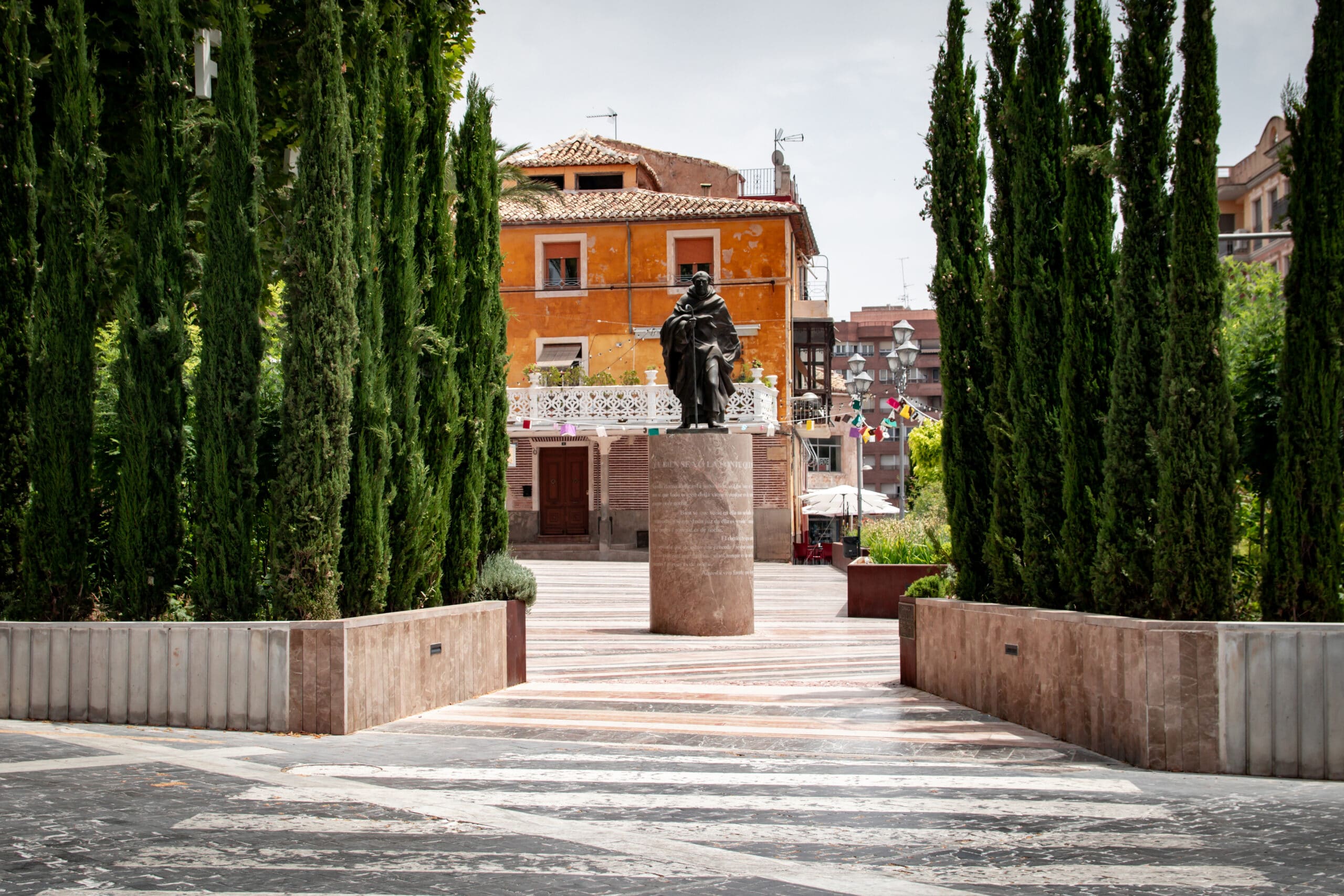
This monument pays tribute to Saint John of the Cross, mystic and poet who founded the Discalced Carmelite convent in Caravaca in 1586.
Saint John of the Cross is a figure of great significance in the city's history, and this monument serves as a permanent reminder of his presence, his spiritual work, and his profound mark on the Caravaca community, consolidating the town's mystical and religious vocation.
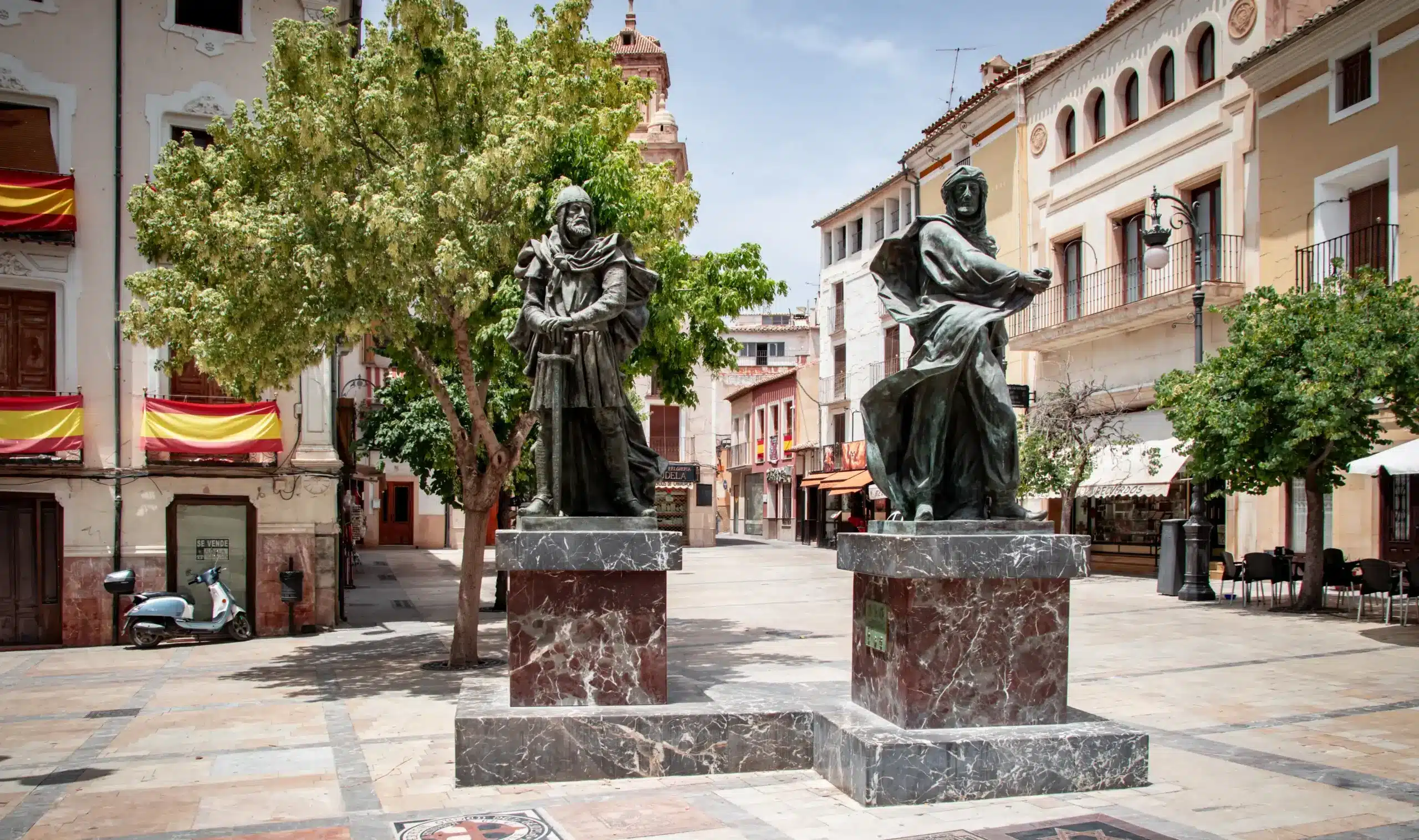
This neo-baroque sculptural ensemble was inaugurated in 1985 and features two figures who are dearly loved by all the people of Caravaca de la Cruz. It is the “Moor and the Christian”, a monument created by the recently deceased Valencian sculptor Rafael Pí Belda, an adopted son of the city.
These two figures are located in the city’s most iconic square, Plaza del Arco. You reach it through the arch that gives it its name; even before you pass through, you can already see the two statues framed within it, with the tall Bell Tower of the Parish Church of El Salvador in the background. From this viewpoint, it looks like a beautiful postcard. They are the ones who greet and welcome all the tourists and visitors who arrive in the city, eager to learn about its history. And no one better than them to tell it, because this pair of sculptures is a true reflection of what happened within its walls in another time.
The Monument to the Rice Farmer pays tribute to the farmers dedicated to rice cultivation. This sculptural fountain symbolizes Calasparra's pride in a trade linked to its history and the renowned quality of its rice.
The castle is likely one of the most fundamental and recognizable elements of Moratalla's history. The original structure was built in the 9th century over Neolithic and Iberian remains, and was later rebuilt by the Order of Santiago in the 15th century. Five towers completed the walled enclosure, in addition to the Keep: Redonda, Blanca, La Magdalena, Quebrada (or de los Limones), and Los Cuatro Vientos.
The old town of Moratalla, declared a Historic-Artistic Site, is an evocative labyrinth of steep, winding streets of medieval and Islamic heritage.
Taking an urban route is the best way to discover its essence. The tour will take you through its main monuments, such as the Church of the Assumption and the Fortress Castle. You will also discover manor houses with coats of arms, charming squares like the Church Square, and museums that tell the story of its most deep-rooted traditions. Getting lost in its streets is a true journey back in time, full of corners to photograph.
Mula Casino is one of the most unique buildings in the historic center. It originated in 1741 as a grain storehouse, and at the beginning of the 20th century, it passed into the hands of the local bourgeoisie. They transformed it into a casino and expanded it in 1908 under the direction of architect Pedro Cerdán, giving it its most iconic appearance.
The Mula City Museum, located in the Convent of San Francisco, offers a comprehensive journey through the history and ethnography of the town.
Its rooms display everything from archaeological remains from various periods to collections illustrating traditional trades, life in the orchard, customs and festivals, with special attention to the Night of the Drums. It is a highly educational visit that allows visitors to gain a global view of Mula's identity, its historical evolution and its rich cultural heritage.
Just a few minutes away, in the village of Barranda, you will find one of the most important collections in the world. Ethnomusicologist Carlos Blanco Fadol has gathered instruments from five continents and remote cultures, from instruments used for magic to others for courtship. A curious and fascinating visit that surprises everyone.
This museum features a permanent exhibition where visitors can learn in detail about two of Moratalla's most representative festivals: the Holy Week Drums and the Running of the Bulls of Cristo del Rayo.

If you don’t visit Caravaca in May, this museum in the Palacio de los Uribe lets you experience our Festivals of International Tourist Interest at any time of year. It showcases the richness of the Christian and Moorish groups, their costumes and weaponry, and also dedicates space to the giants and big-head figures that bring joy to our streets.
Located in the former palatial home of the Mora and Uribe family, very close to the Convent of Santa Clara, it is dedicated to portraying the Patron Saint Festivities of Caravaca de la Cruz, declared of International Tourist Interest, held every year from May 1 to 5. Alongside a space that recalls the religious origins of the celebrations in honor of the Vera Cruz, its rooms display a collection of costumes, accessories and weaponry from the Christian groups and Moorish cabilas, as well as embroidered garments typical of the trappings of the Wine Horses.
Among the pieces on display, it’s worth highlighting the set featuring a fully adorned horse with the four riders who usually accompany it; the recreation of the Historic Horse; the spectacular outfits and capes worn by the Sultans and Kings, for both adults and children; some Moorish and Christian costumes; and the Giants and Big-Heads, represented by the charming characters Nano and Nana.
Located within the Sanctuary grounds, in the Chaplain's House. It is essential for understanding the history of the Relic. You can see the Chasuble of Chirinos (linked to the miracle of the Apparition), the medieval reliquary donated by the Order of Santiago, and paintings of great value such as "The Healing of Tobias" by the Caravaca-born artist Rafael Tegeo. Additionally, the visit includes access to ancient areas of the castle, such as cisterns and dungeons.
Located in an old 18th-century palatial house in the historic center. This museum is pure passion. Here you will understand why the Wine Horses are recognized as Intangible Cultural Heritage of Humanity by UNESCO. You can admire up close the luxurious cloaks embroidered in silk and gold—true works of art that adorn the horses every May 2nd—and learn about the evolution of this unique celebration in the world.
The church and the remains of the Convent of La Merced in Calasparra were founded in the early 17th century (around 1625) on the site of an old hermitage, standing out as an important historic landmark in the town centre. Although it was severely damaged and looted after the Peninsular War in 1812, the site retains its historical value, including the figure of a Crucified Christ by sculptor Juan Manuel Miñarro López.
Located on Calle Mayor, it is one of the region’s most iconic and interesting private buildings. In its basement is the Ethnographic Museum, which displays uniforms from the Order of Santiago and a sample of the craftsmanship of espadrille makers.
The Fajardo Palace, located in Plaza del Castillo, is one of the most important civil buildings in the old town. This 18th-century palace, which now houses the Archaeological Museum, belonged to one of the most influential families in the region.
Its façade, though understated, shows the quality of its ashlar masonry construction and the elegance of its proportions. The building is arranged around an inner courtyard that leads to the different rooms. It is a testament to the power of the nobility in Early Modern Cehegín and an incomparable setting for the museum’s collection.
The Villar de Felices Palace is one of the most outstanding stately homes in the Old Town of Cehegín. It is part of the municipality's noble architecture and dates from between the 15th and 18th centuries, achieving special relevance as an example of Murcian Baroque (with references to its construction in the 18th century).
This natural spot becomes the epicenter of the San Marcos Festival held in April. After the massive parade of floats that celebrates agricultural tradition, the area serves as the setting for the traditional picnic and other leisure activities.
This natural corridor connecting Bullas and Cehegín, where vineyards and typical crops such as almond trees intermingle, offers an impressive view. As we advance, the vine takes on greater prominence, always under the presence of the Lavia peak, which dominates the landscape, with the Venta del Pino at its foot. The land combines tones of calcareous white and red ocher, accentuated by the green of nearby forests.
It is the jewel of Murcian Renaissance architecture and a must-see in the historic center. You will be amazed by its four gigantic Ionic columns, nearly two meters in diameter, supporting ribbed vaults at great height. Although it remains unfinished, its grandeur and tower dominate the skyline of the lower city. Inside, it houses a Baroque main altarpiece from the former Jesuit church and a valuable collection of goldwork and religious imagery.
A small building already existed prior to 1468; this was extended in the 16th century to become a monumental structure with a basilica-style layout, vaulted over enormous Tuscan columns. It is striking that the work remained unfinished in the choir area, a unique feature of its architecture. It is the town’s principal historic church, a 16th-century building that combines Gothic and Renaissance elements. Located in the heart of the old town, it stands out for its solid bell tower and its spacious, light-filled interior, where the ribbed vault and rich religious imagery enhance its artistic and devotional value. It is one of the most emblematic buildings in Moratalaz’s heritage and a spiritual and cultural landmark of the town.
Located in the old town, it is one of the most important monuments in Calasparra. It is a clear example of the typical buildings of the regional Murcian Baroque style and dates back to the 17th century.
Perched on the slopes of San Jorge Hill and overlooking Moratalla's historic quarter, this viewpoint is an open space offering a privileged perspective of the entire town.
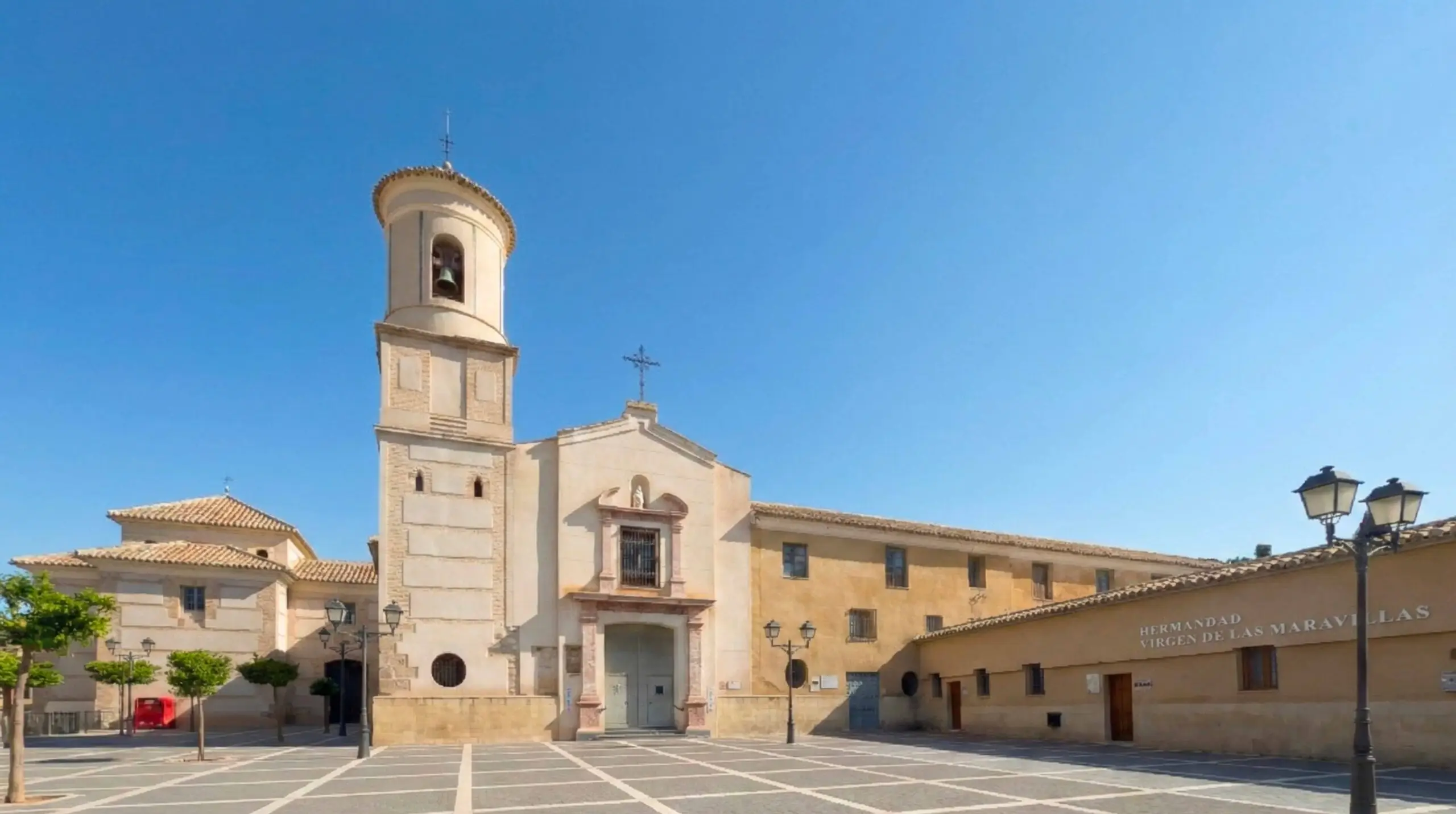
They are held every year in the first weeks of September. The patron saint, María Santísima de las Maravillas, is cared for by the Franciscan friars in her sanctuary until the celebrations begin.
Held in the last week of July in honour of the patron saints of farmers. It’s customary to get together in groups to prepare and enjoy the typical migas ruleras and glasses of cuerva.
The Pilgrimage of the Child of Mula is one of the town’s most beloved traditions: a popular pilgrimage to its hermitage, blending faith and celebration, commemorating the appearance of the Child Jesus to the shepherd Pedro Botía in 1648. A moving event to experience the most authentic atmosphere of Mula.
Popularly known as Plaza del Hoyo and officially as Plaza de los Caballos del Vino, this is one of Caravaca's most iconic spots.
This is where one of the most important events of the Caravaca Wine Horses Festival takes place: the bareback horse competition on May 1st, when the square becomes a hub of people, music, and color.
The rest of the year, it is a large public space that houses the monument dedicated to the horse.
It is the heart of social life in Caravaca, and you can access it through the Arch that gives it its name. Here you will find the City Hall, an 18th-century Baroque building whose original design is by Jaime Bort. Take a look at the old granary and the prison, which are now part of the municipal offices.
It is the perfect place to start or end your walk.
Plaza del Castillo is the heart of Cehegín's old town and the epicenter of its social and historical life. Dominated by the imposing Church of La Magdalena and the Fajardo Palace (Archaeological Museum), this medieval square is a monumental space of great beauty.
Its famous 17th-century porticos, central fountain, and bar terraces make it a vibrant place full of life. From here, you can enjoy a wide panoramic view of the surrounding landscape. It is the essential starting point for any visit and the setting for the city's most important events.
This watercourse is notable for its peculiar narrowing as it passes through the El Cristo area (in El Carrascalejo). This narrowing facilitates a greater water supply through the soil, which encourages the appearance of sub-humid forest species such as Portuguese oaks, elms, ashes, black poplars, and willows.
The Castle, symbol of the origin of Cehegín, consisted of a large Keep Tower, cellars, granaries, chapel and other outbuildings. This fortress was a collection and administration center of the Order of Santiago. Scattered remains of the walls survive, including a section of wall from the Muslim period and the presence of an Almohad gate of the citadel.
Also known as Sierra Seca, it is the highest point in the Region of Murcia and one of Moratalla’s most iconic landscapes. With its highest peak at Los Obispos (2,014 m), it is notable for its karstic terrain, its vast high-altitude plains and the presence of pine forests, holm oaks and wildlife such as vultures, golden eagles and mountain goats. Located at the western edge of the municipality, near Inazares, Cañada de la Cruz and Los Odres, it is an ideal spot for hiking and for enjoying the snow in winter.
Folleto sobre El Sendero Pico del ObispoThe Calasparra Rice Museum, located in the old granary of the Villa Museum, pays tribute to the region's rice-growing tradition. Across its two floors, it showcases the landscape and rice cultivation process on one hand, and historical machinery, traditional tools, and ancient documents on the other, reflecting centuries of the bond between Calasparra and its rice.
Moratalla has the highest concentration of Levantine and Schematic Rock Art in the Region of Murcia, declared a UNESCO World Heritage Site.
The Rock Art Interpretation Center "Casa de Cristo" is the starting point for understanding this legacy. Through replicas and panels, it explains the importance of the area's rock shelters (such as those at Cañaica del Calar or Fuente del Sabuco). Visits to the original shelters are usually restricted and must be arranged through the Tourist Office to ensure their preservation.
Part of Levantine rock art, these figures from the Chalcolithic period were drawn in the inner cavities of three caves on Peña Rubia mountain: Cueva de las Palomas, Las Conchas, and Cueva del Humo. They were declared a UNESCO World Heritage Site in 1998.
Inscribed on the UNESCO World Heritage list, the paintings of Abrigo del Pozo, located in the Almadenes Canyon, date back to the Eneolithic (around 7,000 BC) and belong to what is known as schematic art. Excavations have documented human presence at the site for at least ten thousand years.
One of the most important archaeological sites in the municipality of Mula. This site is divided into a residential area, with thermal baths, and a work area, where production zones for wine and oil have been preserved.
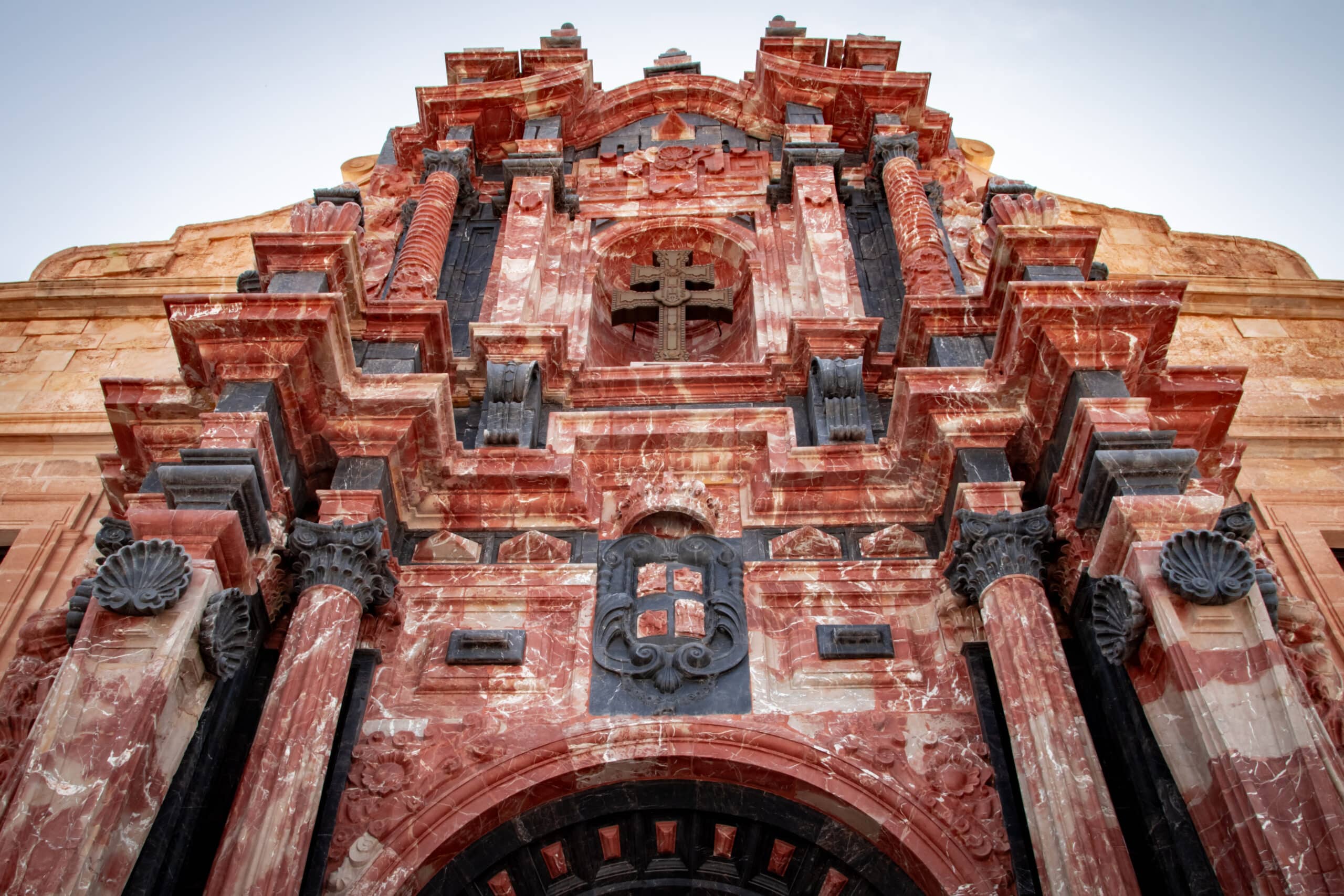
It is our symbol and the reason why we are one of the five Christian Holy Cities in the world. It stands imposingly in the heart of the ancient medieval fortress. Its construction began in 1617 and it stands out for its impressive 18th-century Baroque facade, carved from local marble. Inside, you will not only admire the Herrerian architecture but also feel the devotion as you stand before the Chapel of the Vera Cruz, where we guard the relic and the "Lignum Crucis".
Considered one of the region's finest monastic buildings. Most astonishingly, the monastery, whose origins date back to the 17th century, houses a reliquary containing the Holy Thorn from Jesus Christ's crown that is in Spain.
Located on the San José hill. From the Islamic period, we preserve a cistern upon which what we see today was built, dating from the 14th century. In 1289, it was donated to the Order of the Hospital of Saint John of Jerusalem.
Built in the 15th century, the hermitage was destroyed by the French army during the Peninsular War. Despite being in ruins, it remains a highly attractive tourist spot and an unrivalled viewpoint over the old town. It is the starting point of the San Sebastián pilgrimage.
Listed as a Site of Geological Interest, the Salto del Usero is located in the bed of the Mula River, north of El Castellar hill. It is a spot of great scenic beauty with hydrological and geomorphological interest. Erosion has created its unique dome-shaped morphology, where the water plunges down a waterfall several meters high, forming a deep pool that stays full year-round and is very popular during the summer.
The San Ildefonso Chapel, popularly known as the Chapel of the Cross, was built in 1900 and linked to the old Asylum and Hospital for the Elderly. After its restoration in 2016, original elements were recovered and a niche was found, interpreted as the confessional used in her youth by Saint Maravillas de Jesús.
They are held in May and include making traditional migas at the fairgrounds on Saturday night. On Sunday there is a pilgrimage and a parade of decorated floats, where participants dressed in traditional huertano attire hand out the traditional afternoon snack.
A night-time pilgrimage is held from the Ruins of the Hermitage of San Sebastián to Plaza del Castillo, where torches are carried to light the great bonfire in honour of the saint.
It is the quintessential magical place of devotion and probably the main religious attraction Calasparra offers. This 17th-century temple was carved into the rock next to the Segura River and houses the images of La Pequeñica and La Grande. It is located in a natural setting of extraordinary beauty that is part of the Cañaverosa Natural Reserve.
Information:
- Foundation: 968 72 00 54
- Sacristy and refuge: 968 74 54 62
- Gift shop: 968 72 01 26
- Restaurant: 968 72 04 12
This complex, declared a National Monument, is one of the few surviving examples of the most authentic Murcian Baroque. Built between the 16th and 18th centuries on the site of a former 15th-century hermitage, it has safeguarded María Santísima de las Maravillas, the city’s patron saint, since 1725.
Inside, the Baroque cloister stands out as the true heart of the complex, around which the rest of the convent buildings are arranged. And as a devotional jewel, the image of the patron saint is a delicate wooden carving linked to the Italian Baroque school.
Located in the hamlet of El Niño, this is an 18th-century Baroque temple. Its history is defined by the legend of the appearance of the Divine Child to the shepherd Pedro Botía in 1648, an event that shaped the religious life of the municipality.

Moratalla is home to two sanctuaries of great devotion and unique natural beauty, linked to its patron saints and deeply rooted in local tradition.
Just 7 km from the town center is the Casa de Cristo, a 17th-century sanctuary in popular Baroque style, whose origin is related to the appearance of Christ to the shepherd Rui Sánchez in 1493. The restored complex includes the church, hostel, and dining areas, and houses the Rock Art Interpretation Center, dedicated to showcasing paintings declared a World Heritage Site.
In a more remote setting surrounded by nature lies the Sanctuary of La Rogativa. Its chapel, built between the 16th and 17th centuries, has been a pilgrimage destination for over four hundred years. Its location between the Revolcadores Massif and Peña Jarota offers a landscape that captivates every visitor.
The Romerías (pilgrimages) are the great festive and devotional link between both sanctuaries. Every first Sunday of May, a pilgrimage is held in honor of Jesucristo Aparecido, where the Patronato and hundreds of pilgrims carry the patron saints from the Parish Church of Ntra. Sra. de la Asunción to the Casa de Cristo. The festival dedicated to the Virgen de la Rogativa takes place on the last Sunday of May.
Each day, a section of the route is covered, reaching the hamlet where the image will stay overnight and where the locals organize a welcome celebration. Especially distinctive are the pilgrims’ dance to the rhythm of the Cuadrillas de Animeros and the traditional bidding for the honor of carrying the platform.
A work by artist Juan García Jiménez, it is located at the roundabout on the western exit of the town. The sculpture, made up of hundreds of steel pieces, depicts a child spinning and pays tribute to the great importance that the hemp industry had for Cehegín.
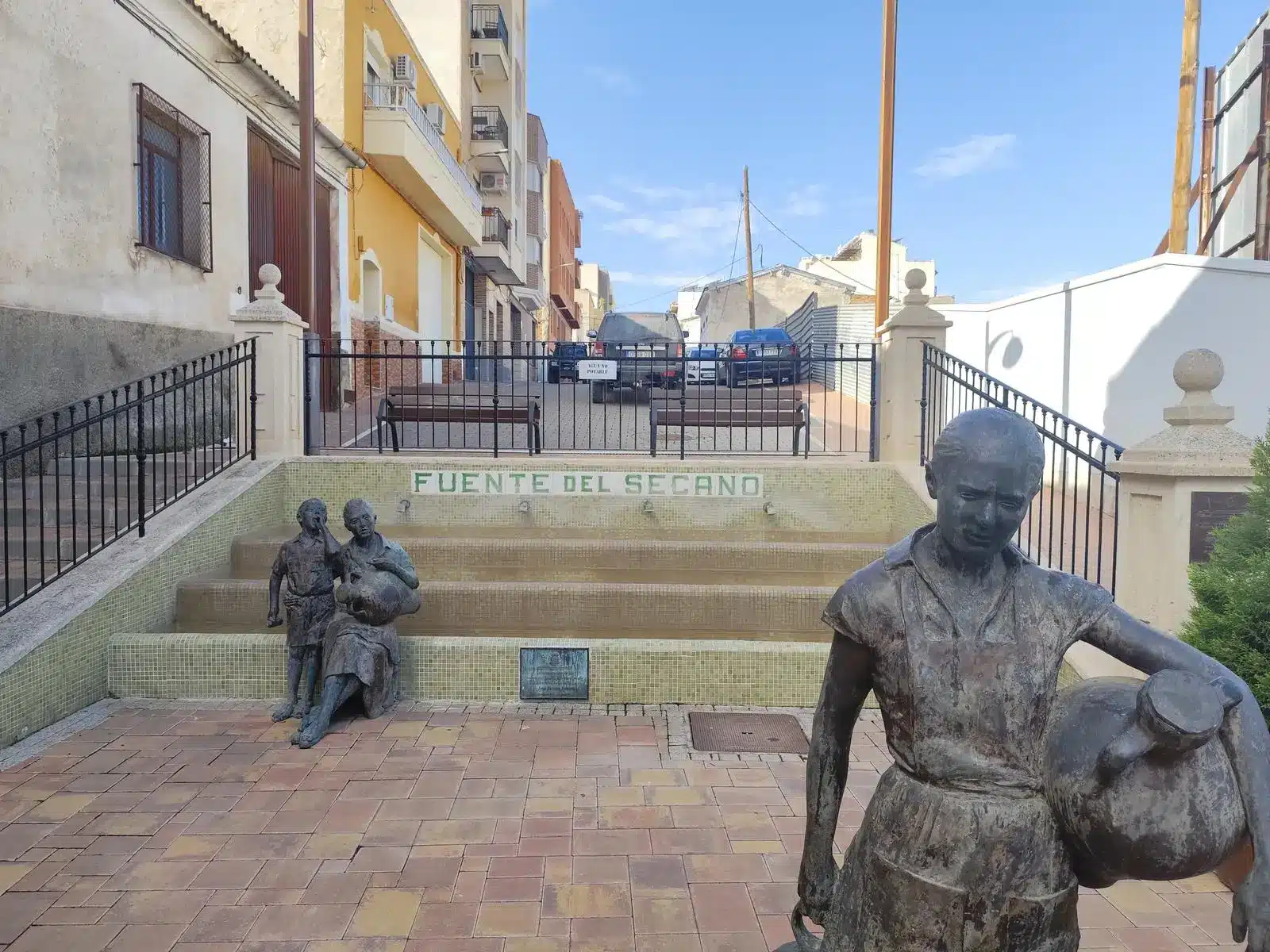
The Fuente del Secano is one of Calasparra's most popular fountains, once used by residents to supply water for their homes. Today it has been restored, recovering its appearance and traditional function as a meeting point and water source.
Mula shares territory with the Sierra Espuña Regional Park. It combines peaks, ravines, and valleys that offer an ideal setting for hiking, nature watching, and outdoor activities. In addition to its environmental value, Sierra Espuña holds significant scenic and cultural interest, making it an emblematic place for the peaceful enjoyment of the natural environment and contact with the rural Murcian surroundings.
The Somogil area is a beautiful natural enclave, located near the Barranco de Hondares, a zone of special conservation and high ecological value. Here you’ll find two truly incredible natural water pools. One of them is of thermal origin, with lukewarm water that tends to feel cool. Nowadays, it’s a true haven of peace, ideal for relaxing.
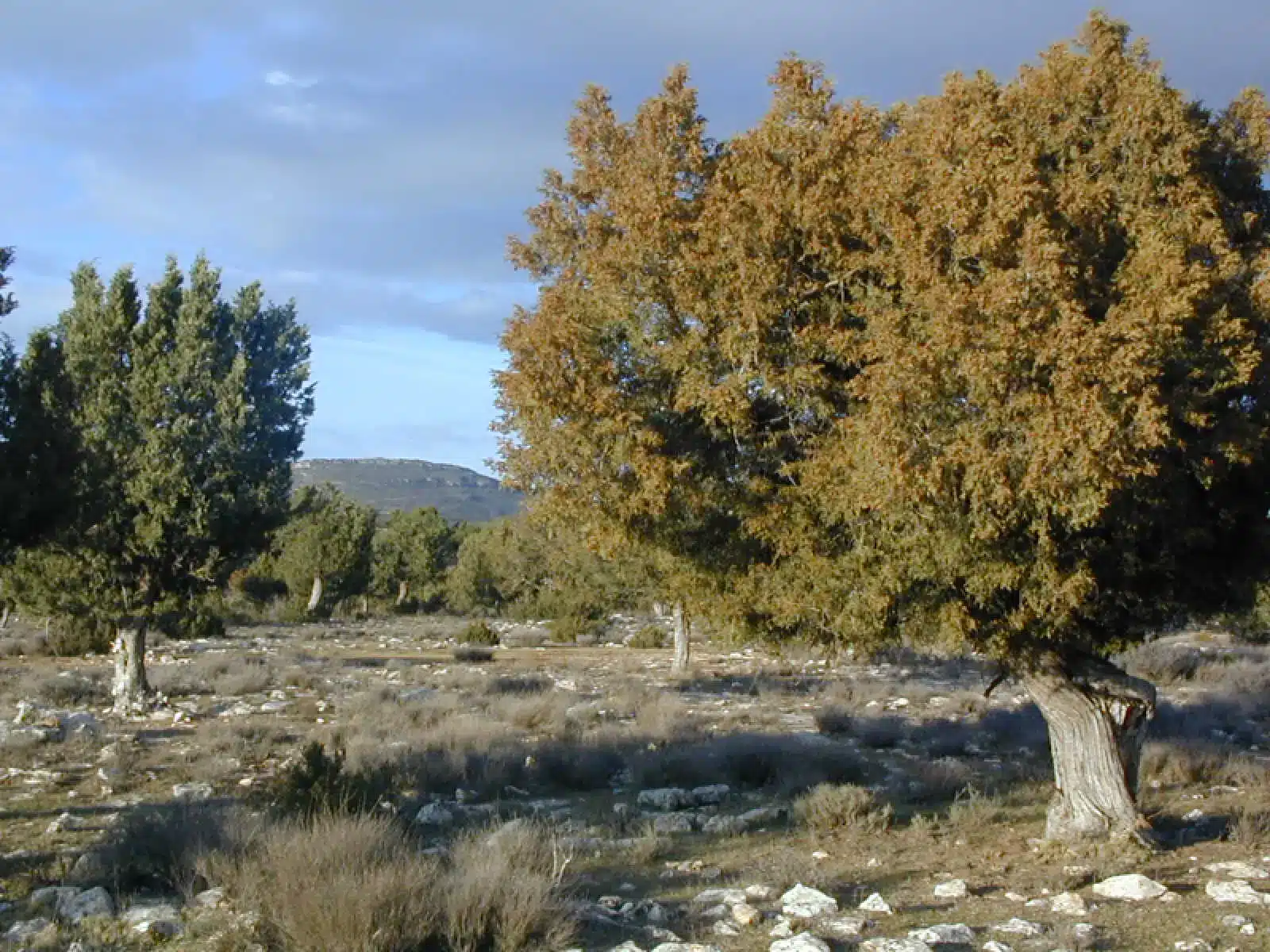
The Moratalla White Juniper Forest is one of the most unique natural landscapes in the high-altitude districts of El Sabinar and El Calar de la Santa. In these mountains, centuries-old junipers survive, with twisted trunks and a majestic bearing, forming an ancient forest inherited from colder eras and unique to the Region of Murcia. The Spanish juniper (Juniperus thurifera), a protected species, is a tree with a dense, conical crown and highly distinctive aromatic wood. Some of the finest centuries-old specimens are preserved in these areas, true natural monuments that lend character to the landscape. Amidst rocky outcrops, silent slopes and pure mountain air, visitors discover an environment of great ecological value, where black pine, juniper and wildlife perfectly adapted to the altitude coexist. To walk through this juniper forest is to enter an ancient, authentic and vibrant woodland that preserves the natural essence of Moratalla intact.
Strolling through the streets of Caravaca's old town is a journey back in time. Narrow and steep streets like Calle Mayor, Cuesta del Castillo, or those of the medieval quarter, preserve the city's original layout. Its stately homes with ashlar facades and noble coats of arms coexist with more humble whitewashed dwellings, creating a harmonious and charming ensemble.
Getting lost in its corners means discovering small squares, arches, and architectural details that speak of the city's rich history, from its Islamic past to its Renaissance and Baroque splendor.
The Trieta Theater is one of the most representative examples of civil architecture in Moratalla, built in 1917. It features modernist finishes and currently hosts most of the cultural events that take place annually in the town.
Located in the Fuentes del Marqués natural area, the Templars' Tower is a 17th-century defensive tower. Inside, it houses the Nature Interpretation Center, an educational space that explains the geological richness, flora, and fauna of the Fuentes area.
Popularly known as Plaza Vieja, Plaza Teniente Flomesta is the heart of Bullas' old town. This square, the center of the town's social life for centuries, retains the charm of traditional architecture, with its whitewashed houses and wrought-iron balconies. The old town hall used to be located here. Today, it's a meeting point surrounded by bars and shops, where numerous events and markets are held. Its peaceful atmosphere and historic character make it an ideal starting point for exploring the narrow, steep streets of the town's historic center.

These projects have turned Moratalla into a benchmark for lavender cultivation in the Region of Murcia. "Territorio Lavanda" and "Lalavand" are agrotourism initiatives that allow visitors to immerse themselves in a spectacular landscape, especially during the blooming season (June and July).
They offer guided tours of the deep purple fields with their intoxicating aroma, where the cultivation and distillation processes are explained. They also have shops where you can buy artisanal products such as essential oils, soaps, or cosmetics. An unforgettable sensory and visual experience.
Walking and cycling routes and guided tours through the lavender fields:
- Cicloracices, cycling and hiking routes adapted to all levels and abilities. Custom routes, leisurely rides, family routes, sports routes, and bicycle rental.
Information and reservations: Phone 613076420. Instagram: @cicloraices
- España en Floración, visits through the lavender fields.
Information and reservations: https://floracion.es/contacto
- Guide, farmer, and representative of the Northwest Aromatic Association, offering routes and tours through the aromatic plant fields of the high districts of Moratalla.
Information and bookings: 664453221
The Cehegín Tourist Office is the essential information point for any visitor. Located in a central and accessible location, its staff offers all kinds of assistance to plan your stay in the city and its surroundings.
Here you can obtain detailed information about monuments, schedules, hiking trails, gastronomic offerings, and cultural activities. Additionally, they organize guided tours of the old town, a highly recommended option to not miss any detail of Cehegín's rich history and heritage. It is the first stop to make the most of your visit.
Located in the Casa Granero building, you can visit the Rice Museum, the Archaeological Museum, and the Emilio Pérez Piñero Foundation. It also features various exhibition spaces, such as the ethnographic room, the trades room, and an exhibition and conference hall.
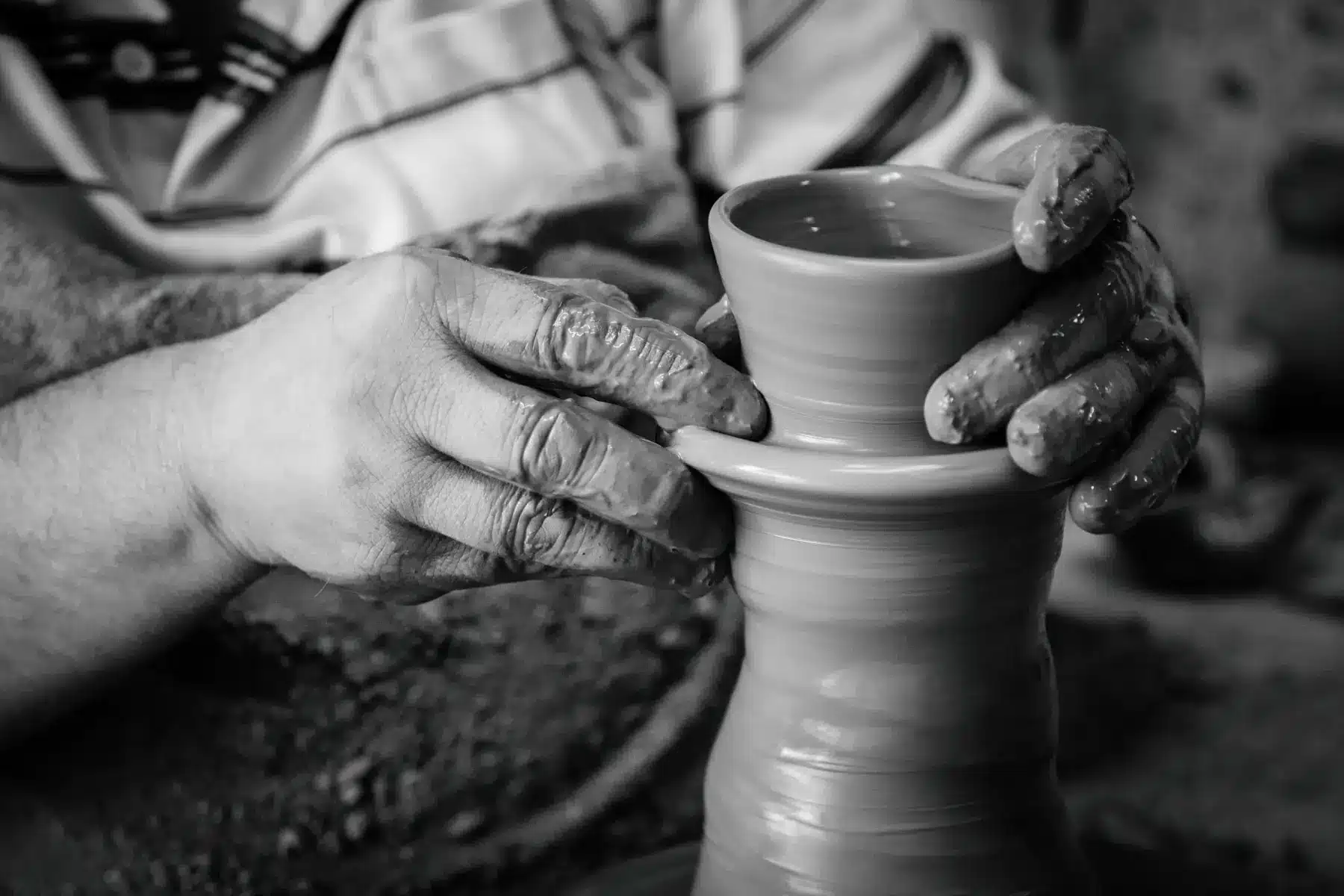
Mula pottery is eminently utilitarian, and the workshops are known as 'ollerías'. Also noteworthy are the artisans who, using goat and sheep skins, dedicate themselves to the unique crafting of the drums that resonate during Holy Week.
The Encierros del Cristo del Rayo are the centerpiece of Moratalla's main festivities. Their main feature, unique in Spain, is that the fighting bulls are led along mountain paths and trails by riders on horseback until they reach the town.
From July 11 to 17, one of these bull runs is held every day, followed by the release of the cattle through the streets of the old town. It is a festival declared of Regional Tourist Interest, combining the excitement of the bullfighting event with livestock tradition and the spectacular landscape of the Moratalla mountains.
This imposing building is the city's most prominent and iconic landmark. A magnificent 16th-century ashlar construction, it stands at the top of the hill, overlooking the entire river plain. It was built to demonstrate the power and supremacy of the House of Vélez. Although not open to visitors, it offers stunning views of the city and the Mula River region.
This impressive iron viaduct, built in the early 1930s, is one of the most spectacular engineering works on the Northwest Greenway.
At 110 meters long and 50 meters high, it spans the Mula River, offering breathtaking and spectacular views of the surrounding landscape. Crossing it on foot or by bicycle is one of the most exciting experiences on the route. Its red metal structure contrasts with the green of the orchards, creating an iconic image of the region.
A medieval abandoned settlement that was one of the most important farmsteads in the Cora of Tudmir. Today you can visit the excavated ruins and the Interpretation Centre, which includes a recreation of an Islamic home.
Located on the slope leading up to the Basilica, this spectacular bronze sculptural ensemble pays tribute to Caravaca de la Cruz’s most iconic festival: the Wine Horses, declared UNESCO Intangible Cultural Heritage of Humanity. The work, by Valencian artist Rafael Pi Belda, captures the exact moment when a richly harnessed horse, accompanied by four young men, makes the fast and daring run up the slope.
It is a symbol of the effort, passion, and tradition that define this unique celebration, and a must-stop photo spot for all visitors.
In the 17th-century cellars of the Palacio de la Tercia, the Wine School of Cehegín awakens aromas of centuries-old vineyards from the Argos valley.
Its buried earthenware jars, visible beneath a glass walkway, safeguard the legacy of wines that once brought together noblemen and farmers at shared tables.
Here, oenology and gastronomy courses are interwoven with tastings that pair Bullas wine with the sweetness of artisan alfajores.
When visiting its halls, travelers savor the history of a town that celebrates the harvest with raised glasses and promises of fertile land.