

The document outlines a roadmap to boost the gastronomy, agri-food products, and wine heritage of Bullas, Calasparra, Caravaca de la Cruz, Cehegín, Moratalla, and Mula....


Mula is a monumental town of great historical value, declared a national Historic-Artistic Site in 1981. Settled in a fertile valley and surrounded by important mountain formations, its identity has been forged by the passage of the great cultures that have left their mark on the Peninsula.
Today, Mula continues to surprise with its contrasts: karstic and semi-arid landscapes that alternate with the bright green of the orchards. A destination with soul and heritage, it invites you to experience its traditions and collect its landscapes.
Here, time is measured in two pulses: that of the river that feeds the fertile plain and that of the drum skin that bursts every Holy Tuesday. Between Sierra Espuña and the hills of Perea, Mula combines the freshness of its thermal baths with fiery sunsets over the dry lands.
The journey is savored in young wines, early harvest oils, and honeys that distill mountain rosemary, while the cobbled streets narrate stories of Romans, Andalusians, and noble conquerors.


SAN ISIDRO
It is celebrated on the Saturday closest to May 15th, the feast of San Isidro Labrador. When spring has filled the entire orchard with scents, Mula pays tribute to the patron saint of the many farmers and ranchers who have always inhabited this region. A procession, held on Saturday morning, winds through the streets, ending in the Plaza del Ayuntamiento where people await the arrival of the image of San Isidro.
Around 6:00 PM, a large parade of floats travels through the most central streets of Mula. Men and women from Mula, dressed in costumes that evoke orchard traditions, hand out cold meats, wine, soft drinks, and beer to visitors and spectators, while music enlivens the party. The open-air dance and festive atmosphere last until the early hours of the morning.
SEPTEMBER FAIR
The patron saint festivals in honor of Saint Philip the Martyr and the Virgin of Carmen, patrons of Mula, and the Child Jesus of Balate, take place from September 19th to 25th. The religious heart of the entire festive week is the commemoration of the appearance of the Child Jesus to the shepherd Pedro Botía, celebrated on the 21st. A procession with his image leaves the Church of Santo Domingo and ends at the Royal Convent of the Incarnation. Many pilgrims from nearby towns, especially from the Ricote Valley municipalities, moved by devotion, walk to Mula in the early hours of the 21st. On the 22nd, the Romería del Niño returns the image to its hermitage in the district of El Niño de Mula, which it left on the 8th of the same month during the “Bajada” pilgrimage.
On the 23rd and 25th, with their respective processions and religious services, the people of Mula pay homage to their patron saints, the Virgen del Carmen, who since the 18th century has replaced Nuestra Señora de los Olmos in this rank, and San Felipe Mártir.
An extensive program of street parties, concerts, fairground attractions, craft exhibitions, etc., ensures visitors enjoy themselves during the patron saint festivities.
The festive calendar is completed by an impressive parade of color and music held during Carnival.
HOLY WEEK
During Holy Week, the streets and squares of Mula are filled with a large number of outstanding pieces of imagery that have rested in parishes and hermitages throughout the rest of the year. Now is the time to decorate them and take them out onto the streets on their thrones for the locals, visitors, and penitents to see. On Holy Wednesday, Thursday, and Friday at dusk, in the early hours of Holy Thursday, and on Easter Sunday morning, sculptures by prominent followers of the Francisco Salzillo school or new artists sponsored by recent brotherhoods (such as José Sánchez Lozano or Ramón Cuenca respectively) blend with the light, color, and mild temperatures of early spring.
But before the candle wax has dripped onto the steep streets during the first procession, Mula has already heard the unique sound of its Holy Week. “The Night of the Drums” is the most singular festival in Mula’s calendar, declared a Festival of International Tourist Interest and UNESCO Intangible Cultural Heritage. On Holy Tuesday at midnight, a cornet signals the moment when thousands of drummers, gathered in the Plaza del Ayuntamiento and dressed in black tunics, are “allowed” to sound their drums. Uninterruptedly until 5:00 PM on Holy Wednesday, the deafening music silences any other hint of sound, wherever it may come from. The episode is repeated on Good Friday morning and Easter Sunday from midday, within the times established and publicized by the Mayor’s Proclamation before the start of Holy Week.
The origin of this unique festival seems to have been far from faithful to the solemnity of Holy Week that ecclesiastical powers have always promoted. Municipal ordinances record, at least since the mid-19th century, recommendations for the good behavior of the town’s inhabitants and express prohibitions against “walking through the streets with drums” unless it is within processions and with official permission. It must have been in this century and around these dates that the custom became established, associated with the people and denounced by the church and the bourgeois class.


Just 5 km from the town center, Los Baños de Mula await you as a refuge for relaxation and well-being. This thermal complex, marked by the emergence of travertine formations, is known for its hot springs. They have been used since Roman times and, over time, have evolved from simple springs to modern baths, especially recommended for unwinding and treating rheumatic conditions.
Next to the baths is the small neighborhood of La Misericordia, which originated in the 19th century around a guesthouse created to care for the sick who came from Mula in search of these healing waters.

Mula’s old town is a true monumental treasure, woven over the centuries. And, watching over the fertile plain from the highest point, the Castle of Los Vélez stands tall or Mula Castle: a superb ashlar fortress from the 16th century, built to display the supremacy and power of the Fajardo lineage. Although it cannot be visited inside today, its location offers stunning views of the entire valley.
In the Town Hall Square stands the Church of San Miguel Arcángel, whose major expansion began in the 16th century and took two centuries to complete. Moving up to the higher part of the city, other key temples appear: the Church of Santo Domingo de Guzmán, the oldest in the area, built on an ancient Arab mosque, and the Royal Monastery of La Encarnación, considered one of the best conventual works in the region. This architectural gem also houses a very unique relic, the Holy Thorn from the crown of Jesus Christ. At the foot of the Castle, we find the Hermitage of Carmen, with its 15th-century bell tower. This hermitage houses impressive images, including those by Sanchez Lozano.
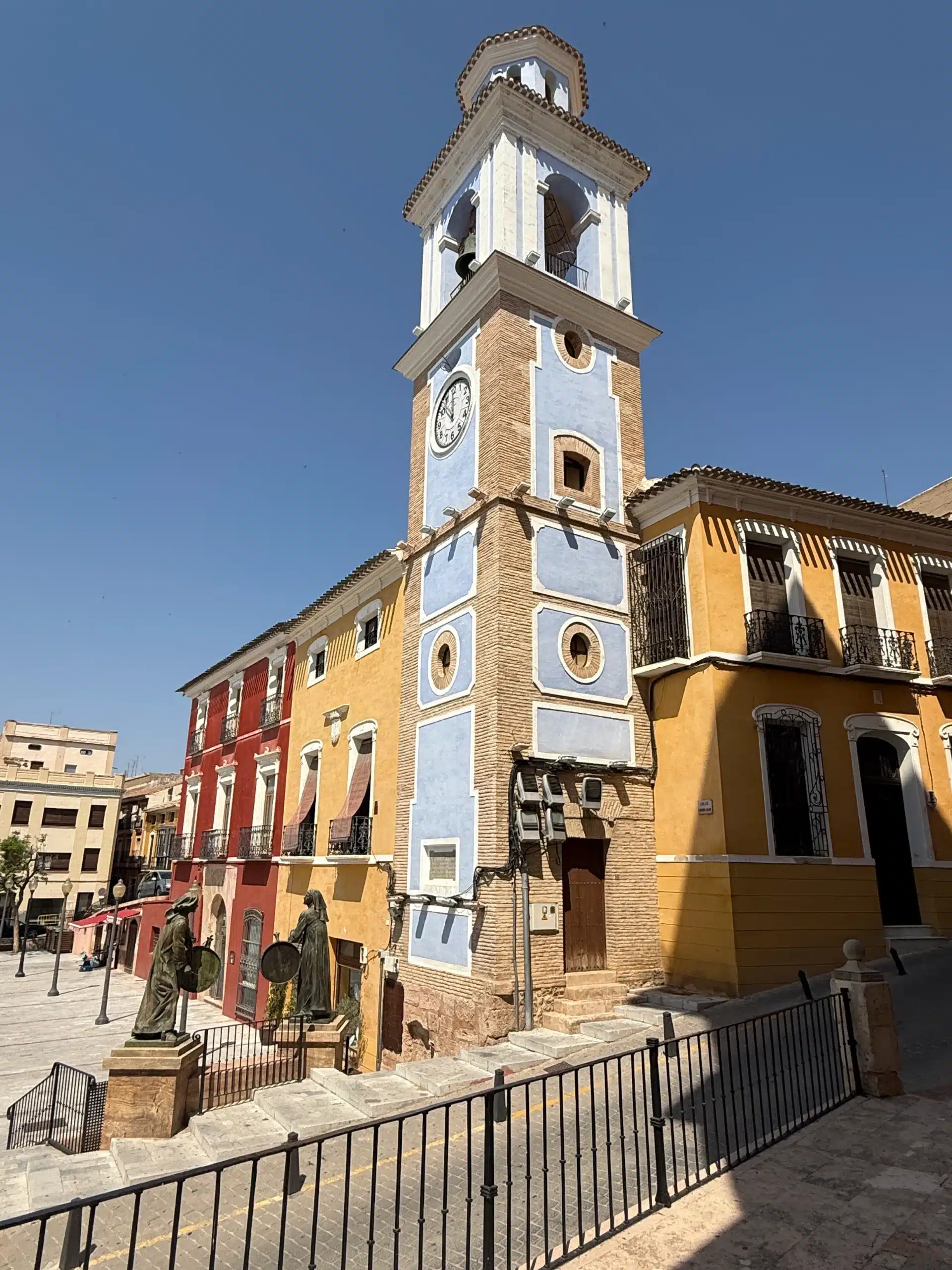
This civil heritage is completed by the Clock Tower, the Audience of the Marquis of Los Velez, as well as his palace, the Drummer Monument, and the numerous manor houses scattered throughout Mula’s old town, noble coats of arms, and much more.
In 2025, the Torre-Ermita Vieja in the district of La Puebla de Mula was opened to the public. It is a farmhouse tower built during the repopulation of the area, serving as a stronghold of management autonomy for the peasant community, in this case, the Moors. Later, the tower was used as a place of worship, which is why locals know it as the “Old Hermitage.” The transformation of the tower into a hermitage occurred after the expulsion of the Moors in 1613. Therefore, from the 17th century onwards, the tower took on the role of a hermitage dedicated to Our Lady of Solitude.


In Mula, history isn’t just sensed: it’s viewed up close, piece by piece, in its museums. An essential visit is the “El Cigarralejo” Museum of Iberian Art, considered one of the best exhibitions of Iberian art on the peninsula and an international reference for its study. In its rooms, more than 80 sets of grave goods from the nearby necropolis await you, a direct journey to the heart of that culture.
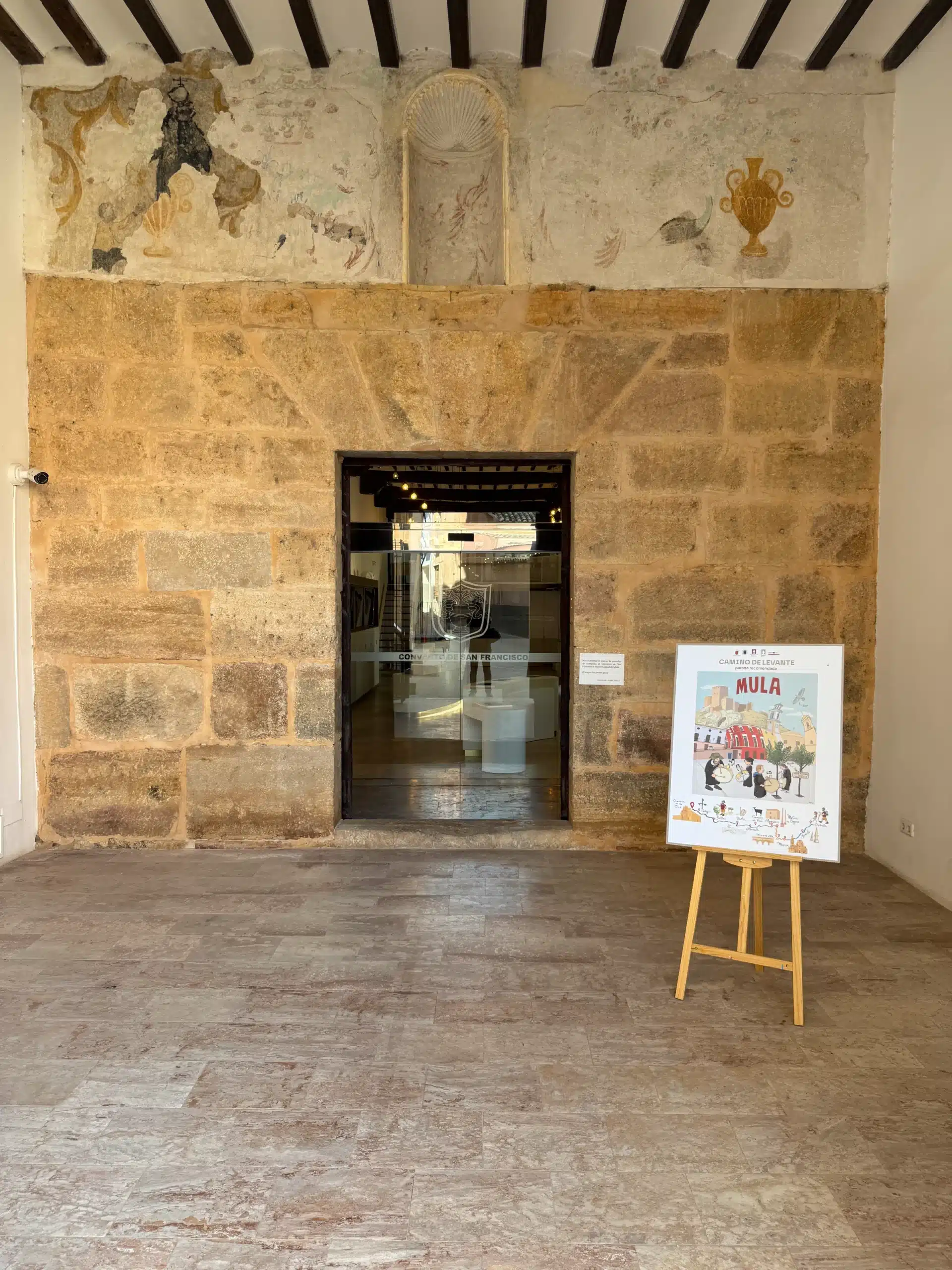
The Mula City Museum is a key space for sharing the history, archaeology, art, and traditions of the municipality. It houses the permanent exhibition “The Legacy of Mula in History”, which offers a chronological journey from Prehistory to the contemporary era through pieces exclusively from local sites. The Romanization room, with the imposing Visigothic sarcophagus, and the Algar room, with the fascinating princely tomb, highlighting the silver crown. And if modern art attracts you, the Cristóbal Gabarrón Museum is a must-see. Located in an elegant palatial house, it traces the career of the celebrated Mula artist with more than 150 pieces.
To go even further back in time, we suggest two fascinating places: the Roman Villa of Los Villaricos, a key site with remains of thermal areas and workspaces, and the Abrigo del Milano, where rock paintings over 6,000 years old await you.
The abundant agricultural production, shaped by the variety of products from the irrigated valley floors and the dryland fields sheltered by the mountains, has long provided the basis of sustenance in the region. Various restaurants, bars, and inns feature dishes cooked with the raw materials that have always been the fruit of these lands.
The richness of our gastronomy comes from a fertile land that gives us high-quality products. And when it comes to flavor, our vineyards are part of the Bullas Wine D.O.
We also invite you to discover our artisans, guardians of trades that are still very much alive: utilitarian pottery, esparto grass weaving, and blacksmithing. Among them all, there is a particularly exciting tradition: the making of the drums that resonate during Holy Week, a meticulous process that begins months in advance.
At the beginning of the year, the almond blossom transforms the municipality of Mula into a vast white blanket that contrasts with the green of the forest. This landscape, linked to the dryland crops of districts like Casas Nuevas and Fuente Librilla, depends directly on the season’s weather conditions. With the arrival of spring, the peach blossom in the fields of Yéchar takes over, tinting the landscape with intense magenta tones.
Sierra Espuña, located south of the Mula municipal area and shared with several municipalities, is one of the most important natural areas in the Region of Murcia. Declared a Regional Park in 1992, it stands out for its high biodiversity, varied terrain, and a climate that is colder and more humid than its surroundings, reaching 1,583 m in altitude. It is home to more than 200 animal species and over a thousand plant species, a result of the diversity of landscapes and altitudes. The reforestation carried out at the end of the 19th and beginning of the 20th centuries by Ricardo Codorniu is key to its current appearance. The mountains also feature an extensive network of marked trails.
In the area around the Mula River, you’ll find the thermal waters of the Baños de Mula, which emerge at 37°C thanks to a geological fault. Known since ancient times and declared medicinal in 1882, they gained great popularity at the beginning of the 20th century and continue to be an important heritage and tourist resource.
The municipality of Mula features a marked diversity of agricultural landscapes, dominated by dryland farming—with almond, vine, and cereal crops—and, to a lesser extent, by irrigated land in the valleys of the Mula and Pliego rivers. Unique spots like Fuente Caputa, the almond blossom, and the Mula orchards provide high scenic value.
This hydraulic system is completed by the La Cierva reservoir, built at the beginning of the 20th century and currently with a capacity of 7 hm³, fundamental for irrigation and agricultural supply in the municipality.

Accommodation
Businesses
Gastronomy
Places
Routes
Accommodation
Businesses
Gastronomy
Places
Routes
The document outlines a roadmap to boost the gastronomy, agri-food products, and wine heritage of Bullas, Calasparra, Caravaca de la Cruz, Cehegín, Moratalla, and Mula....

The Northwest Tourism Services Association continues to advance the modernization and digitalization of the tourism offerings in its member municipalities by acquiring...
La Mancomunidad de Servicios Turísticos del Noroeste de la Región de Murcia continúa avanzando en la transformación del modelo turístico del territorio con la...
PRESS RELEASE Boosting the tourism sector in Northwest Murcia through a business mentoring program funded by NextGenerationEU The Northwest Region of Murcia, under the...

The 8 March Women’s Centre Association in Mula held a commemorative event to mark its 25th anniversary, a day dedicated to recognising its history and the role it has...