A winding, narrow street, very typical of the town, distinguished by the display of flowerpots and flowers cared for by the residents themselves.
This is a place of legend. Benizar Castle stands on a huge crag overlooking the entire valley, serving as a lookout and guardian. It dates back to the Islamic period, specifically the 12th century, and due to its location it was a strategic, hard-to-reach point during the frontier era.
The Bolvonegro Gorge is a stunning river-carved gorge in Moratalla, renowned for its significant geological value and marine fossils. It offers an easy walking route through vertical rock faces, pools of water and riverside vegetation. It is a unique natural setting that combines scenic beauty and tranquillity in the heart of the Region of Murcia.
Folleto sobre el Sendero del Estrecho de Bolvonegro
The Los Molinicos site is one of the most important Iberian settlements in the Region of Murcia. Although most of the visible structures date from the Iberian period (which began in the 5th century BC), the hill witnessed several phases of occupation starting in the Neolithic.
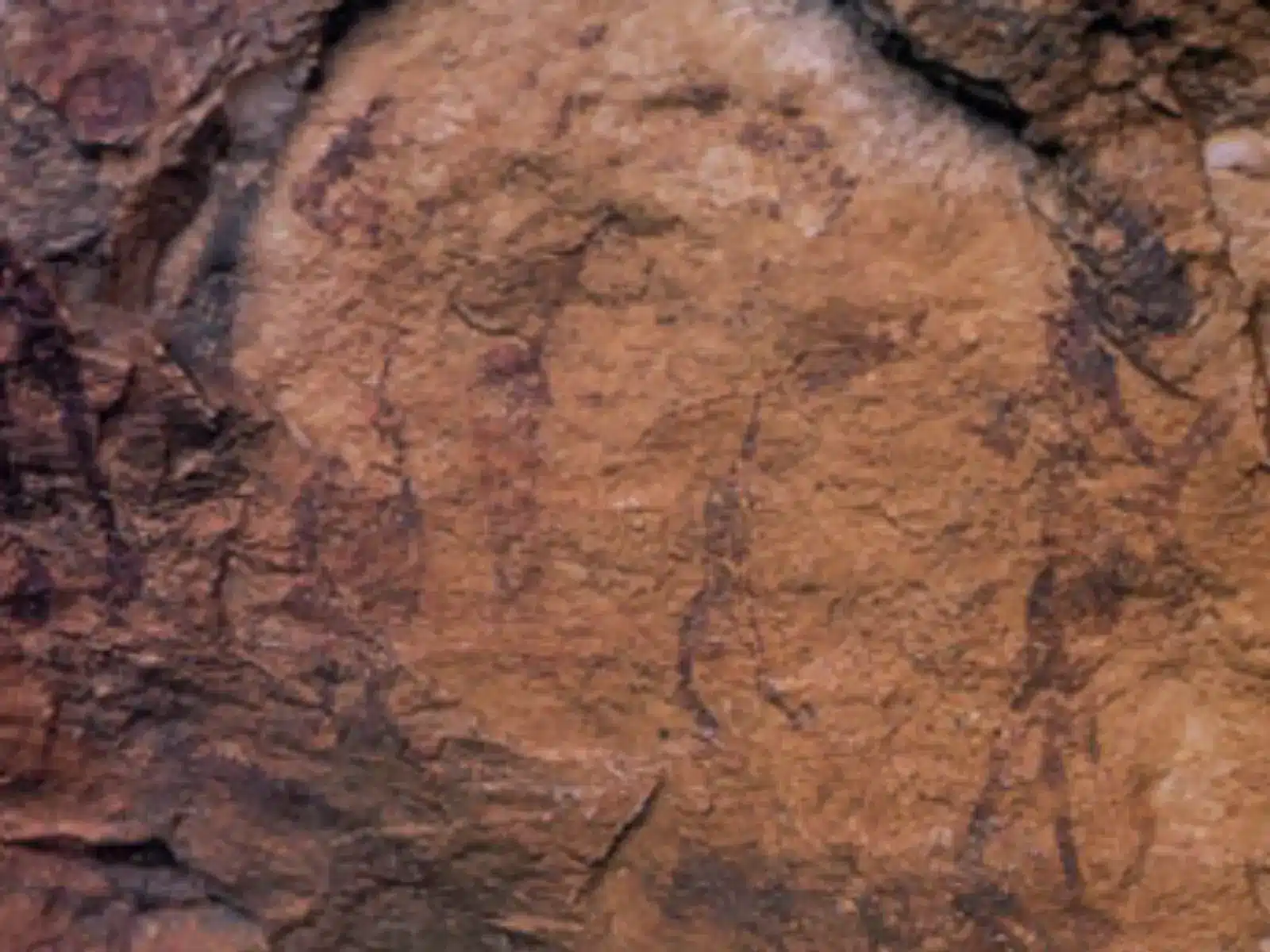
The rock paintings at La Cañaica del Calar, located in El Calar de la Santa, are situated in a landscape dominated by an extensive juniper forest and rock shelters that preserve valuable examples of prehistoric art. In Shelter II, more than forty figures have been identified, including quadrupeds, caprids and cervids, forming one of the most outstanding collections in the site. Declared a UNESCO World Heritage Site, a prior booking is required to visit them at the Casa de Cristo Rock Art Interpretation Centre.
This protected natural area, shared with the municipality of Calasparra, protects one of the best-preserved riverside forests in the Region of Murcia, along the upper course of the Segura River.
The Moratalla section is characterized by a more rugged and mountainous environment. The river narrows to form landscapes of great beauty, with a rich biodiversity that includes the otter as an iconic species. It is an exceptional spot for hiking, fishing, and observing flora and fauna in a highly ecological and well-preserved setting.
The Ermita de Santa Ana was built around 1614, following the foundation of its brotherhood in 1607. Later, between 1760 and 1796, the presbyter D. Joaquín Conejero directed and co-financed a major rebuilding that provided the temple with key elements such as the tower and the facade.
After being looted during the Civil War and losing its decoration, the hermitage was repaired. However, the constant humidity of the enclosure and the passage of time caused severe structural deterioration, forcing it to close for worship in 1988.
In 1994, a profound restoration began to consolidate it and adapt it to the Second Vatican Council. During the works, it was discovered that the humidity came from an underground spring, over which the new Tabernacle was placed, renewing the interior with murals and an Altar based on Hebrew numerology.
Church Square is the true heart of Moratalla's old town and the center of its social and religious life. This monumental space is dominated by the imposing Renaissance facade of the Church of Nuestra Señora de la Asunción.
It is a beautiful and harmonious square, surrounded by historic buildings and offering spectacular views of the valley. Some of the most important local festivals and traditions are celebrated here. Sitting on one of its benches allows you to enjoy the peaceful atmosphere and contemplate centuries of history reflected in the stone.

These are the main festivities in Moratalla, declared of Regional Tourist Interest, and represent one of the town's most iconic events. Held in honor of the Santísimo Cristo del Rayo, they commemorate the miracle that occurred in 1621, when a bolt of lightning struck the image of the crucified Christ without harming any of the faithful present. This historical event gave rise to a deeply rooted tradition, which today is experienced with intensity and pride.
Popularly known as the "fiestas de la vaca," they are famous for the spectacular nature of their traditional Encierros por Vereda (bull runs), which fill the streets with excitement, adrenaline, and a unique festive atmosphere. The celebration begins on June 15 with the feast of the Stmo. Cristo del Rayo, featuring a traditional "huertano" parade, floral offerings, and a religious service.
The festivities continue from July 11 to 17, a period during which Moratalla is completely transformed to host bull runs and celebrations integrated into a wide program of events that combine tradition, devotion, and community. Each year, locals and visitors come together to enjoy an experience that is an essential part of the municipality's cultural heritage.
The old hermitage of San Sebastián, built in the late 15th century and ceded to the Franciscan monks in 1574, underwent major expansions in subsequent centuries until a severe fire devastated the vast complex in 1833.
Its architecture stands out for its Baroque portal decorated with colored jasper and its tower. Today, only the foot of the nave, the tower, and the upper choir—which has been rehabilitated as an Exhibition Room—survive from the old temple.
Fuente del Sabuco is a rock art site where the paintings are well preserved. In Shelter I, more than 70 figures have been identified, including archers, quadrupeds, and male and female human figures.
Holy Week in Moratalla is experienced in a unique way, being the most diverse, free, and distinct. Here, the main star is the Drum, a tradition that turns the sound of drumming into the city's soundtrack during Maundy Thursday, Good Friday, and Easter Sunday, from very early in the morning until dusk. And for good reason—this celebration is a source of pride for the municipality, recognized as Intangible Cultural Heritage of Humanity by UNESCO and a Festival of Regional Tourist Interest.
There’s also room for the majestic processions held year after year with great passion, including: Cristo de la Sangre, El Prendimiento, Silencio, Santo Entierro, and the act of Jesucristo Aparecido, patron saint of the town, accompanied by the drums.
The keep of Moratalla Castle, built by the Military Order of Santiago in the 15th century, is the dominant feature of the town’s skyline. Standing 22 metres high and 9 metres wide, this jewel of Levantine military Gothic architecture rises as a mighty defensive tower overlooking the entire Moratalla region. Its imposing presence, visible from every point in the valley, makes the castle a symbol of identity and an essential visit for anyone wishing to discover the history and strength that have shaped these lands.
The La Puerta Natural Area is one of the most idyllic and popular spots in Moratalla, especially during the summer. It is centered around the Alhárabe River, where clean, cool waters create natural pools perfect for swimming.
The area is surrounded by lush riverside vegetation and rock formations that create a stunning landscape. It features camping areas, picnic spots, and restaurants, making it an ideal place to spend a day with family or friends, enjoying nature at its purest.
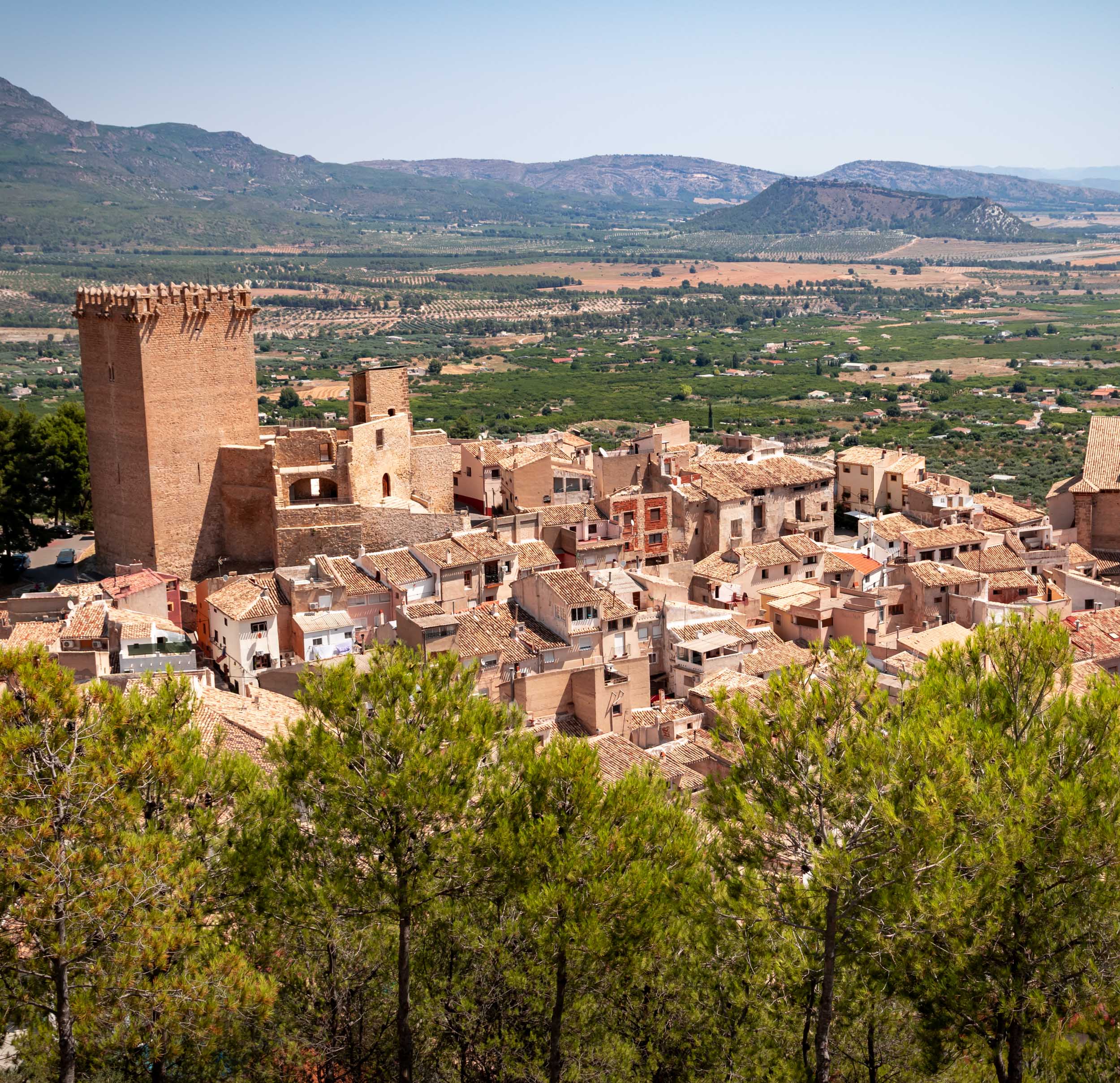
The Mirador de Las Torres, located in the upper part of the old town, offers one of the most impressive and comprehensive panoramic views of Moratalla and its surroundings.
From this point, you can enjoy a 360-degree view that encompasses the labyrinth of the town's rooftops, the silhouette of the Castle Fortress, and the vast mountain ranges that make up the municipality. Its name refers to the medieval watchtowers that once existed in the area. It is a perfect spot to understand the territory's topography and to take spectacular photographs, especially at sunset.
The castle is likely one of the most fundamental and recognizable elements of Moratalla's history. The original structure was built in the 9th century over Neolithic and Iberian remains, and was later rebuilt by the Order of Santiago in the 15th century. Five towers completed the walled enclosure, in addition to the Keep: Redonda, Blanca, La Magdalena, Quebrada (or de los Limones), and Los Cuatro Vientos.
The old town of Moratalla, declared a Historic-Artistic Site, is an evocative labyrinth of steep, winding streets of medieval and Islamic heritage.
Taking an urban route is the best way to discover its essence. The tour will take you through its main monuments, such as the Church of the Assumption and the Fortress Castle. You will also discover manor houses with coats of arms, charming squares like the Church Square, and museums that tell the story of its most deep-rooted traditions. Getting lost in its streets is a true journey back in time, full of corners to photograph.
This museum features a permanent exhibition where visitors can learn in detail about two of Moratalla's most representative festivals: the Holy Week Drums and the Running of the Bulls of Cristo del Rayo.
A small building already existed prior to 1468; this was extended in the 16th century to become a monumental structure with a basilica-style layout, vaulted over enormous Tuscan columns. It is striking that the work remained unfinished in the choir area, a unique feature of its architecture. It is the town’s principal historic church, a 16th-century building that combines Gothic and Renaissance elements. Located in the heart of the old town, it stands out for its solid bell tower and its spacious, light-filled interior, where the ribbed vault and rich religious imagery enhance its artistic and devotional value. It is one of the most emblematic buildings in Moratalaz’s heritage and a spiritual and cultural landmark of the town.
Perched on the slopes of San Jorge Hill and overlooking Moratalla's historic quarter, this viewpoint is an open space offering a privileged perspective of the entire town.
Also known as Sierra Seca, it is the highest point in the Region of Murcia and one of Moratalla’s most iconic landscapes. With its highest peak at Los Obispos (2,014 m), it is notable for its karstic terrain, its vast high-altitude plains and the presence of pine forests, holm oaks and wildlife such as vultures, golden eagles and mountain goats. Located at the western edge of the municipality, near Inazares, Cañada de la Cruz and Los Odres, it is an ideal spot for hiking and for enjoying the snow in winter.
Folleto sobre El Sendero Pico del ObispoMoratalla has the highest concentration of Levantine and Schematic Rock Art in the Region of Murcia, declared a UNESCO World Heritage Site.
The Rock Art Interpretation Center "Casa de Cristo" is the starting point for understanding this legacy. Through replicas and panels, it explains the importance of the area's rock shelters (such as those at Cañaica del Calar or Fuente del Sabuco). Visits to the original shelters are usually restricted and must be arranged through the Tourist Office to ensure their preservation.

Moratalla is home to two sanctuaries of great devotion and unique natural beauty, linked to its patron saints and deeply rooted in local tradition.
Just 7 km from the town center is the Casa de Cristo, a 17th-century sanctuary in popular Baroque style, whose origin is related to the appearance of Christ to the shepherd Rui Sánchez in 1493. The restored complex includes the church, hostel, and dining areas, and houses the Rock Art Interpretation Center, dedicated to showcasing paintings declared a World Heritage Site.
In a more remote setting surrounded by nature lies the Sanctuary of La Rogativa. Its chapel, built between the 16th and 17th centuries, has been a pilgrimage destination for over four hundred years. Its location between the Revolcadores Massif and Peña Jarota offers a landscape that captivates every visitor.
The Romerías (pilgrimages) are the great festive and devotional link between both sanctuaries. Every first Sunday of May, a pilgrimage is held in honor of Jesucristo Aparecido, where the Patronato and hundreds of pilgrims carry the patron saints from the Parish Church of Ntra. Sra. de la Asunción to the Casa de Cristo. The festival dedicated to the Virgen de la Rogativa takes place on the last Sunday of May.
Each day, a section of the route is covered, reaching the hamlet where the image will stay overnight and where the locals organize a welcome celebration. Especially distinctive are the pilgrims’ dance to the rhythm of the Cuadrillas de Animeros and the traditional bidding for the honor of carrying the platform.
The Somogil area is a beautiful natural enclave, located near the Barranco de Hondares, a zone of special conservation and high ecological value. Here you’ll find two truly incredible natural water pools. One of them is of thermal origin, with lukewarm water that tends to feel cool. Nowadays, it’s a true haven of peace, ideal for relaxing.
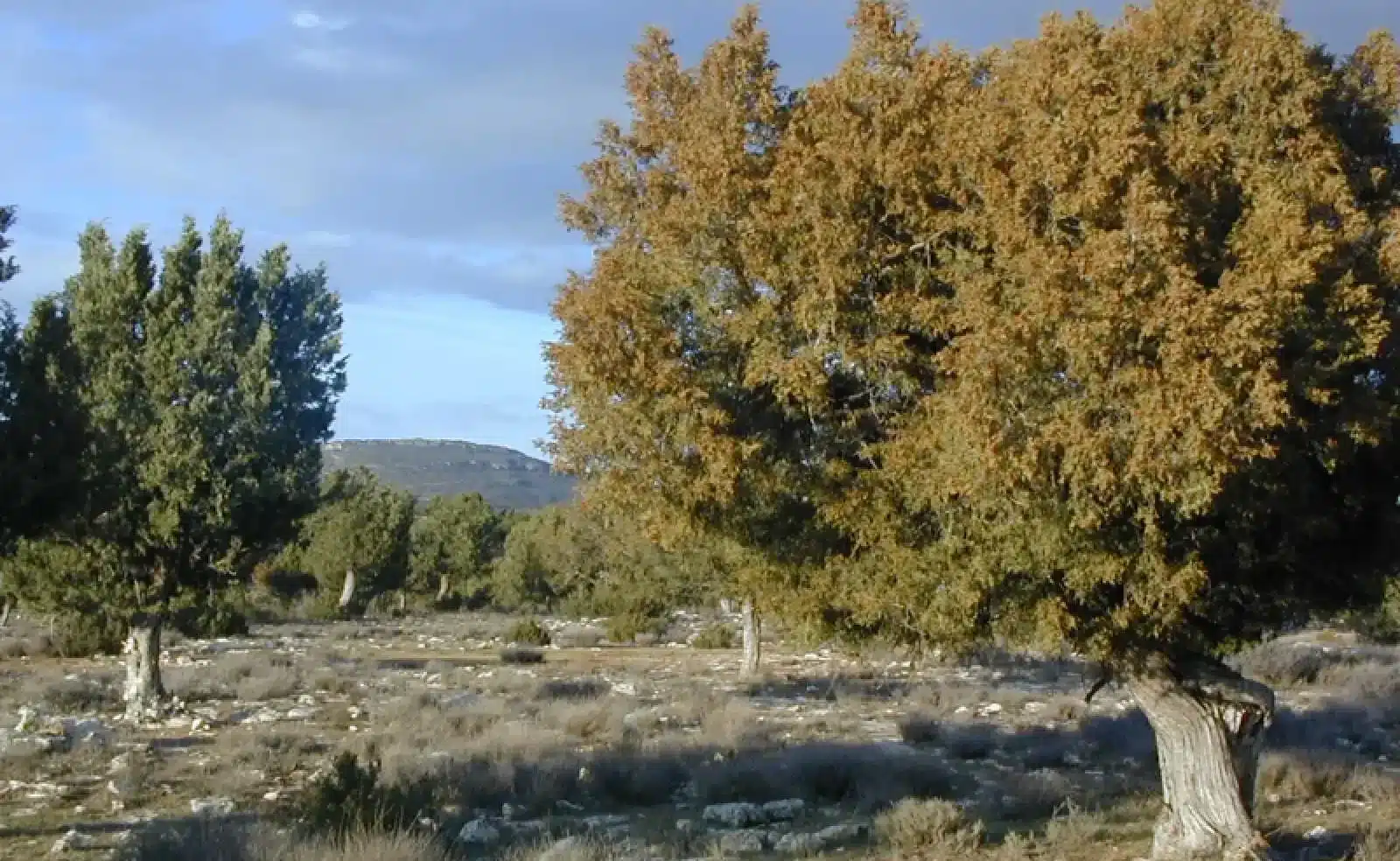
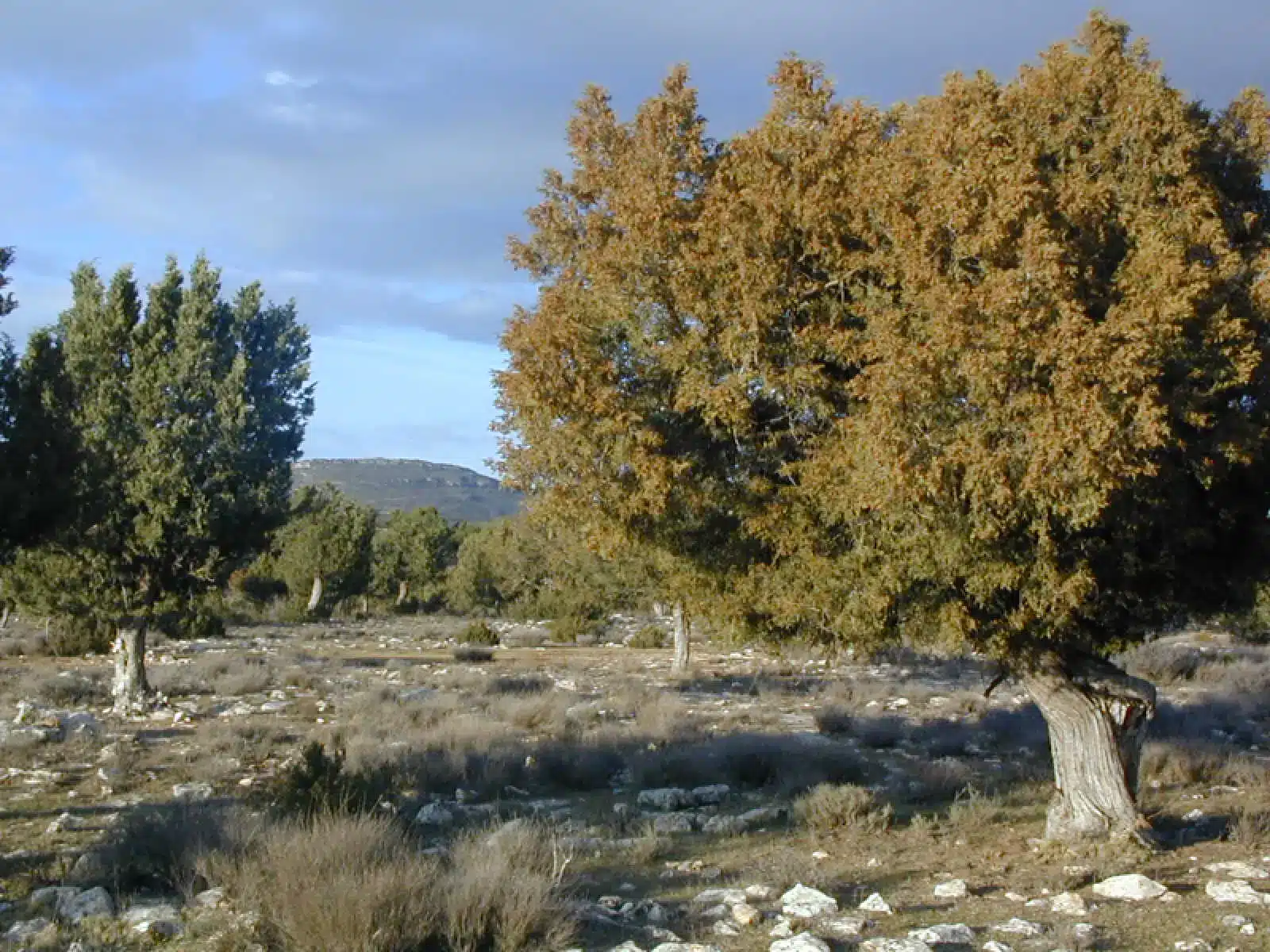
The Moratalla White Juniper Forest is one of the most unique natural landscapes in the high-altitude districts of El Sabinar and El Calar de la Santa. In these mountains, centuries-old junipers survive, with twisted trunks and a majestic bearing, forming an ancient forest inherited from colder eras and unique to the Region of Murcia. The Spanish juniper (Juniperus thurifera), a protected species, is a tree with a dense, conical crown and highly distinctive aromatic wood. Some of the finest centuries-old specimens are preserved in these areas, true natural monuments that lend character to the landscape. Amidst rocky outcrops, silent slopes and pure mountain air, visitors discover an environment of great ecological value, where black pine, juniper and wildlife perfectly adapted to the altitude coexist. To walk through this juniper forest is to enter an ancient, authentic and vibrant woodland that preserves the natural essence of Moratalla intact.
The Trieta Theater is one of the most representative examples of civil architecture in Moratalla, built in 1917. It features modernist finishes and currently hosts most of the cultural events that take place annually in the town.

These projects have turned Moratalla into a benchmark for lavender cultivation in the Region of Murcia. "Territorio Lavanda" and "Lalavand" are agrotourism initiatives that allow visitors to immerse themselves in a spectacular landscape, especially during the blooming season (June and July).
They offer guided tours of the deep purple fields with their intoxicating aroma, where the cultivation and distillation processes are explained. They also have shops where you can buy artisanal products such as essential oils, soaps, or cosmetics. An unforgettable sensory and visual experience.
Walking and cycling routes and guided tours through the lavender fields:
- Cicloracices, cycling and hiking routes adapted to all levels and abilities. Custom routes, leisurely rides, family routes, sports routes, and bicycle rental.
Information and reservations: Phone 613076420. Instagram: @cicloraices
- España en Floración, visits through the lavender fields.
Information and reservations: https://floracion.es/contacto
- Guide, farmer, and representative of the Northwest Aromatic Association, offering routes and tours through the aromatic plant fields of the high districts of Moratalla.
Information and bookings: 664453221
The Encierros del Cristo del Rayo are the centerpiece of Moratalla's main festivities. Their main feature, unique in Spain, is that the fighting bulls are led along mountain paths and trails by riders on horseback until they reach the town.
From July 11 to 17, one of these bull runs is held every day, followed by the release of the cattle through the streets of the old town. It is a festival declared of Regional Tourist Interest, combining the excitement of the bullfighting event with livestock tradition and the spectacular landscape of the Moratalla mountains.