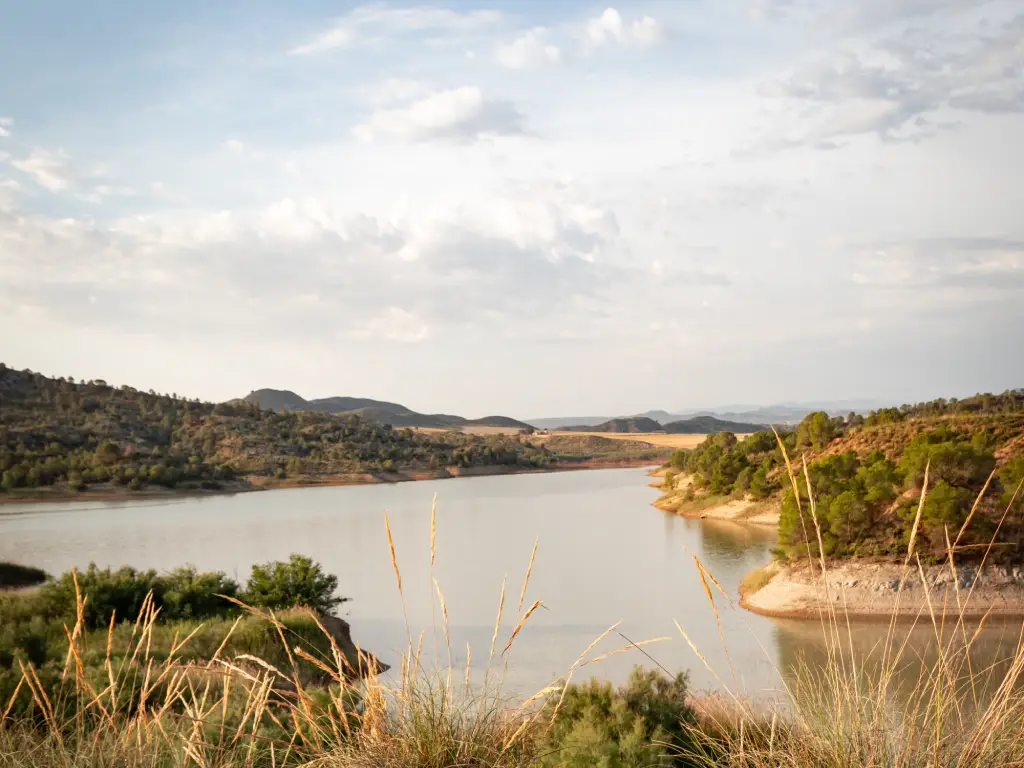
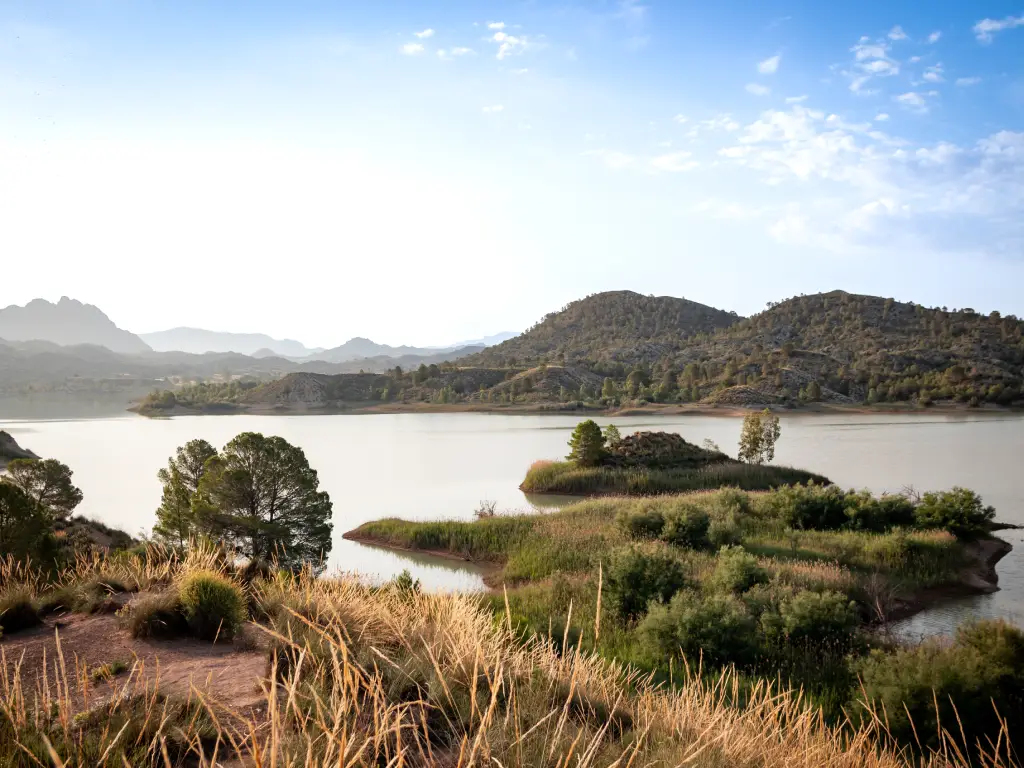
It can be considered one of the most important inland wetlands in the Region of Murcia, as it is home to a large number of waterbirds that live among the reservoir’s vegetation. Very close by, the La Ramona Salt Flats, a highly saline wetland, date back to Roman times. Both the reservoir and the surrounding area are designated as LIC and ZEPA.
A natural area carved by the Segura River featuring vertical walls that reach 150 meters at some points. It preserves valuable remnants of riverside forest and serves as a refuge for species such as the eagle owl, short-toed snake eagle, and otter. It is a place of singular beauty ideal for river walks by boat or kayak and where the Rock Art Shelters or Abrigos del Pozo are located.
The Calasparra Archaeological Museum, located in the historic 18th-century Casa Granero, a former Commandery of the Order of St. John of Jerusalem, offers a journey through the municipality's history from the Paleolithic era to 13th-century Muslim Calasparra. Its nearly 700 pieces include significant Islamic finds from the Villa Vieja site, as well as a rich collection of fossils and minerals that complete the look into the territory's past.
This geological site features an outcrop of lamproite rocks, making it one of the most representative lipolite-type volcanic chimneys. It is accessible via a trail with a viewpoint and interpretive panels.
Calasparra's Holy Week is one of the municipality's most deeply rooted celebrations. It is characterized by its highly visual nature and by the processions that depict the most significant scenes of the Passion, Death, and Resurrection.
One of its most unique moments is Holy Wednesday, with the commemoration of the Arrest of Jesus in the Parque de los Olivos. This event has been declared of Regional Tourist Interest.

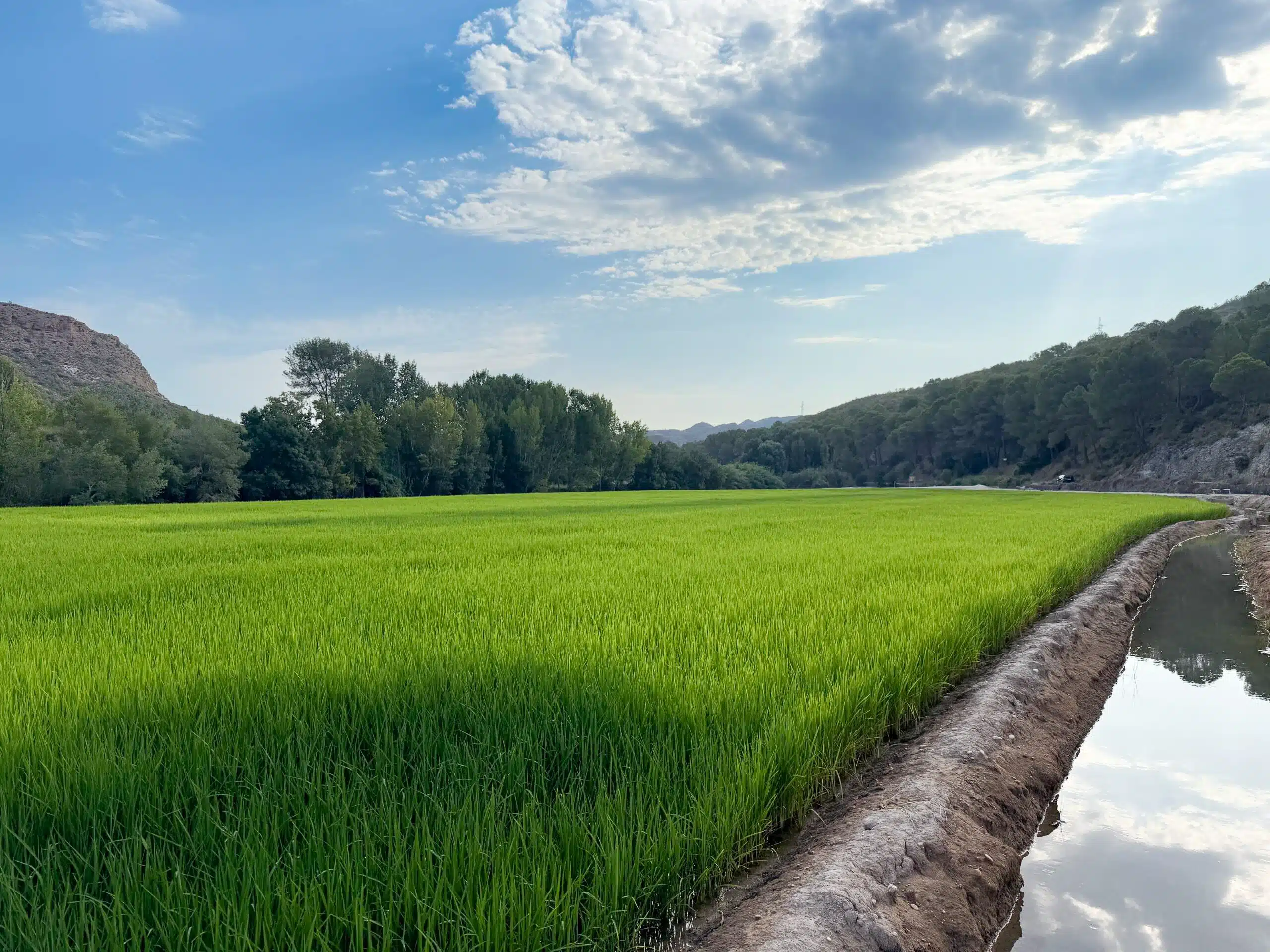
The quality of its varieties is known worldwide. It’s Spain’s first rice with a Designation of Origin. Its cultivation is unique, as it isn’t grown in stagnant water, but in clean, cold water that flows continuously, giving the grain a high level of quality.
The Calasparra Rice Growing Area, located in a very mountainous and sunny area, is made up of lands irrigated by the Segura River and its tributary, the Mundo River, as they pass through the municipalities of Calasparra, Moratalla, and Hellín.
Its ecological environment is clearly different from other rice-growing areas, as it is cultivated in a very mountainous and sunny area, located in the Northwest of the Region.
The quality and prestige of these rice varieties are due to the climate, the coldness and purity of their waters, the inclination of the plots which allows for drainage, preventing water stagnation, the crop rotation, and the use of selected seeds.
Its quality characteristics are reflected in its flavour and firmness. It has dehydrated grains that absorb more water during cooking, swelling more than other rices. And when you click, it gives you more information.
Calasparra Town Hall, known as the Casa Consistorial, is located in a historic building in Plaza de la Corredera. The original building stands out for its sober and functional architecture, presiding over one side of the town's most important square. As the administrative center of the municipality, it is where decisions governing local life are made. Its privileged location makes it a landmark in the daily life of Calasparra's residents.
A natural reserve that exemplifies sustainable development, combining the conservation of endangered species like the otter and the Mediterranean pond turtle, with the traditional cultivation of Calasparra Rice and pilgrimages to the Sanctuary of La Esperanza.
A neoclassical-inspired building completed in 1808. Today it houses the Municipal Tourist Office and the Town Museum, which includes the Rice Museum, the Archaeological Museum and the Emilio Pérez Piñero Foundation. It also includes an exhibition and trades room.
A small church built in the 16th century and dedicated to the Holy Martyrs Abdón and Senén, patron saints of the town. Its square offers one of the best views of the rice-growing plain and the surrounding hills.
The Calasparra Clock Tower, right on Calle Mayor, is one of the town center's icons and an essential stop on any walk through the heart of town. The first known documentary mention appears in a chapter record from 1609, although its current appearance is due to the new construction from 1905.
Plaza de la Corredera is the heart of social and cultural life in Calasparra. This large, arcaded space is the setting for the town's main events, markets, and festivals. In the center of the square stands the iconic Fuente de la Corredera, a monumental 18th-century fountain representing the Segura and Mundo rivers.
The fountain is not just an ornamental feature, but also a symbol of the importance of water in a land defined by its rice fields. Surrounded by historic buildings like the Convento de la Merced, it is the ultimate meeting point.
Known as the “Jewel of Underground Tourism”, it’s the cave with the longest horizontal route in the region, with nearly 5 km mapped. It is the only one in the Region of Murcia adapted for tourist visits.
It offers an 800-meter illuminated and acoustically enhanced tourist route, and stands out for its Luminous Mineral Room, unique inside a cave in Europe.
Located in the Celadilla area, it dates back to the 16th century. It belonged to the Counts of the Valle de San Juan and is one of the clearest examples of Renaissance civil architecture in Calasparra. It currently houses the Municipal Historical Archive and was declared a Site of Cultural Interest (BIC) in 1983.
The Emilio Pérez Piñero Foundation aims to promote and showcase the work of this distinguished architect from Calasparra. Established through the initiative of his family and the Calasparra Town Council, the foundation fosters cultural, artistic, and professional activities linked to his legacy, introducing his figure to new generations.
Festivals celebrated in honor of the Virgin of Hope, Patron Saint of Calasparra.
The main event is the traditional Pilgrimage to the Sanctuary, held on the night of September 7 to 8, and has been declared of Regional Tourist Interest.
During these festivities, the Rice Bullfighting Fair takes place, featuring young bull fights and traditional bull runs held during the first week of September, from the 3rd to the 8th.
Situated near Calasparra Castle, this outdoor space is part of the Old Town Route. It offers wonderful views of the town and its rice fields, and hosts evening concerts during the summer.
Built in the 14th century, it has served various historical purposes: it was an inn and granary for the Order of Saint John of Jerusalem, and was part of the Commander's Palace-Houses complex.
Today, it houses the Municipal School of Music.
Known as the "Balcony to the Rice Fields." From this viewpoint, you can take in the richness of this natural environment on the banks of the Segura, where you can see the rice paddies and the Segura River.
It's the best way to understand the importance of the Segura's upper valley and is especially stunning at sunset.
The Monument to Esparto Grass represents part of the area’s history and tradition of artisan trades. Working with esparto grass has always been deeply rooted in people’s lives, and this is a tribute to a craft that, fortunately, some still keep alive.
The Monument to the Rice Farmer pays tribute to the farmers dedicated to rice cultivation. This sculptural fountain symbolizes Calasparra's pride in a trade linked to its history and the renowned quality of its rice.
The church and the remains of the Convent of La Merced in Calasparra were founded in the early 17th century (around 1625) on the site of an old hermitage, standing out as an important historic landmark in the town centre. Although it was severely damaged and looted after the Peninsular War in 1812, the site retains its historical value, including the figure of a Crucified Christ by sculptor Juan Manuel Miñarro López.
Located in the old town, it is one of the most important monuments in Calasparra. It is a clear example of the typical buildings of the regional Murcian Baroque style and dates back to the 17th century.
Held in the last week of July in honour of the patron saints of farmers. It’s customary to get together in groups to prepare and enjoy the typical migas ruleras and glasses of cuerva.
The Calasparra Rice Museum, located in the old granary of the Villa Museum, pays tribute to the region's rice-growing tradition. Across its two floors, it showcases the landscape and rice cultivation process on one hand, and historical machinery, traditional tools, and ancient documents on the other, reflecting centuries of the bond between Calasparra and its rice.
Inscribed on the UNESCO World Heritage list, the paintings of Abrigo del Pozo, located in the Almadenes Canyon, date back to the Eneolithic (around 7,000 BC) and belong to what is known as schematic art. Excavations have documented human presence at the site for at least ten thousand years.
Located on the San José hill. From the Islamic period, we preserve a cistern upon which what we see today was built, dating from the 14th century. In 1289, it was donated to the Order of the Hospital of Saint John of Jerusalem.
It is the quintessential magical place of devotion and probably the main religious attraction Calasparra offers. This 17th-century temple was carved into the rock next to the Segura River and houses the images of La Pequeñica and La Grande. It is located in a natural setting of extraordinary beauty that is part of the Cañaverosa Natural Reserve.
Information:
- Foundation: 968 72 00 54
- Sacristy and refuge: 968 74 54 62
- Gift shop: 968 72 01 26
- Restaurant: 968 72 04 12
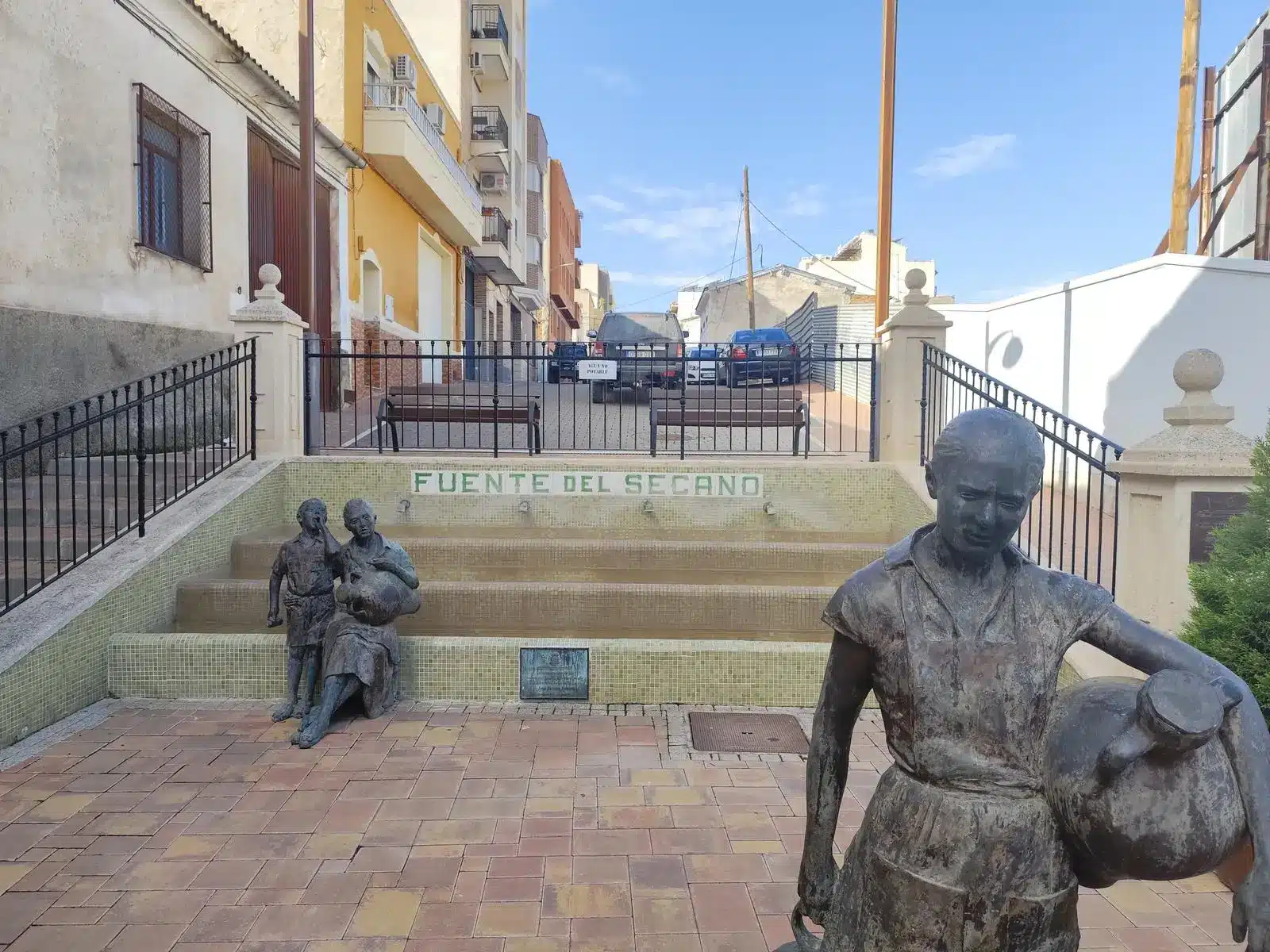
The Fuente del Secano is one of Calasparra's most popular fountains, once used by residents to supply water for their homes. Today it has been restored, recovering its appearance and traditional function as a meeting point and water source.
Located in the Casa Granero building, you can visit the Rice Museum, the Archaeological Museum, and the Emilio Pérez Piñero Foundation. It also features various exhibition spaces, such as the ethnographic room, the trades room, and an exhibition and conference hall.
A medieval abandoned settlement that was one of the most important farmsteads in the Cora of Tudmir. Today you can visit the excavated ruins and the Interpretation Centre, which includes a recreation of an Islamic home.