This monument, located at one of the main roundabouts leading into Cehegín, is a heartfelt tribute to one of the most traditional and important artisan trades in the town's history: the hemp and espadrille industry.
The sculpture depicts an "espadrille maker" at work, recalling a not-so-distant past when this activity was the economic engine for thousands of families in Cehegín. It is a symbol of local identity, hard work, and the ingenuity of its people, welcoming visitors while honoring the town's industrial and artisan roots.
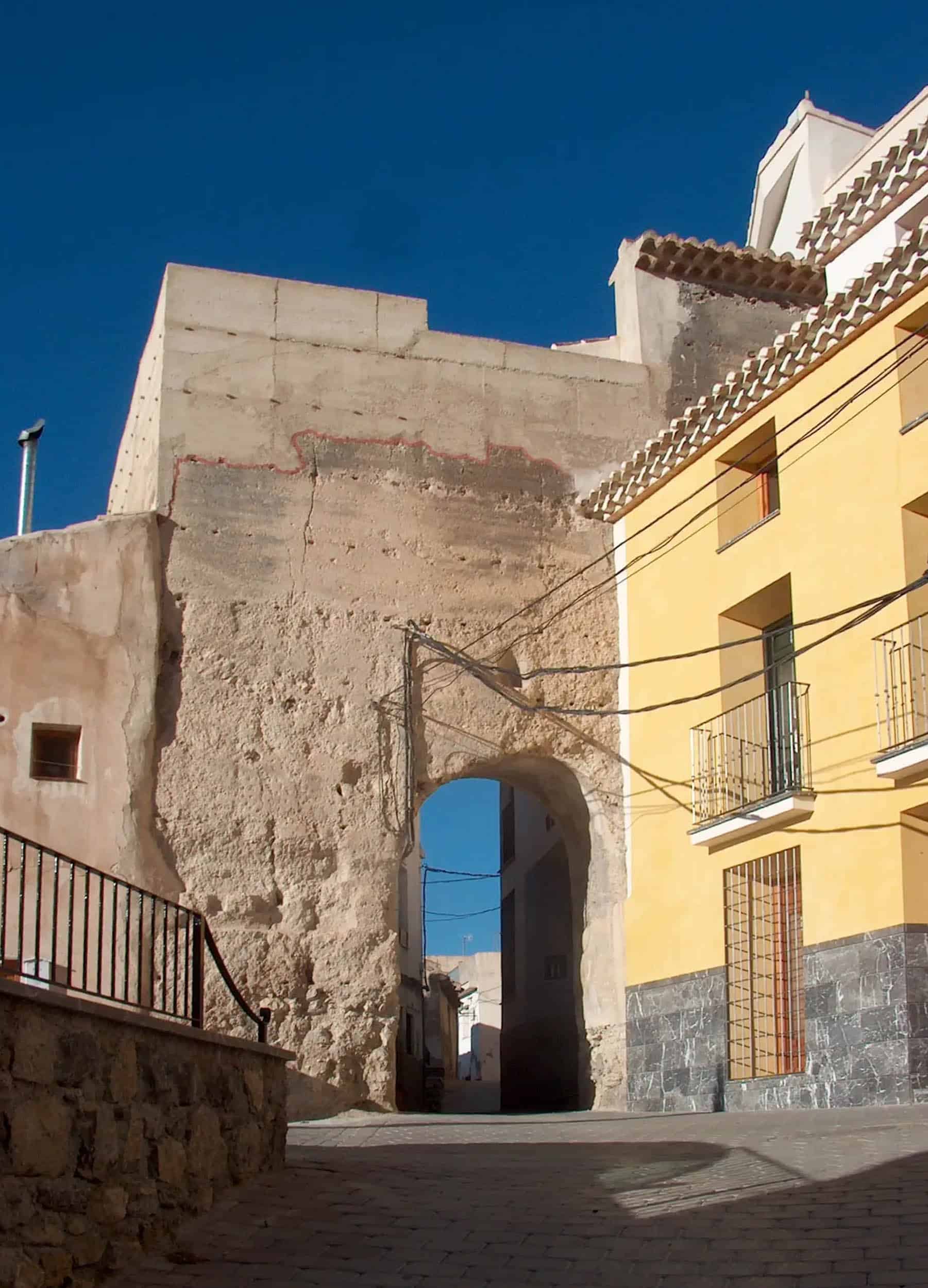
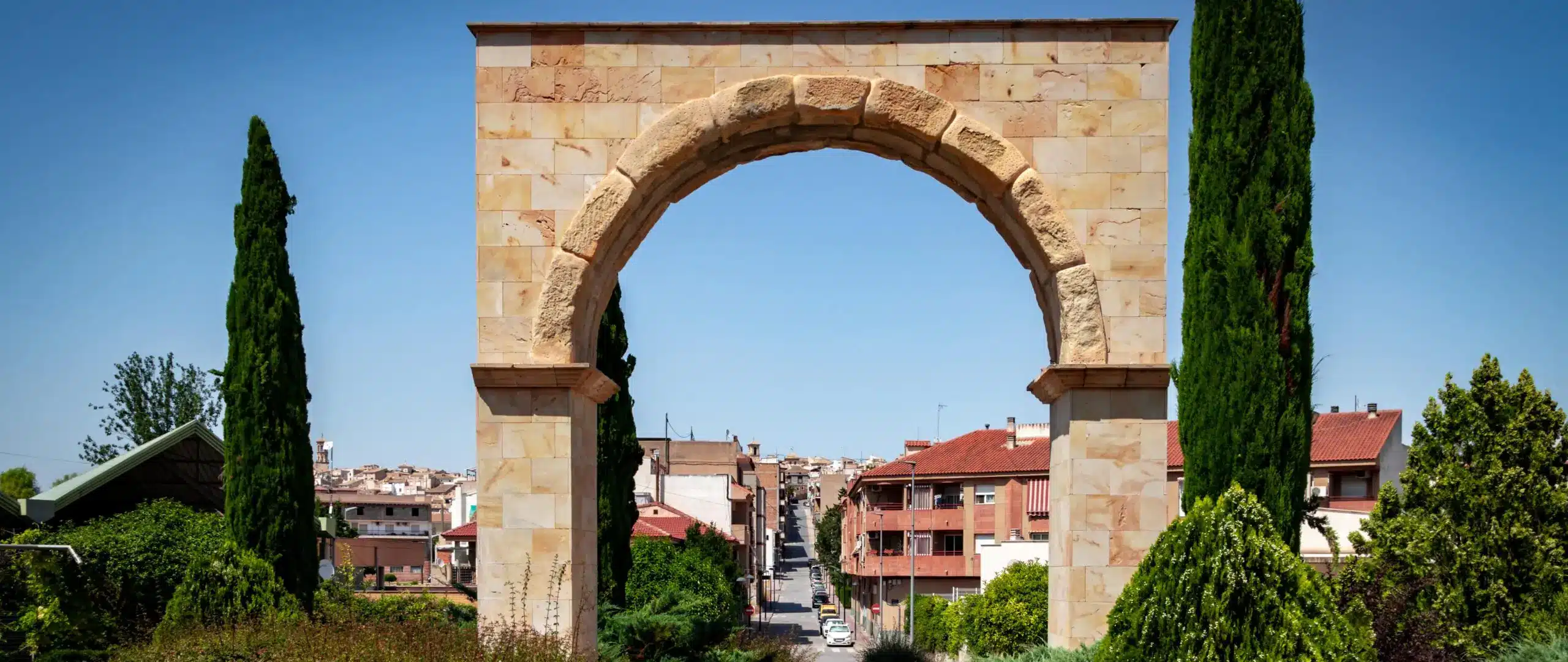
Although it is popularly known as the "Roman Arch," this structure is actually one of the gates of the old medieval wall that surrounded the town in the 15th century. Known as the Canara Gate, it was one of the main entrances to the walled enclosure.
Located in the heart of the old town, this semicircular arch framed by stone blocks is an evocative vestige of Cehegín's defensive past. Walking through it is like symbolically entering the historic city—a small but significant monument that connects directly with the town's medieval past.
Just 3 kilometers from the town center, Begastri is one of the most important Late Roman and Visigothic archaeological sites in the country. Begastri reached its peak when it became an episcopal see during the Visigothic era (until the 8th century AD). It housed a large Basilica that guarded the Monogrammatic Cross of Cehegín, today a symbol of the city.
After its abandonment in the 8th century, the acropolis was converted into farmland.
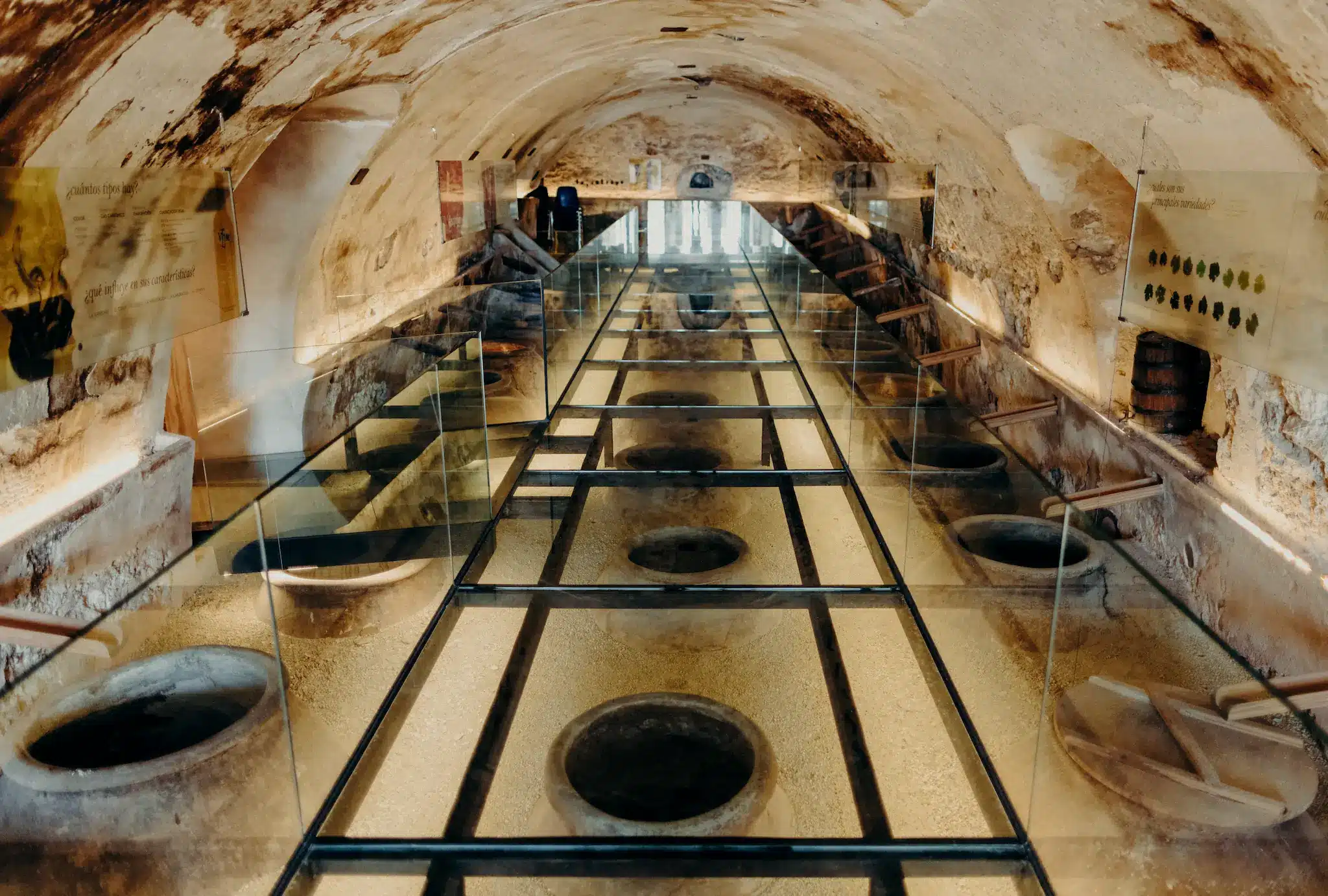
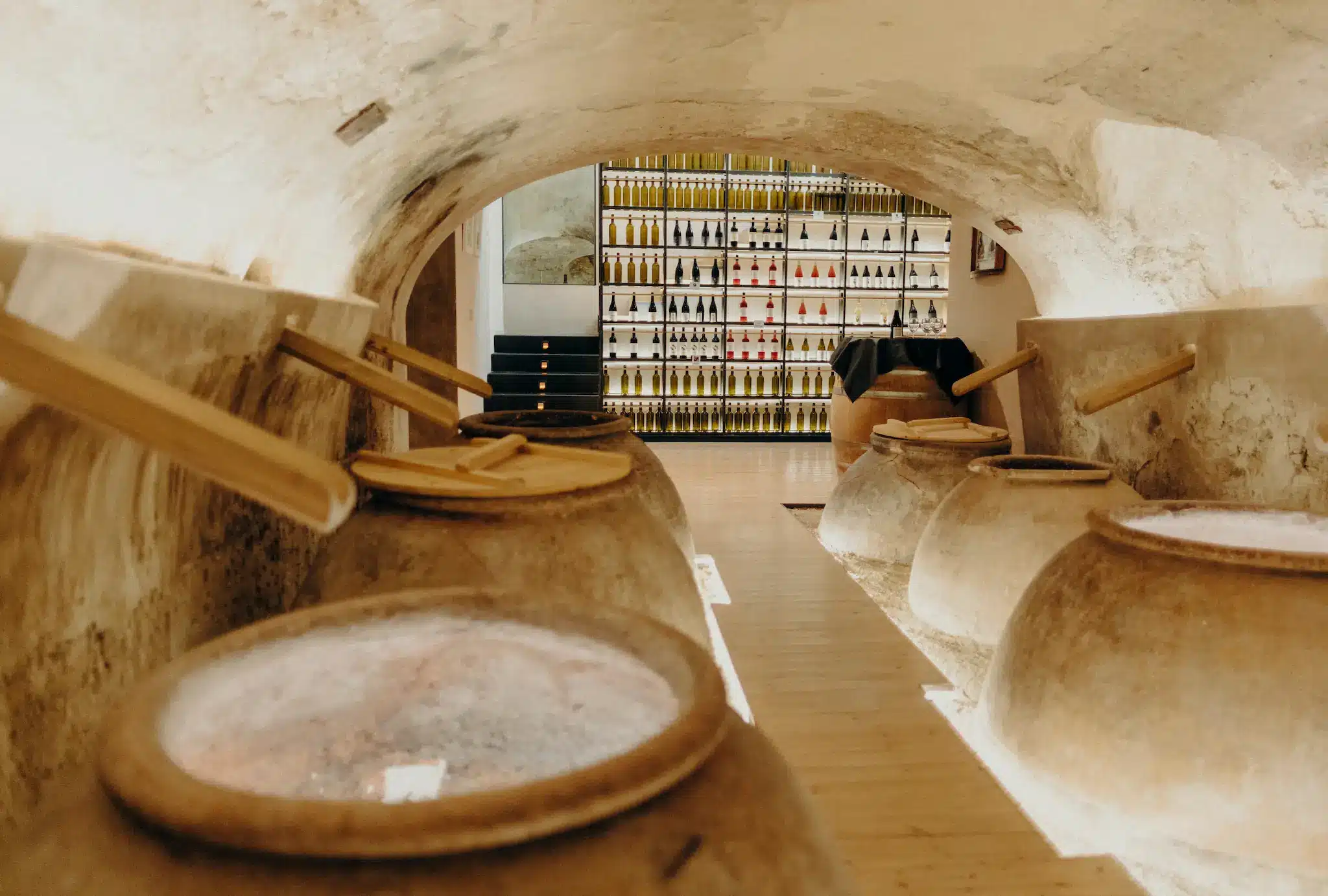
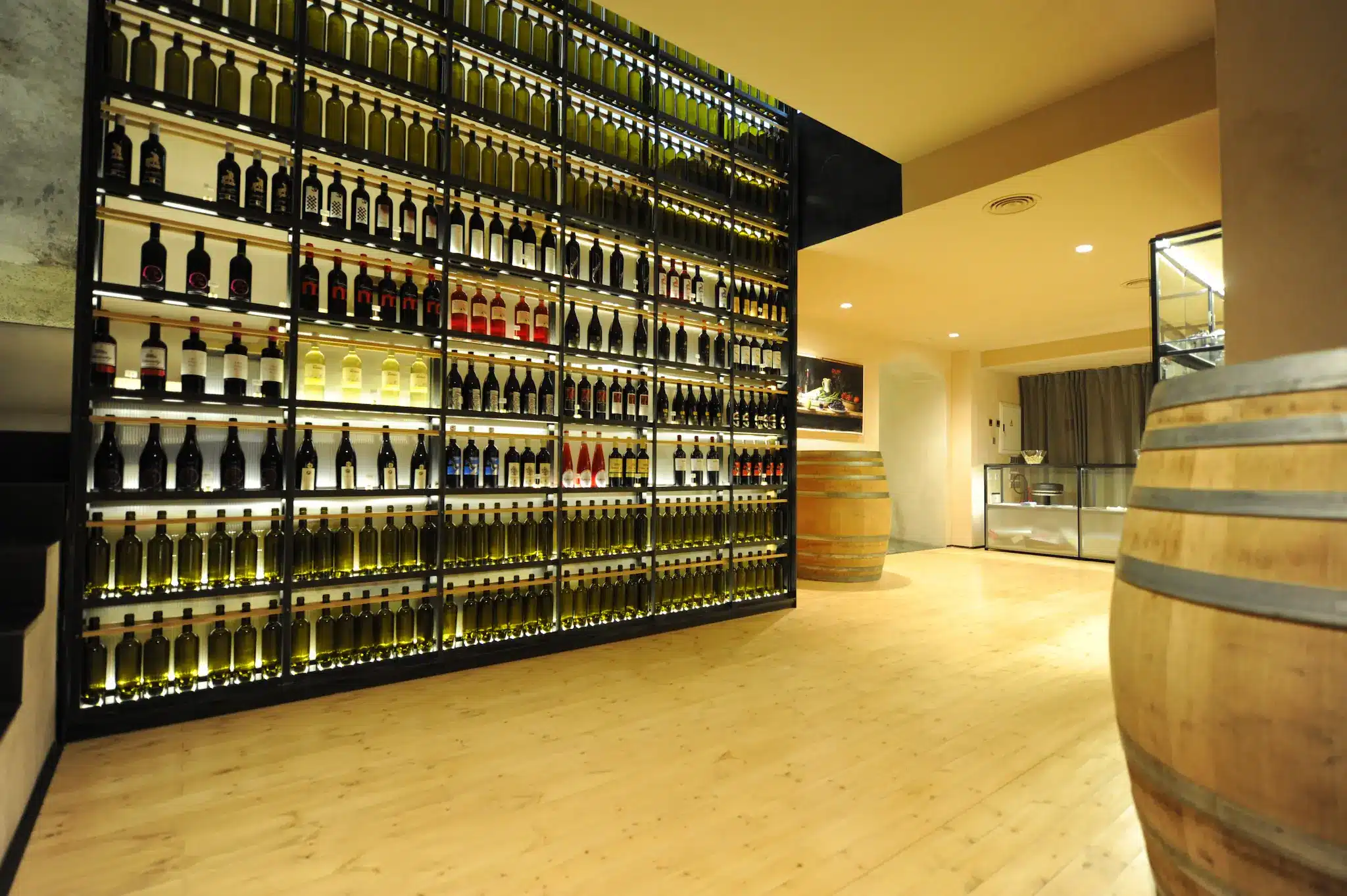
A Baroque building built in the 17th century to house the administrative offices and storage for the income generated by the Order of Santiago in Cehegín. It has an enormous wine cellar. Today, this cellar has been restored to host the Wine School, a training and cultural centre.
It is a three-story neoclassical building with 19th-century artistic elements. The title of Count of Campillos is linked to major charitable works in the town, such as the restoration of the Hermitage of the Conception and support for the creation of the Hospital of the Royal Mercy.
Construction began in 1890 and it was inaugurated on September 14, 1901 with a charity bullfight. Since 1936 it has belonged to the Town Hall, and it stands out for an unusual feature: you access the stands at street level, without stairs, thanks to the excavation carried out in the hillside where it sits. Throughout its history it has welcomed figures such as El Gallo and Juan Belmonte, and it has also hosted bullfighters’ “alternatives” such as Guerrita (1975), El Rubio (2003), and Alejandro Talavante (2006).
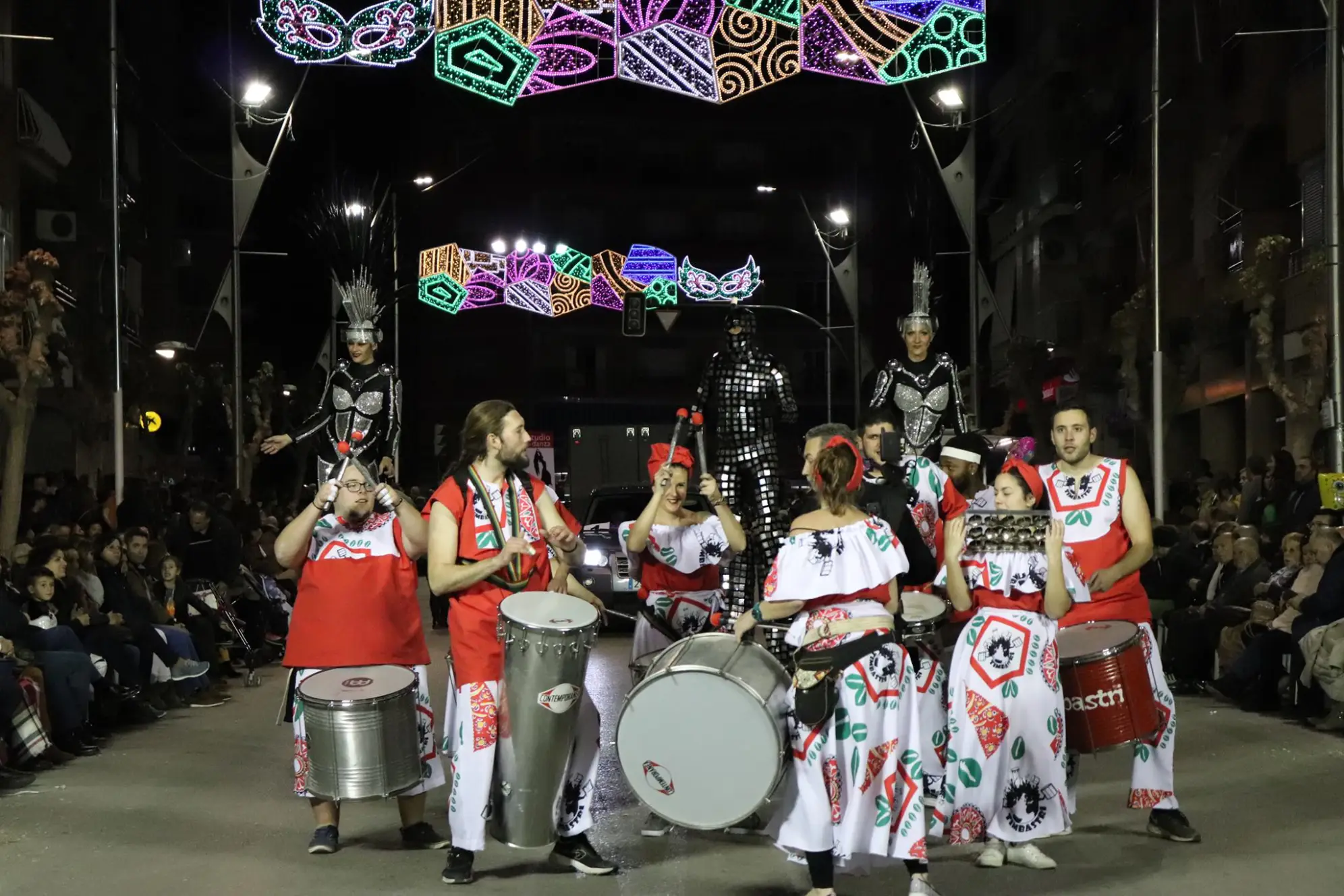
Cehegín's Carnivals fill the municipality with color, music, and community participation, making them one of the most lively celebrations of the year. For several days, the streets are transformed with parades of troupes, creative costumes, and a festive atmosphere that brings together families, young people, and visitors.
The museum’s rooms are spread across three buildings, two of them historic: the Casa del Concejo and the Palacio de los Fajardo. The museum has 12 exhibition rooms that trace history from the Neolithic to the Modern Age, with an emphasis on Chalcolithic sites and Begastri. Admission is currently free.
This historic quarter is considered one of the most beautiful in the region. Declared a Historic-Artistic Site in 1982, its streets and alleyways offer abundant examples of traditional architecture from the 12th to the 19th centuries. It’s a museum in its own right, with manor houses, palaces, churches, viewpoints, and more than 116 coats of arms.
The arcades of Plaza del Castillo date back to 1725. Their original function was to house private boxes for wealthy individuals to comfortably watch spectacles, such as bullfights or ceremonies, held in the square. In the 19th century, they were covered with walls, transforming into rooms dedicated to selling meat and fish.
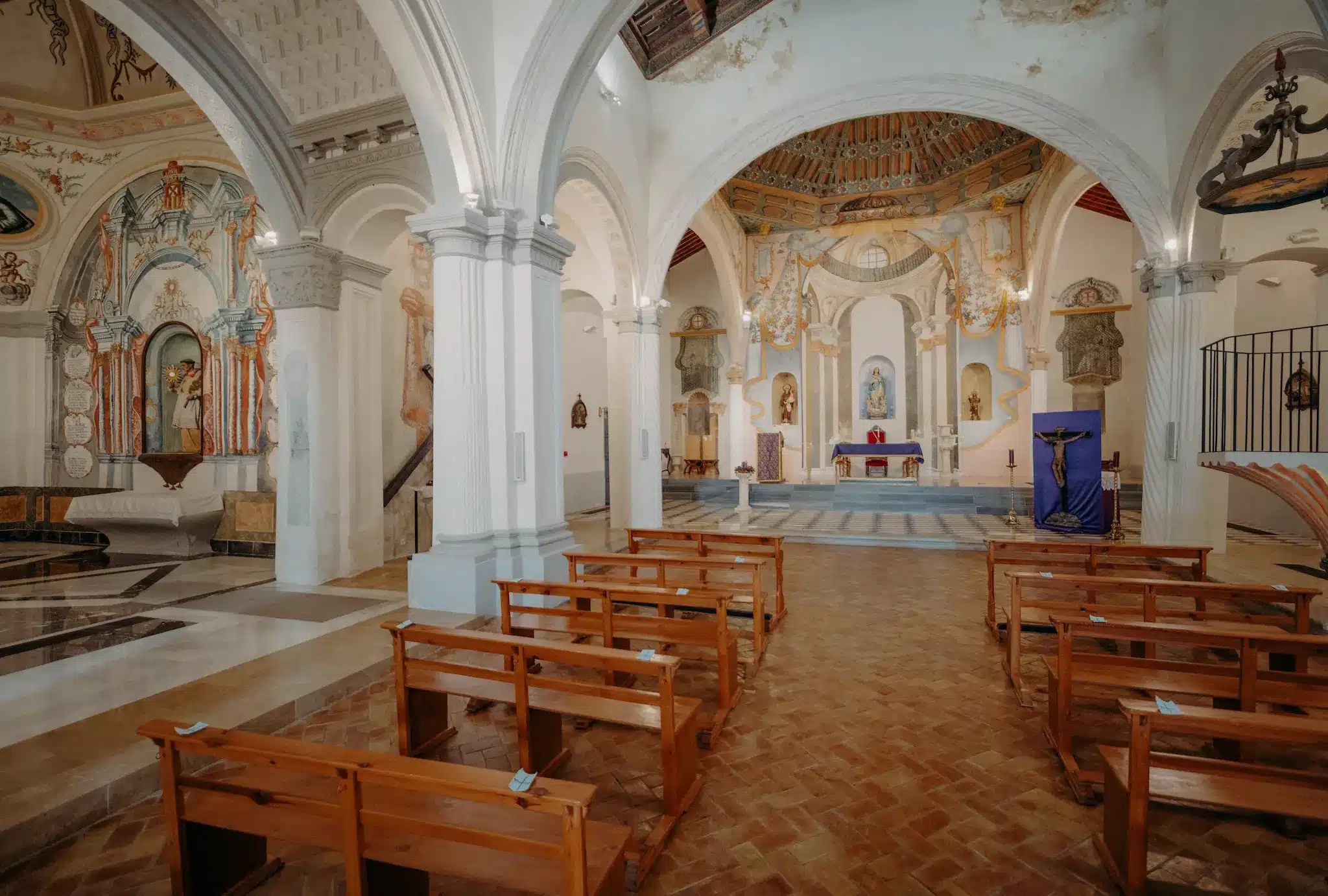
One of the most beautiful and delicate examples of religious architecture in Cehegín. It was declared a Historic-Artistic Monument in 1982. It is a three-nave Renaissance church built in 1595 by the Brotherhood of Our Lady of Sorrows, one of the oldest penitential brotherhoods in the region.
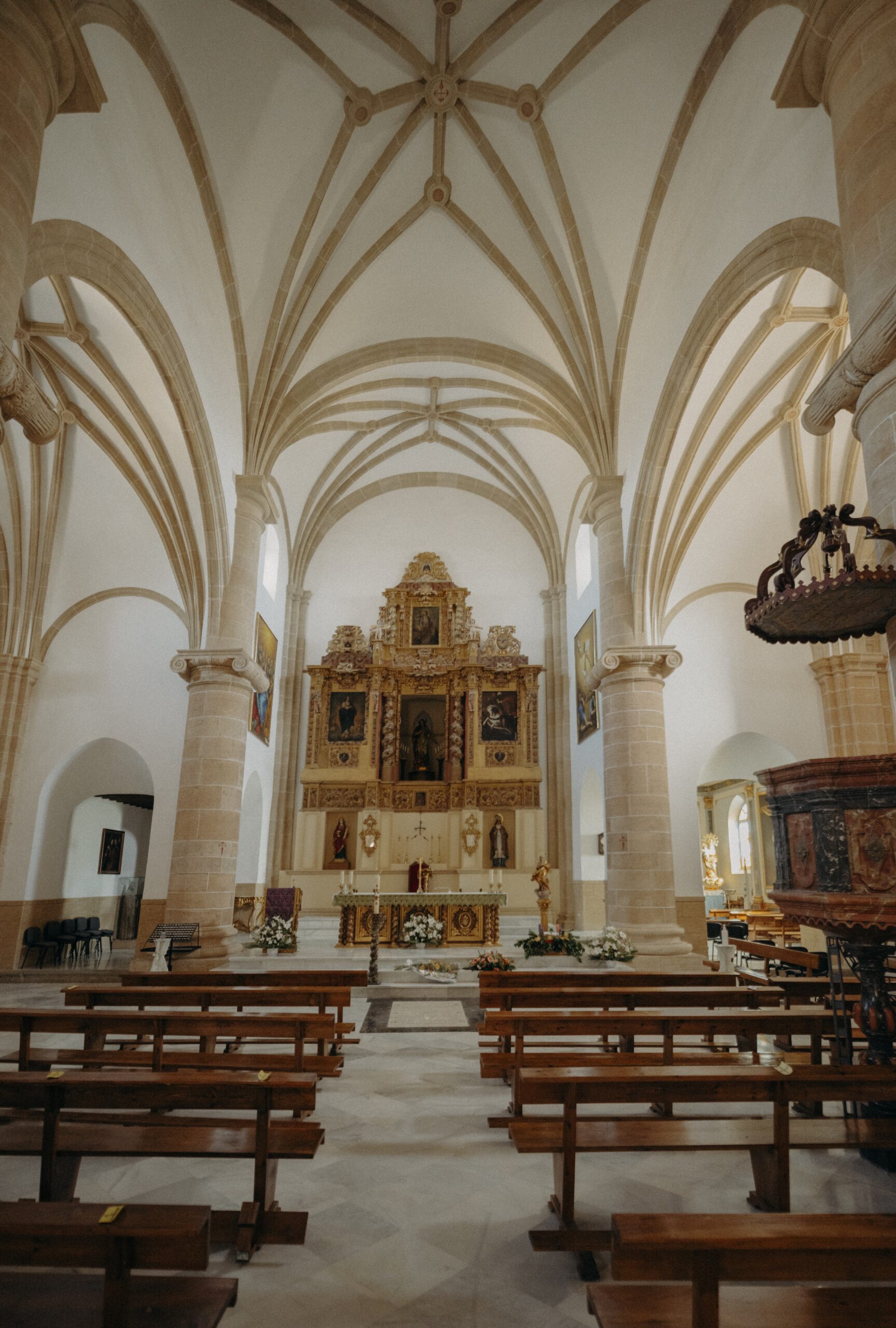
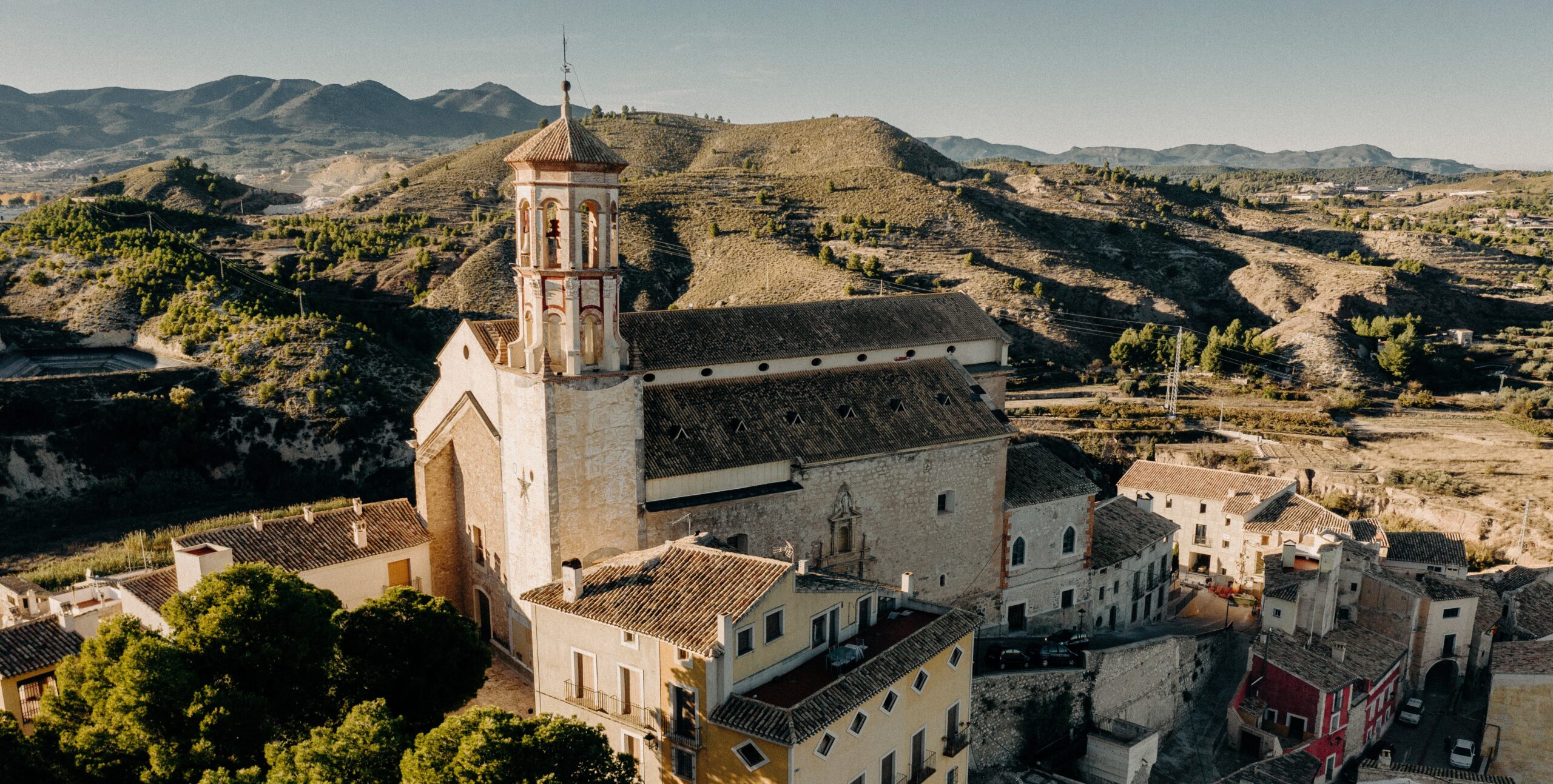
A Renaissance-style building, considered the prototype of a Santiagist church in the Kingdom of Murcia. La Magdalena served as the town’s main parish during the influence of the Order of Santiago (14th–19th centuries). It was remodelled and expanded in the second half of the 16th century.
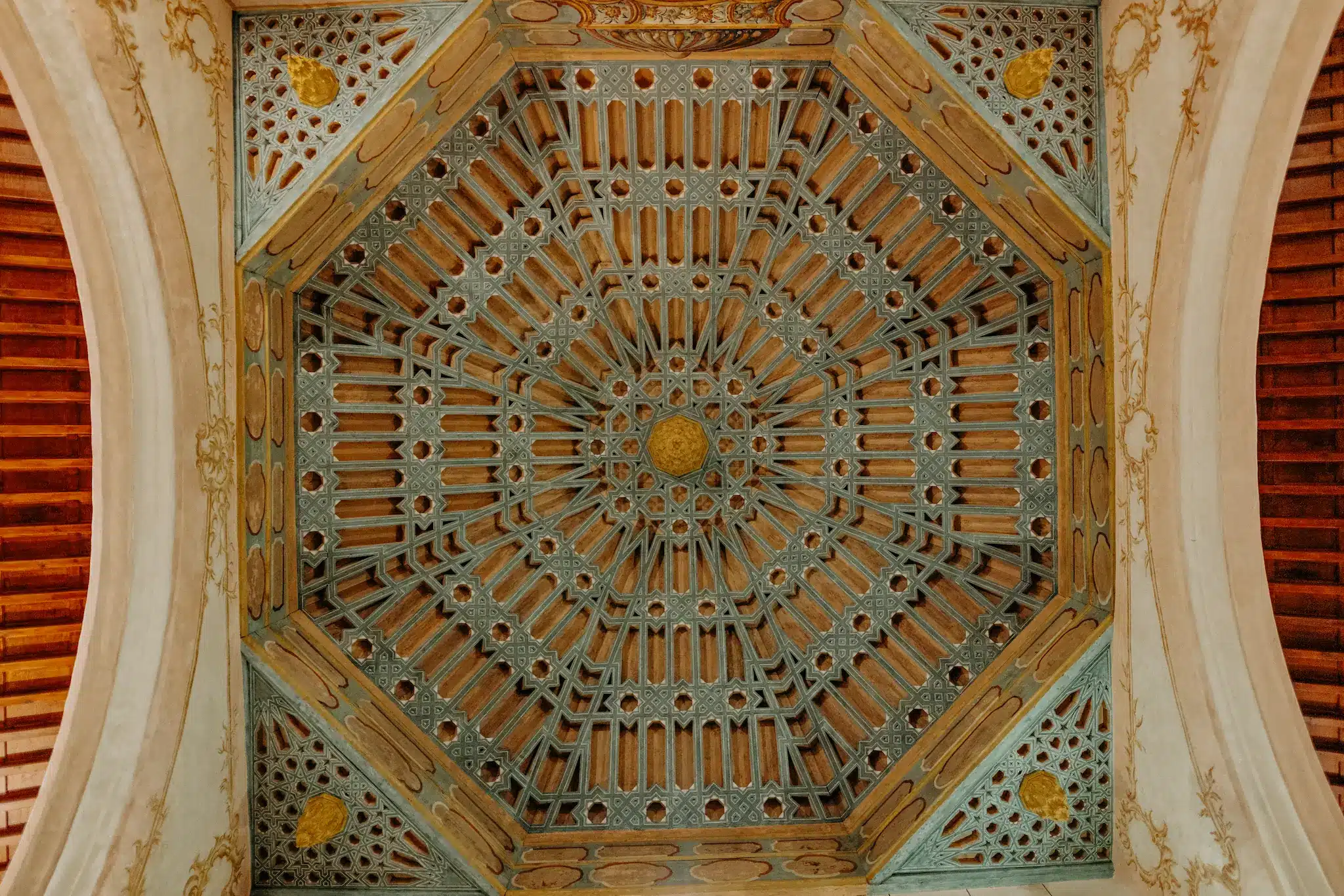
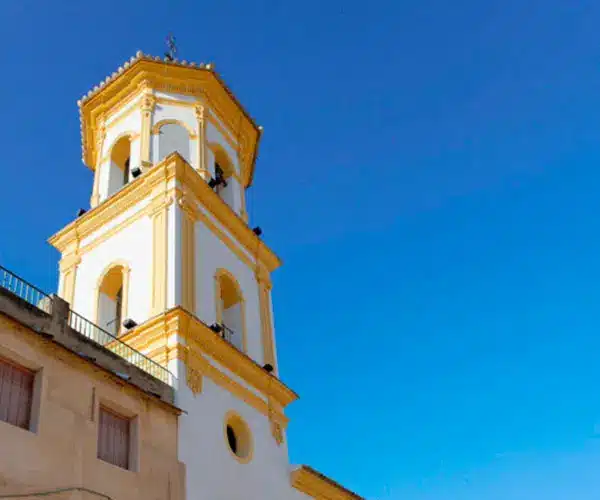
Located on the highest hill in the historic quarter, it was declared a National Monument in 1980. Its construction is believed to date back to the late 15th or early 16th century, and it stands out for its clear Mudéjar influence. Its most spectacular treasure is the polychrome Mudéjar coffered ceiling, crowned by an impressive muqarnas pinecone in the presbytery.
The Jardín del Coso is a charming and centrally located green space that serves as one of the main meeting points in Cehegín. It was formerly the site of bullruns, which is where its name comes from.
This garden, remodeled over time, combines walking areas with flower beds, benches, and a central fountain. It is a place for rest and leisure for all ages, hosting various cultural and social events. Its location at the gateway to the old town makes it the ideal starting point for exploring the city's monumental heritage, offering a peaceful retreat in the heart of urban life.
Located in Plaza del Alpargatero, this sculpture commemorates Cehegín's industrial past. It pays tribute to the residents who emigrated after the decline of the espadrille industry, which once supplied all footwear to the French army during World War I.
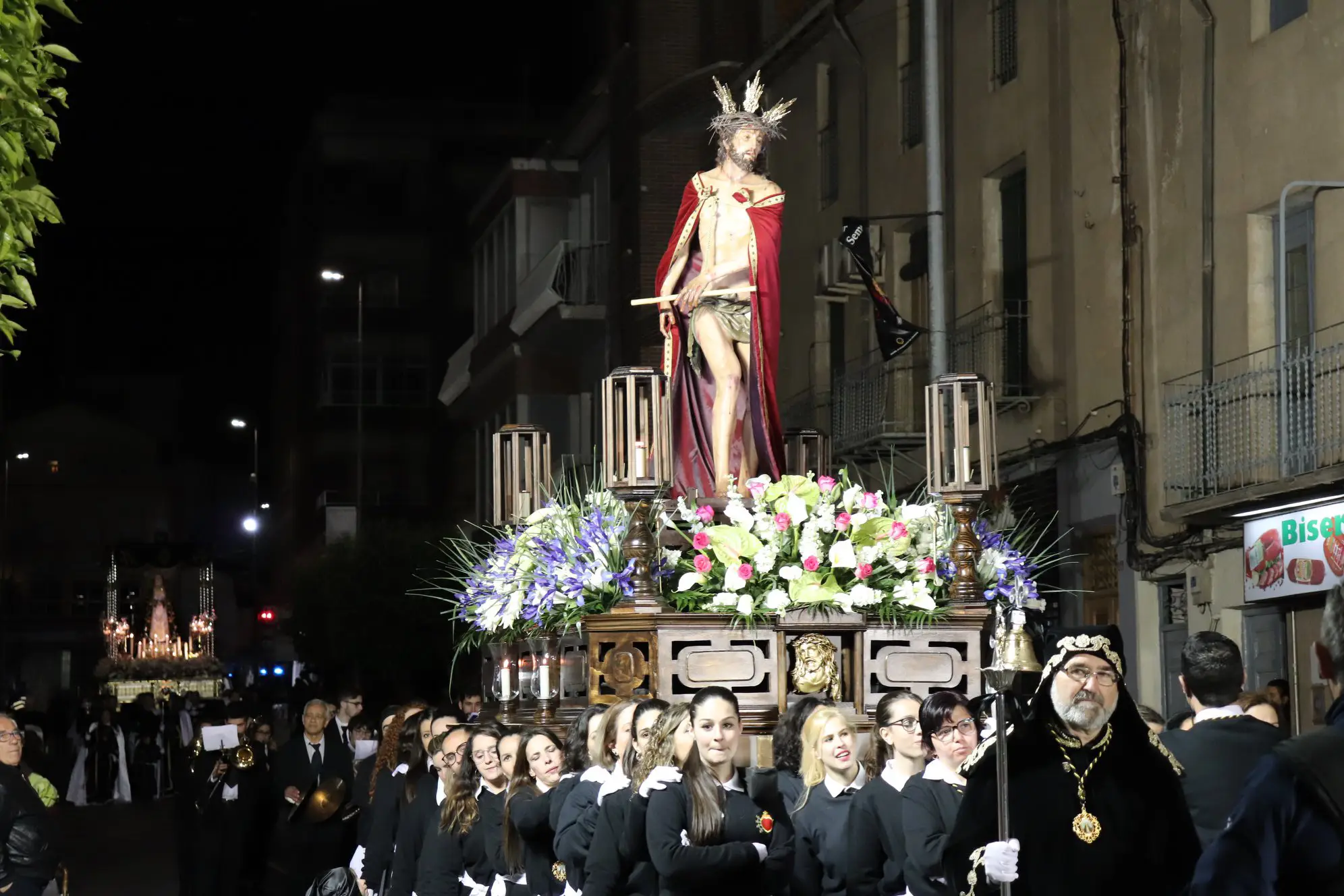
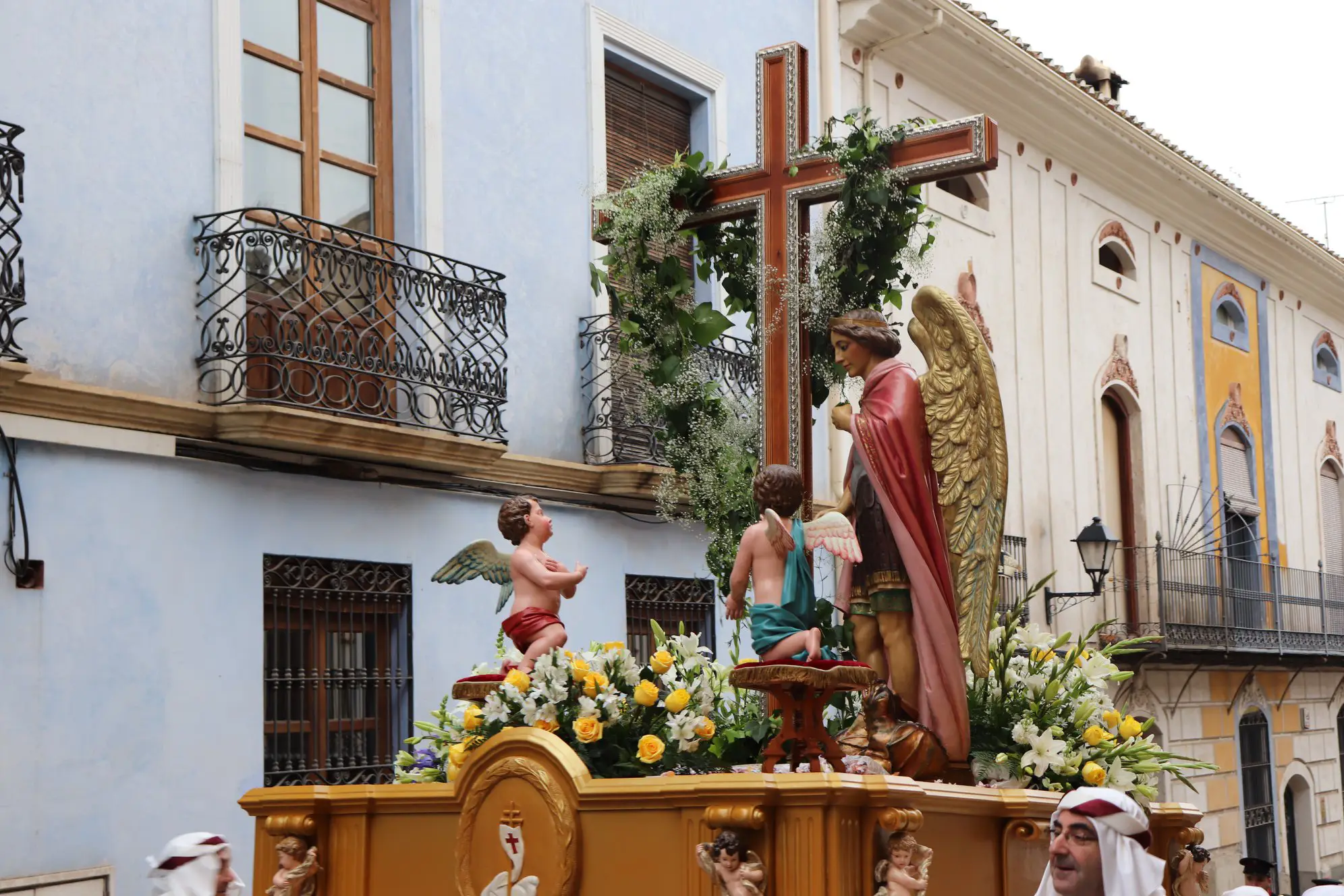
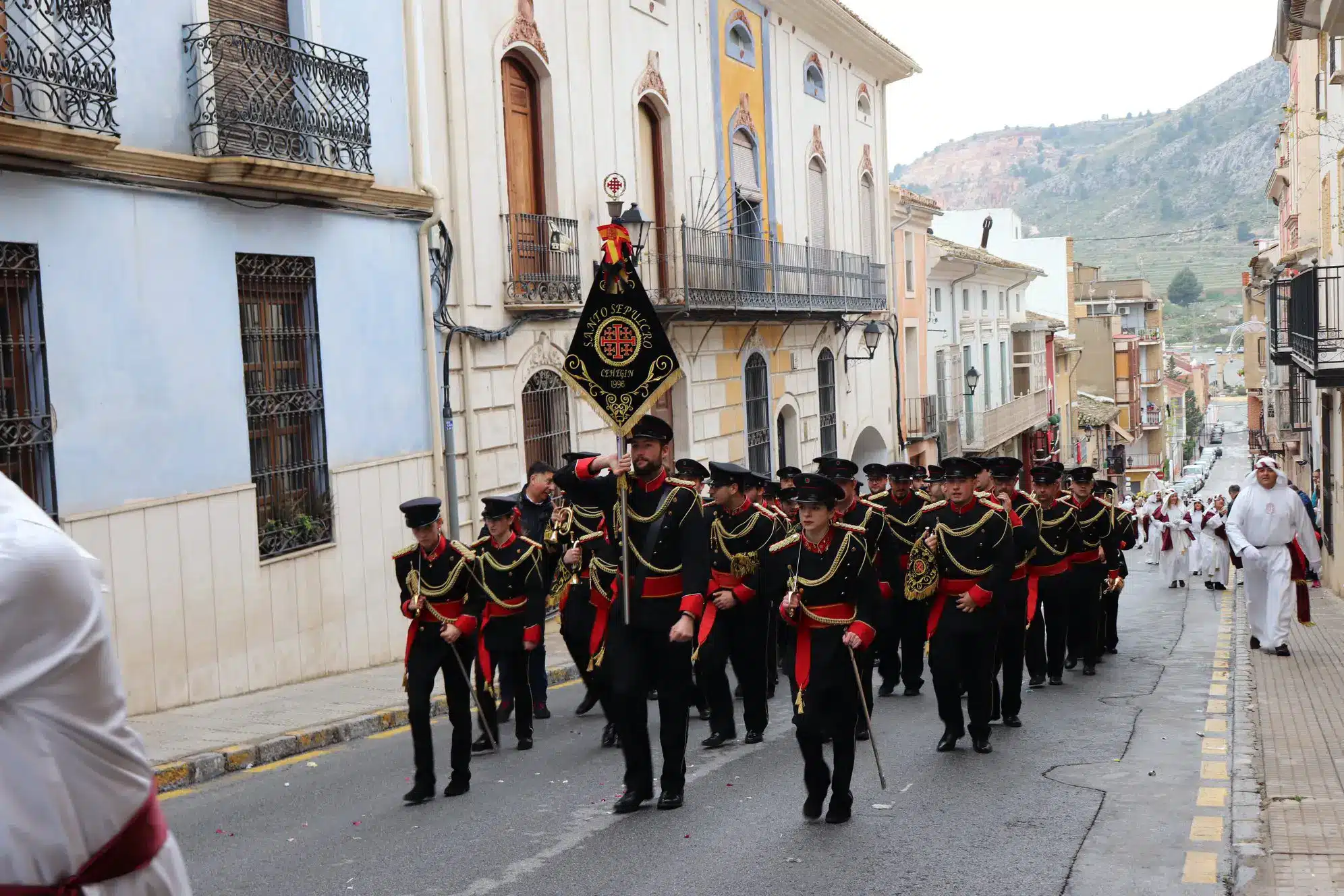
It is a festival celebrated with great religious devotion. Its importance stems from the splendor of its processions, the spectacular setting offered by its old town, the ancient origins of its brotherhoods (some over 400 years old), and the beauty of its religious images. It has been declared a Festival of Regional Tourist Interest.
An iconic local institution, founded in 1891 by Don Pedro Mª Chico de Guzmán, 3rd Count of La Real Piedad, with the aim of replacing the old Hospital de Caridad de la Concepción. The two-story building features a corner coat of arms that immortalizes the Chico de Guzmán family.
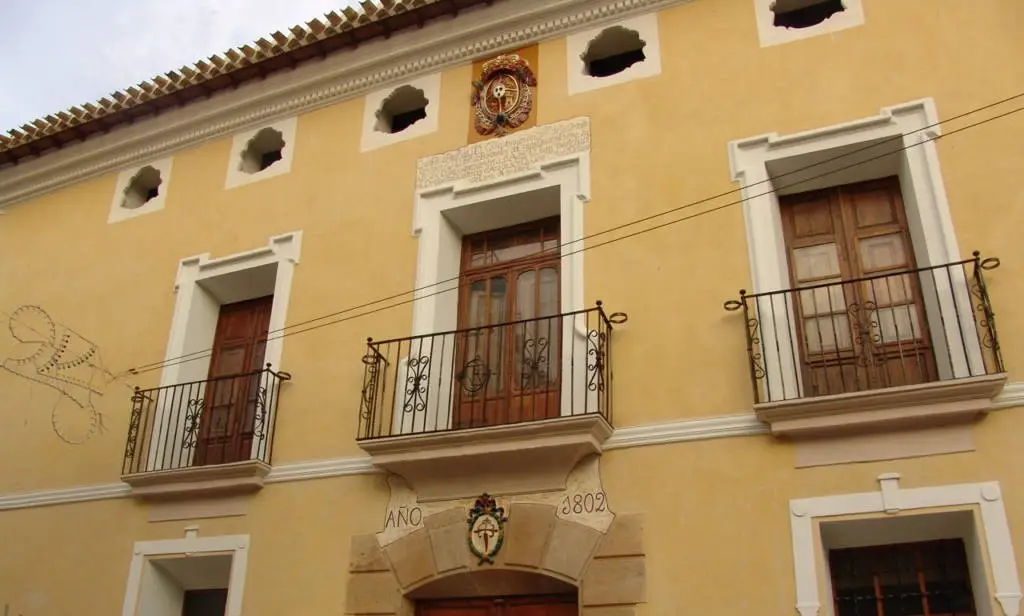
A Baroque-style mansion whose current facade dates back to the 18th century, though it originated in the 15th century. Its main portal is carved from sandstone and framed by noble coats of arms.
One of the standout manor houses in the Old Town. It is an 18th-century Rococo building and currently serves as the Town Hall.
Located on Calle Mayor, it is one of the region’s most iconic and interesting private buildings. In its basement is the Ethnographic Museum, which displays uniforms from the Order of Santiago and a sample of the craftsmanship of espadrille makers.
The Fajardo Palace, located in Plaza del Castillo, is one of the most important civil buildings in the old town. This 18th-century palace, which now houses the Archaeological Museum, belonged to one of the most influential families in the region.
Its façade, though understated, shows the quality of its ashlar masonry construction and the elegance of its proportions. The building is arranged around an inner courtyard that leads to the different rooms. It is a testament to the power of the nobility in Early Modern Cehegín and an incomparable setting for the museum’s collection.
The Villar de Felices Palace is one of the most outstanding stately homes in the Old Town of Cehegín. It is part of the municipality's noble architecture and dates from between the 15th and 18th centuries, achieving special relevance as an example of Murcian Baroque (with references to its construction in the 18th century).
They are held every year in the first weeks of September. The patron saint, María Santísima de las Maravillas, is cared for by the Franciscan friars in her sanctuary until the celebrations begin.
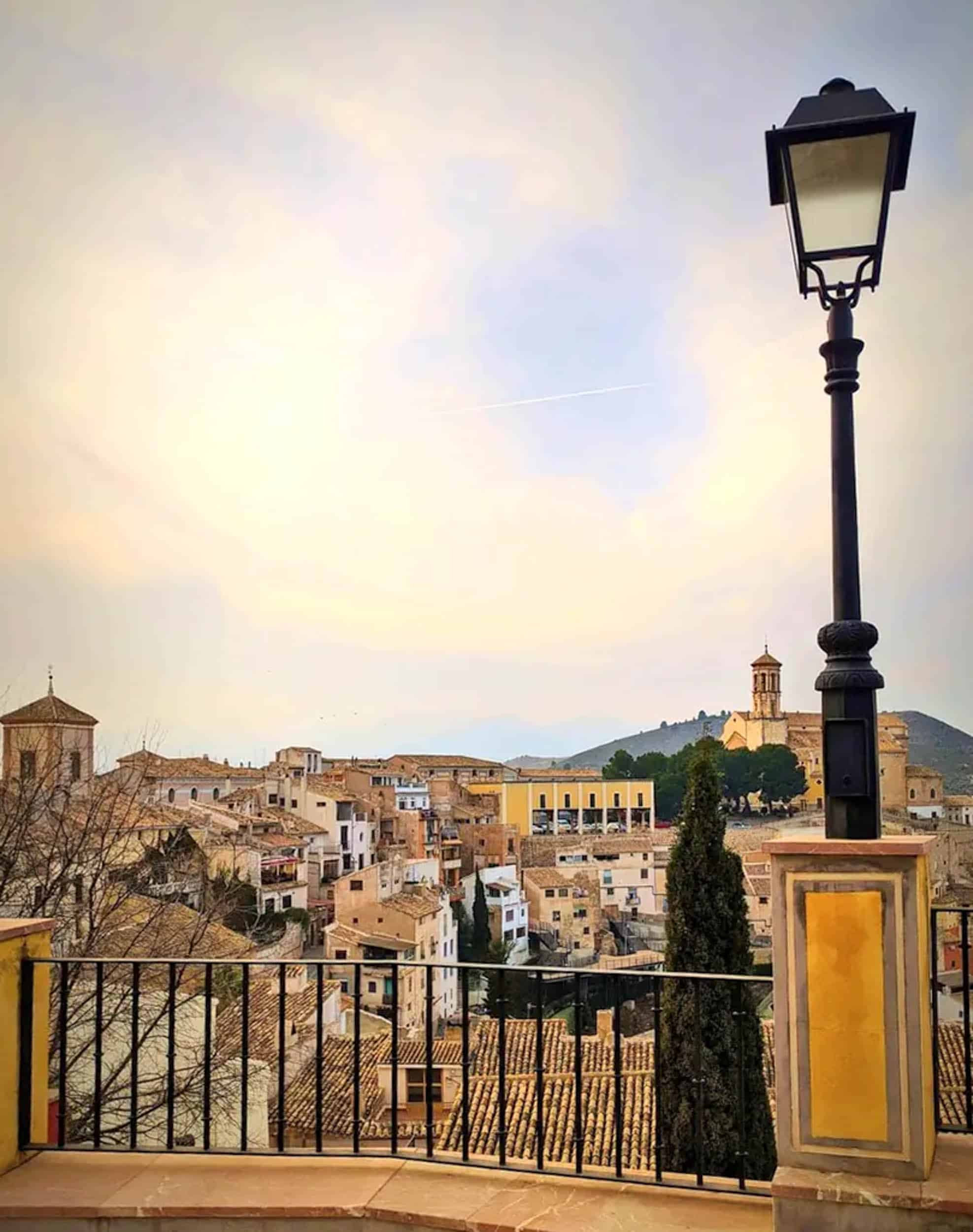
Plaza del Castillo is the heart of Cehegín's old town and the epicenter of its social and historical life. Dominated by the imposing Church of La Magdalena and the Fajardo Palace (Archaeological Museum), this medieval square is a monumental space of great beauty.
Its famous 17th-century porticos, central fountain, and bar terraces make it a vibrant place full of life. From here, you can enjoy a wide panoramic view of the surrounding landscape. It is the essential starting point for any visit and the setting for the city's most important events.
The Castle, symbol of the origin of Cehegín, consisted of a large Keep Tower, cellars, granaries, chapel and other outbuildings. This fortress was a collection and administration center of the Order of Santiago. Scattered remains of the walls survive, including a section of wall from the Muslim period and the presence of an Almohad gate of the citadel.
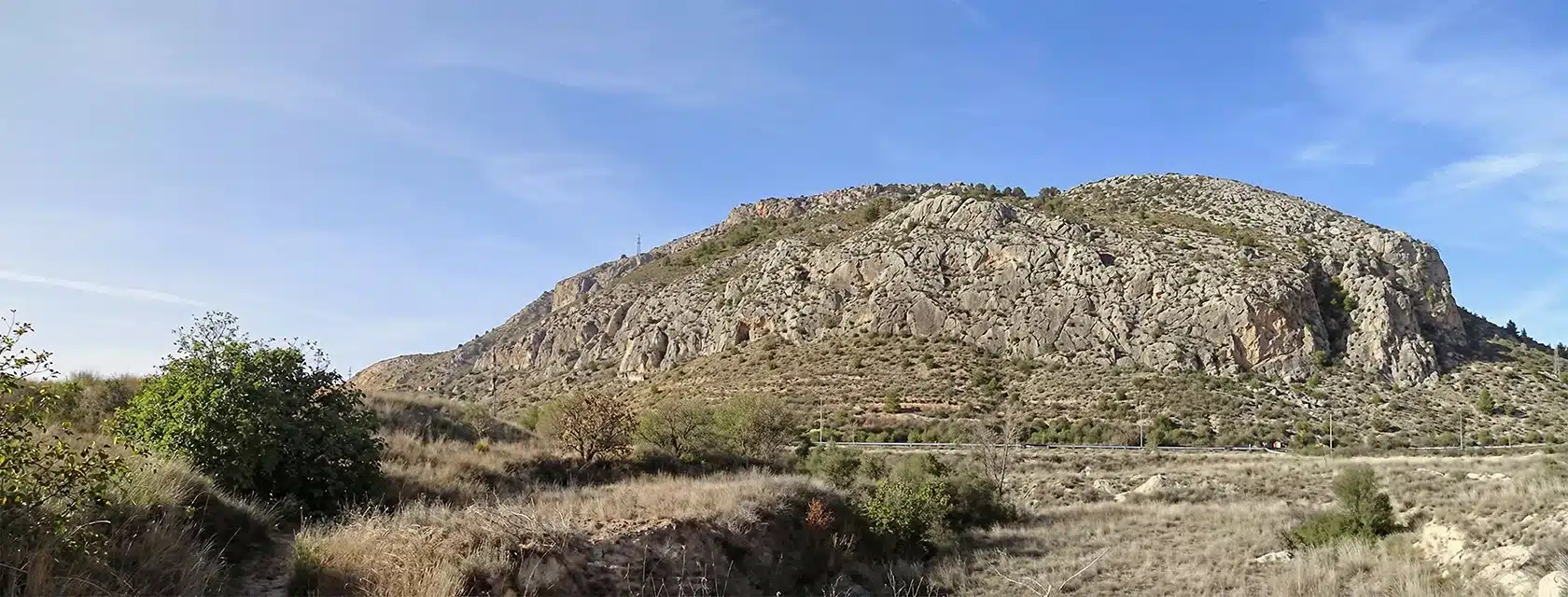
Part of Levantine rock art, these figures from the Chalcolithic period were drawn in the inner cavities of three caves on Peña Rubia mountain: Cueva de las Palomas, Las Conchas, and Cueva del Humo. They were declared a UNESCO World Heritage Site in 1998.
Built in the 15th century, the hermitage was destroyed by the French army during the Peninsular War. Despite being in ruins, it remains a highly attractive tourist spot and an unrivalled viewpoint over the old town. It is the starting point of the San Sebastián pilgrimage.
They are held in May and include making traditional migas at the fairgrounds on Saturday night. On Sunday there is a pilgrimage and a parade of decorated floats, where participants dressed in traditional huertano attire hand out the traditional afternoon snack.
A night-time pilgrimage is held from the Ruins of the Hermitage of San Sebastián to Plaza del Castillo, where torches are carried to light the great bonfire in honour of the saint.
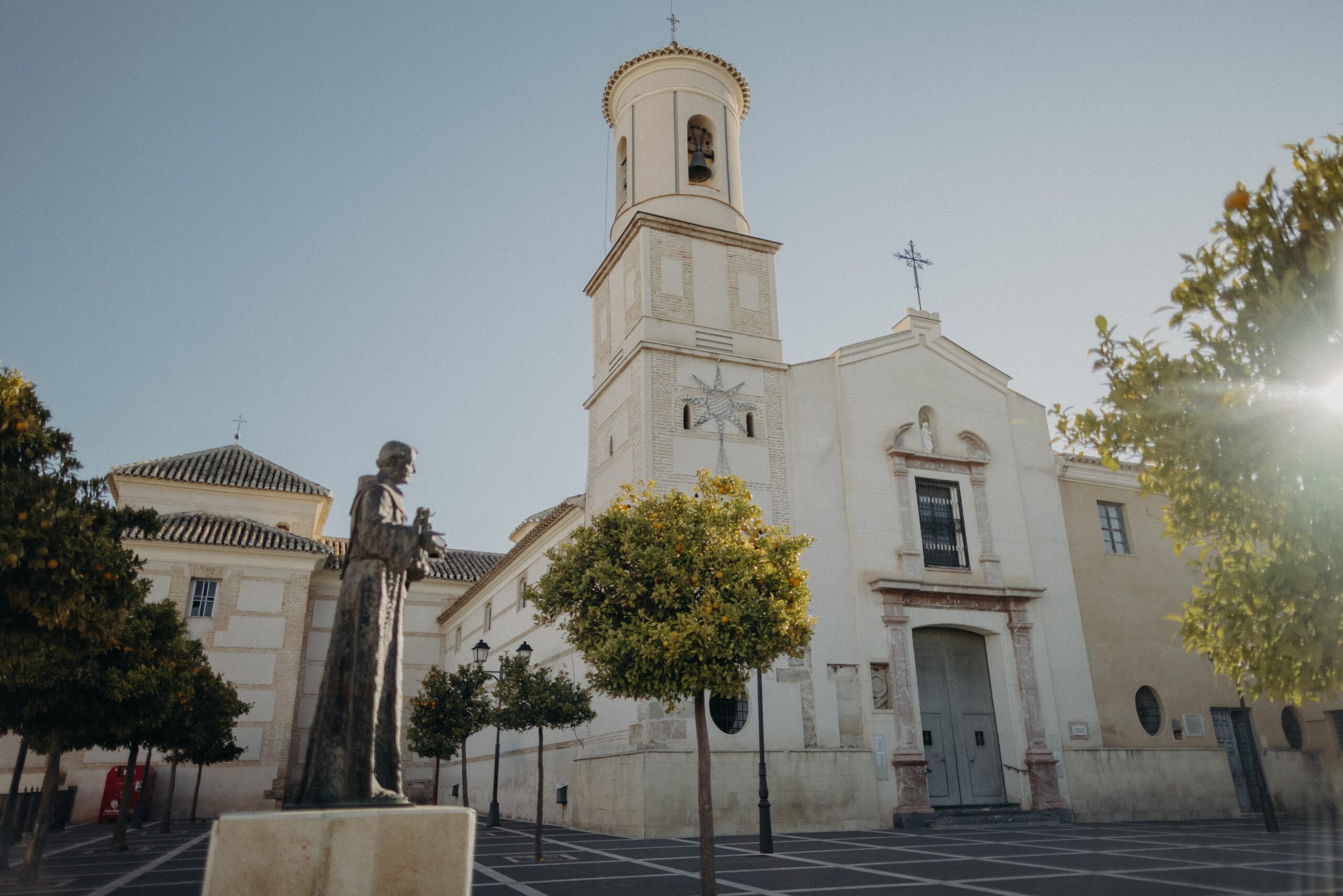
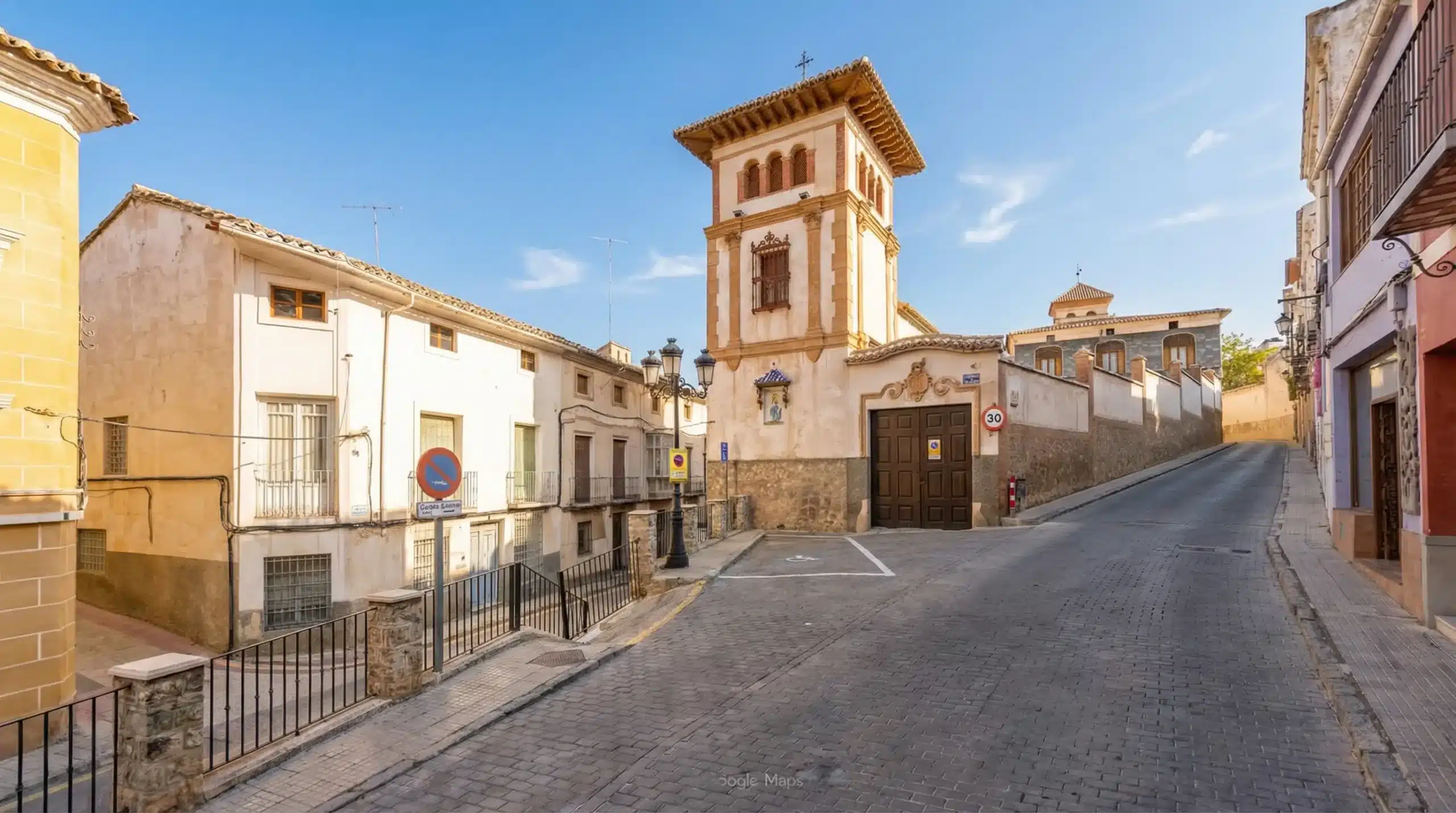
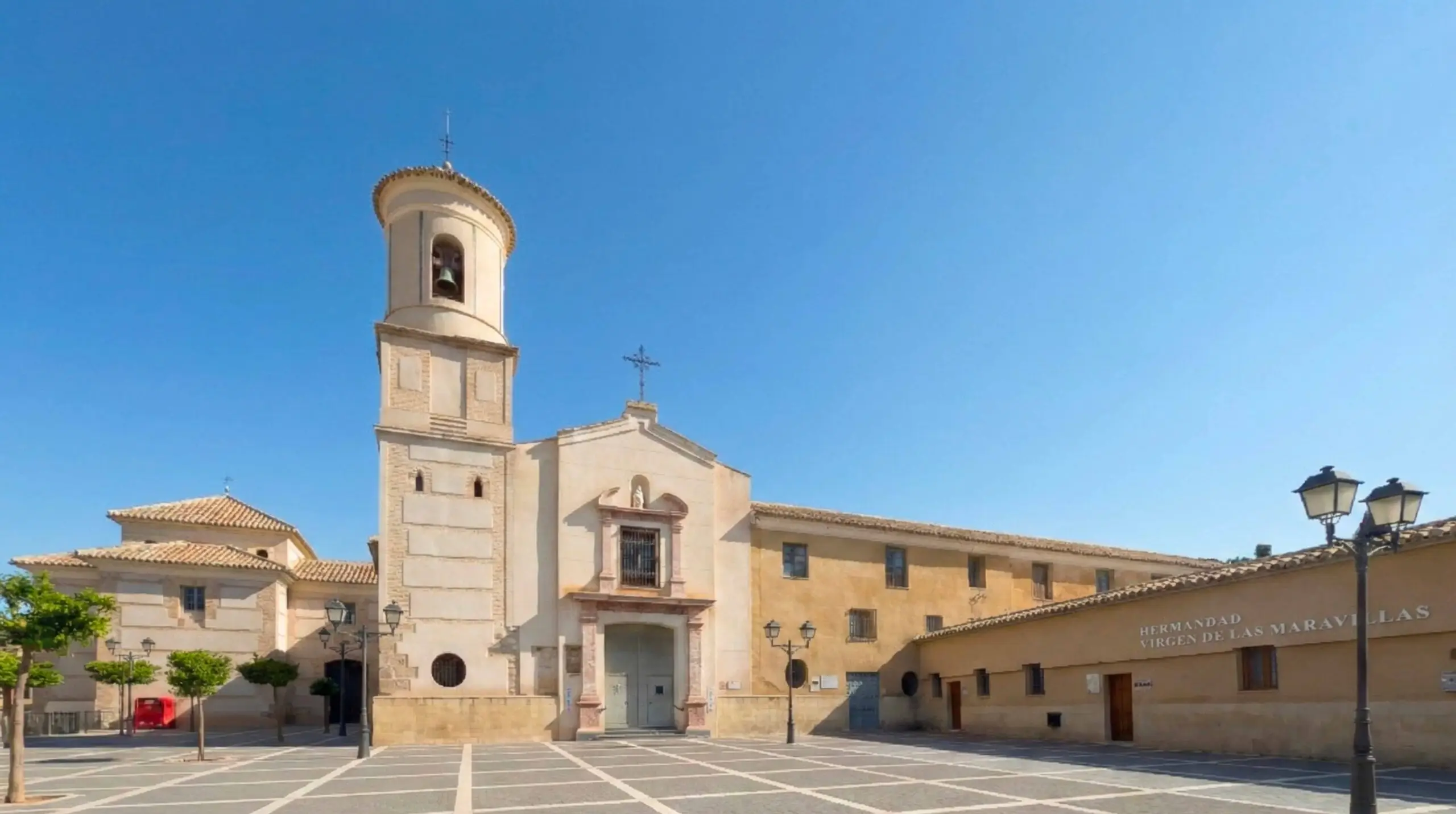
This complex, declared a National Monument, is one of the few surviving examples of the most authentic Murcian Baroque. Built between the 16th and 18th centuries on the site of a former 15th-century hermitage, it has safeguarded María Santísima de las Maravillas, the city’s patron saint, since 1725.
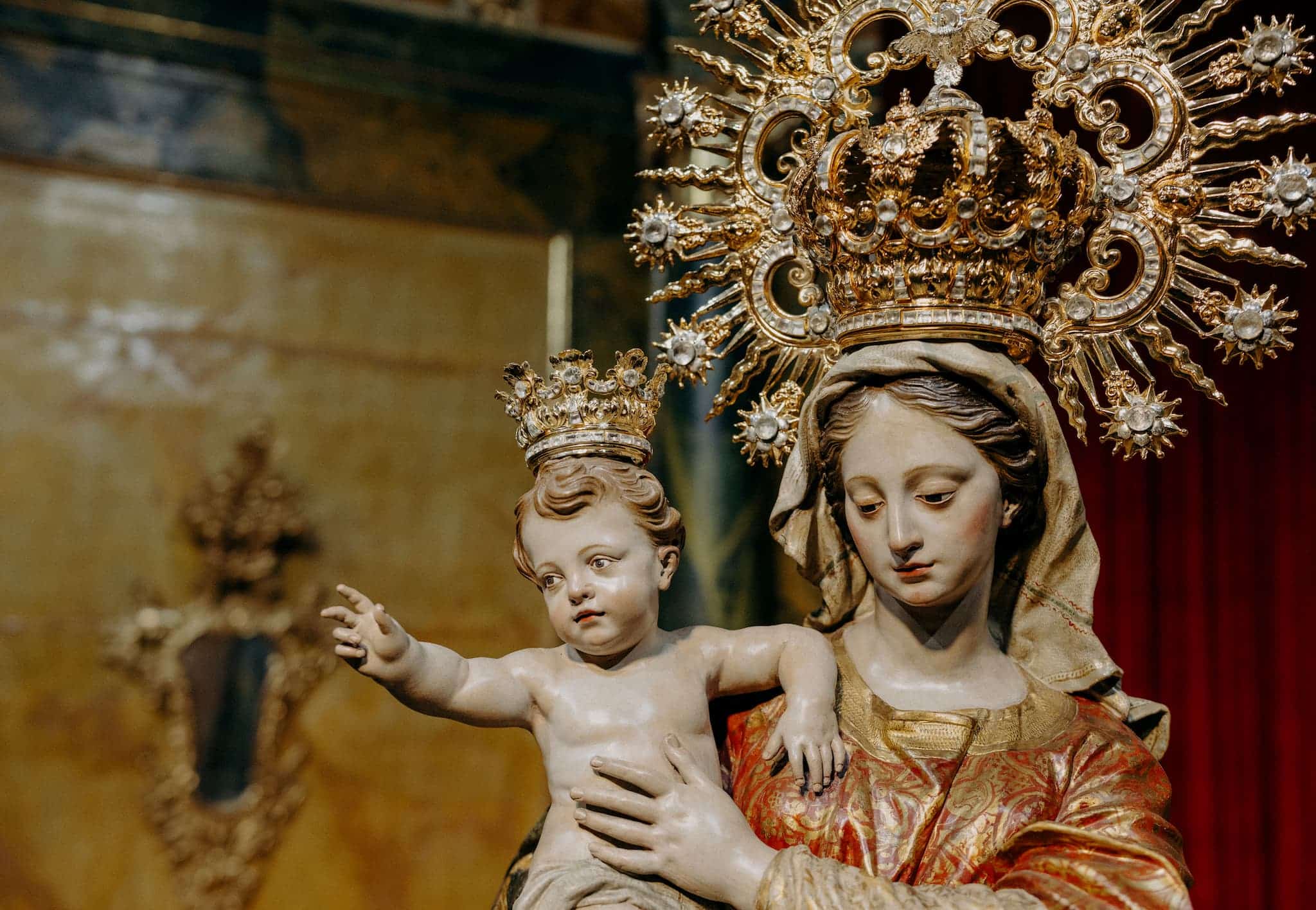
Inside, the Baroque cloister stands out as the true heart of the complex, around which the rest of the convent buildings are arranged. And as a devotional jewel, the image of the patron saint is a delicate wooden carving linked to the Italian Baroque school.
A work by artist Juan García Jiménez, it is located at the roundabout on the western exit of the town. The sculpture, made up of hundreds of steel pieces, depicts a child spinning and pays tribute to the great importance that the hemp industry had for Cehegín.
The Cehegín Tourist Office is the essential information point for any visitor. Located in a central and accessible location, its staff offers all kinds of assistance to plan your stay in the city and its surroundings.
Here you can obtain detailed information about monuments, schedules, hiking trails, gastronomic offerings, and cultural activities. Additionally, they organize guided tours of the old town, a highly recommended option to not miss any detail of Cehegín's rich history and heritage. It is the first stop to make the most of your visit.
In the 17th-century cellars of the Palacio de la Tercia, the Wine School of Cehegín awakens aromas of centuries-old vineyards from the Argos valley.
Its buried earthenware jars, visible beneath a glass walkway, safeguard the legacy of wines that once brought together noblemen and farmers at shared tables.
Here, oenology and gastronomy courses are interwoven with tastings that pair Bullas wine with the sweetness of artisan alfajores.
When visiting its halls, travelers savor the history of a town that celebrates the harvest with raised glasses and promises of fertile land.