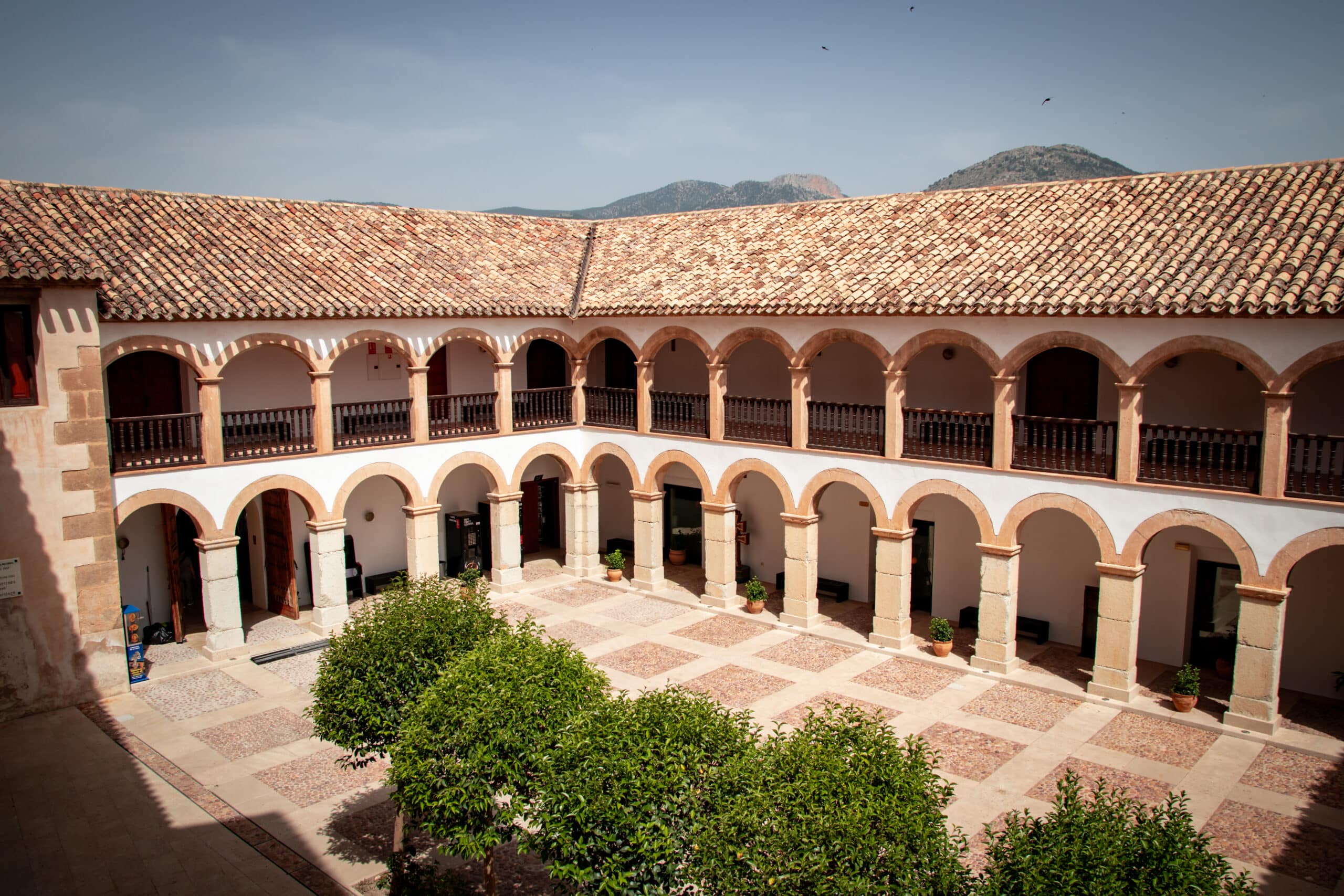
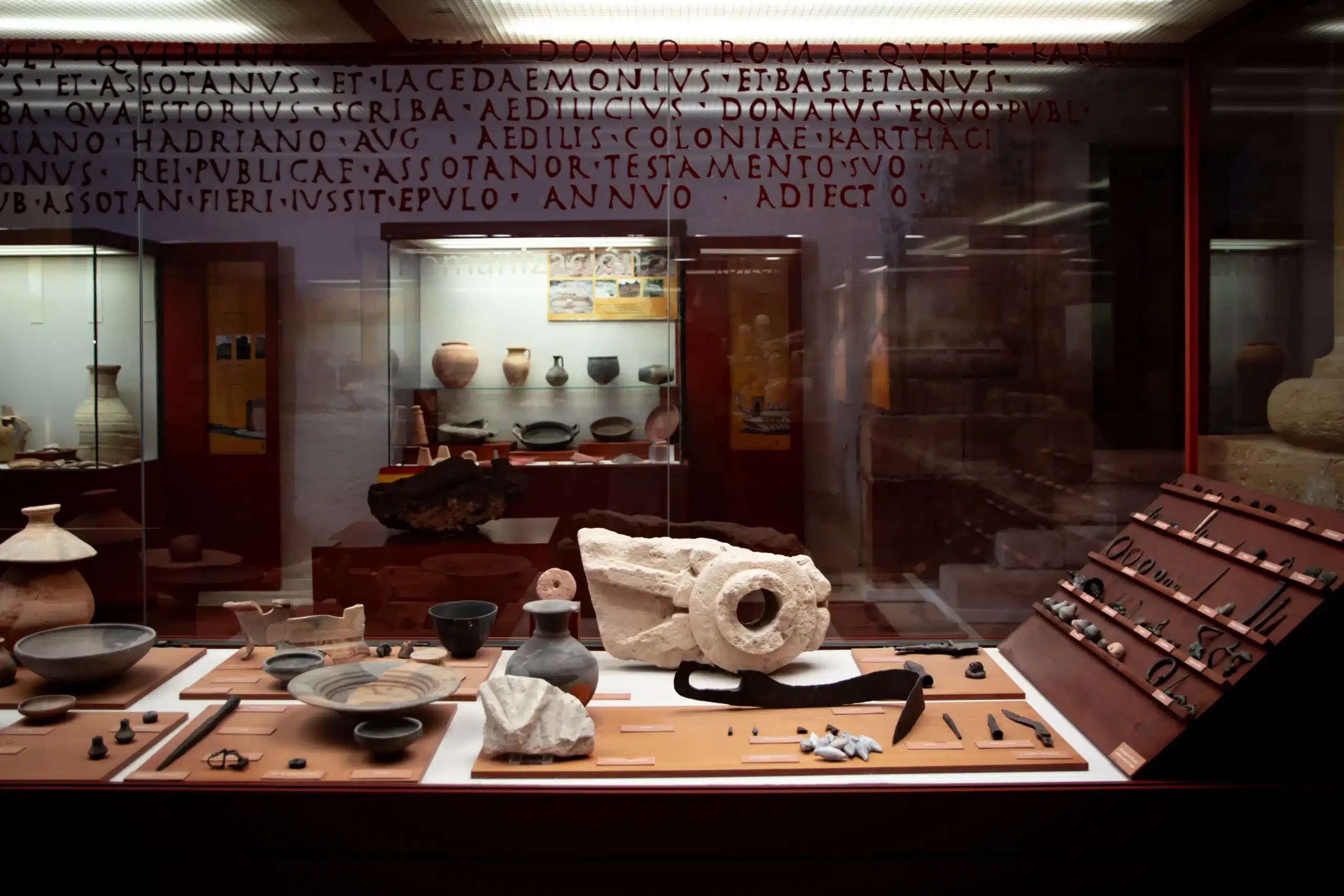
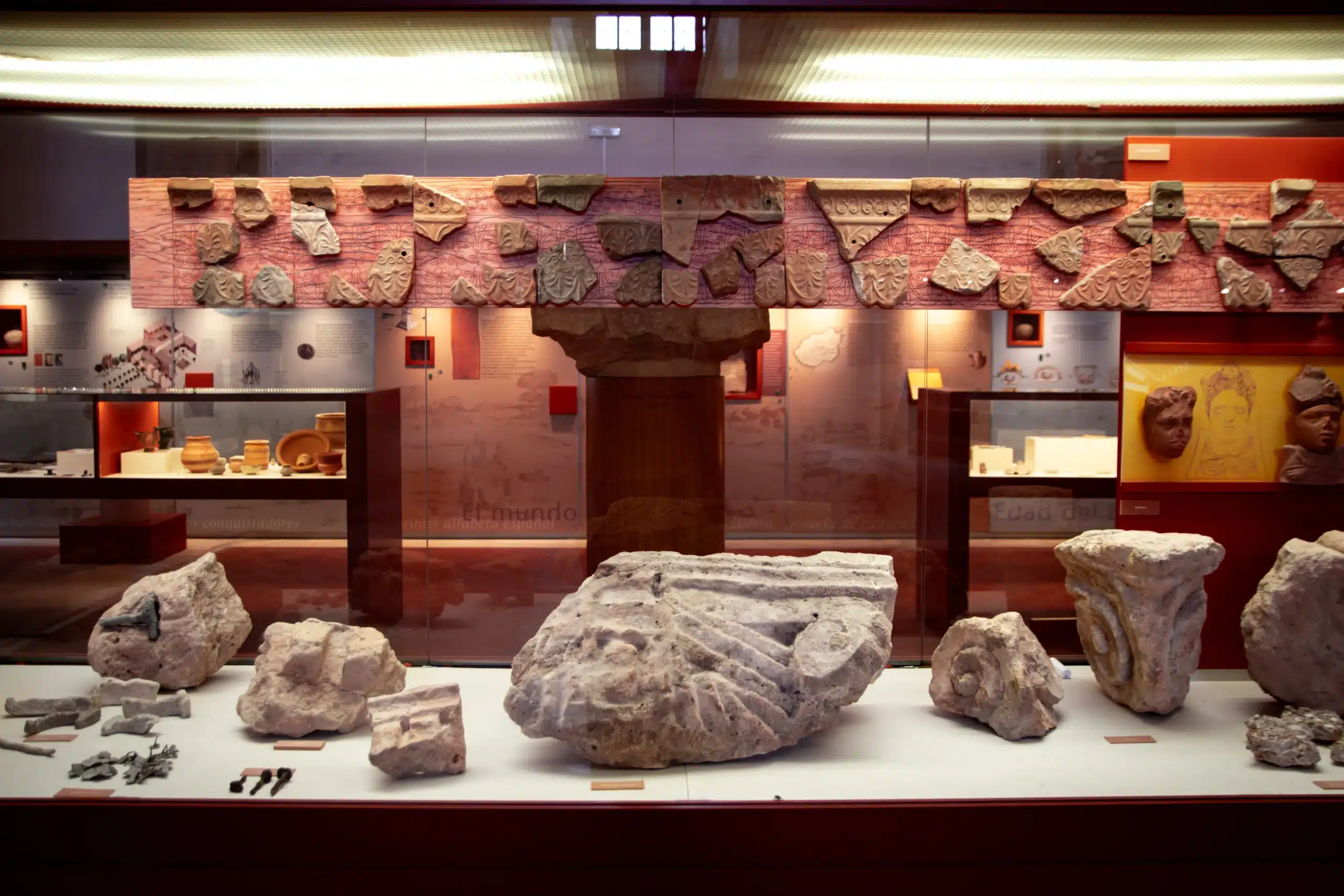
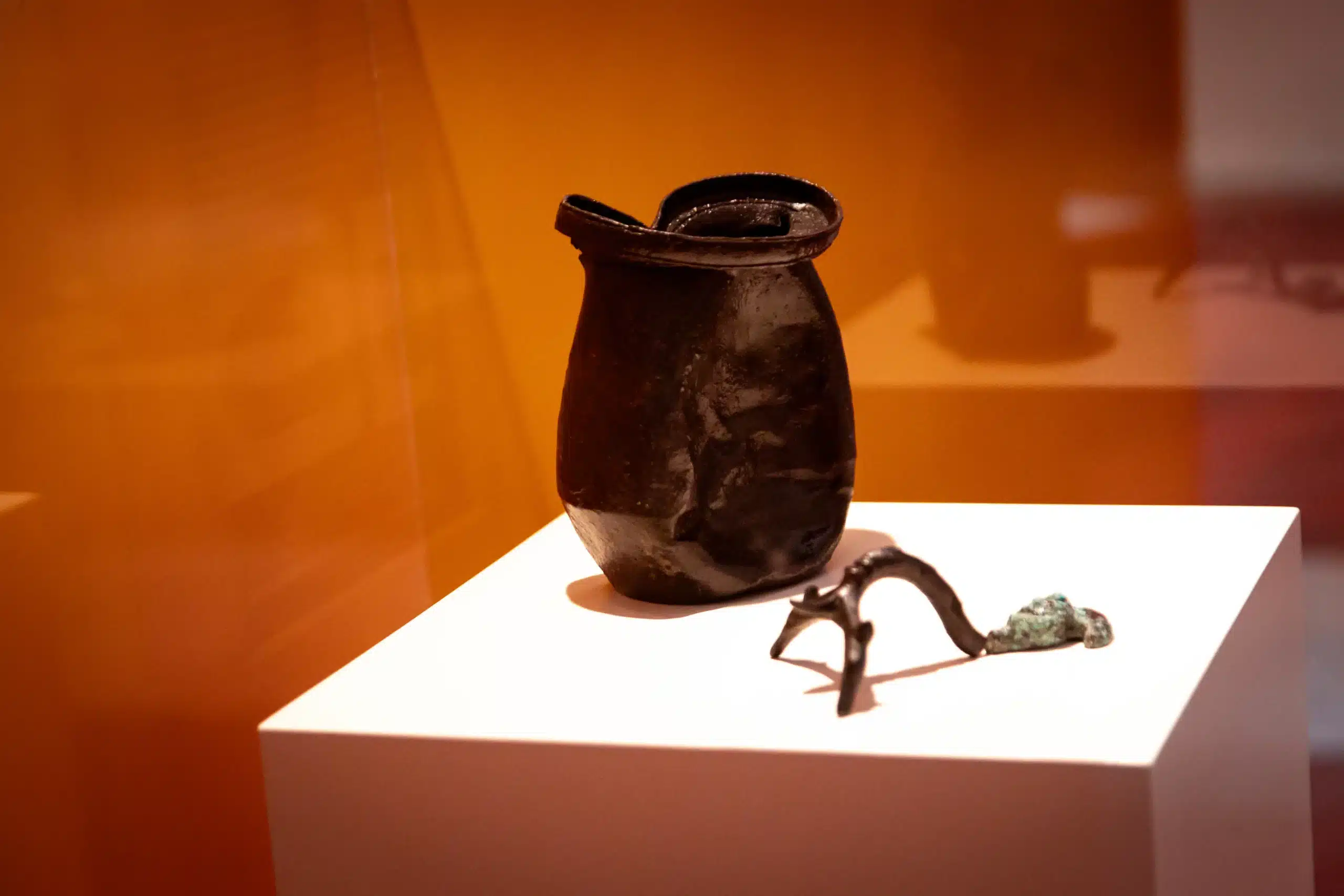
Located on the slope leading up to the Castle, in the former church of La Soledad (the first parish the town had, founded in the 16th century). It is the place to discover who walked this land before us: from Paleolithic remains and the Argaric culture to the Roman and Islamic traces found at sites such as La Encarnación.
The Bullring was built in the second half of the 19th century on the site of the Franciscan monastery of Santa María de Gracia, after it was abandoned by the friars following the Mendizábal confiscation.
It was inaugurated on September 28, 1880, coinciding with that year's Fair, and has undergone several subsequent renovations. Specifically, in 1926 the capacity was increased and the monumental neo-Mudéjar façade that makes such an impression today was erected.
Between 1995 and 1999 the building underwent a rehabilitation process.
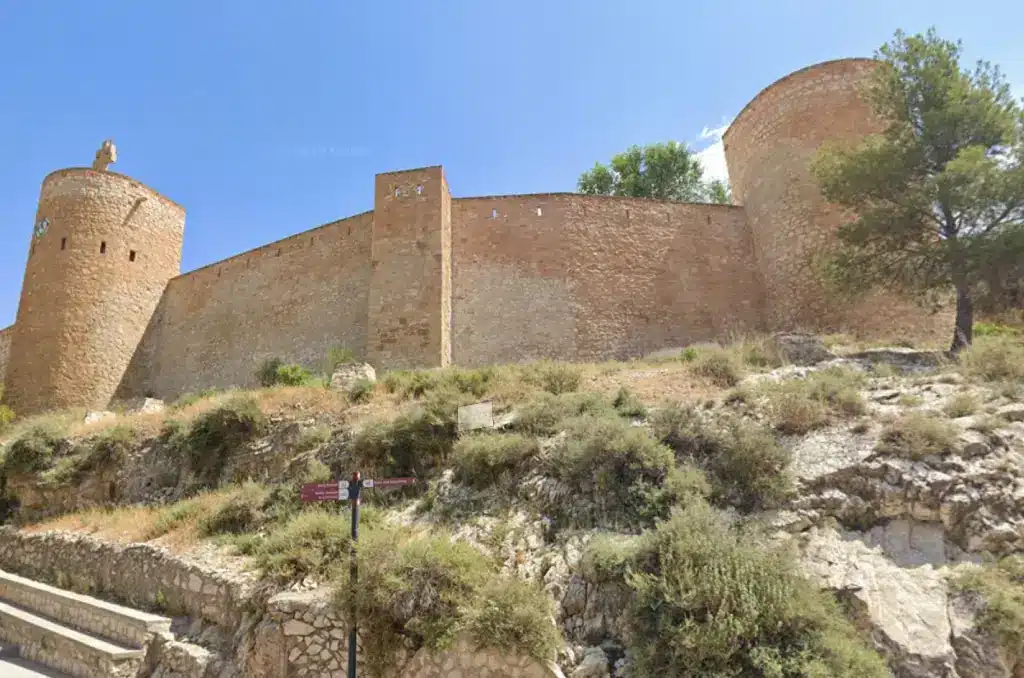
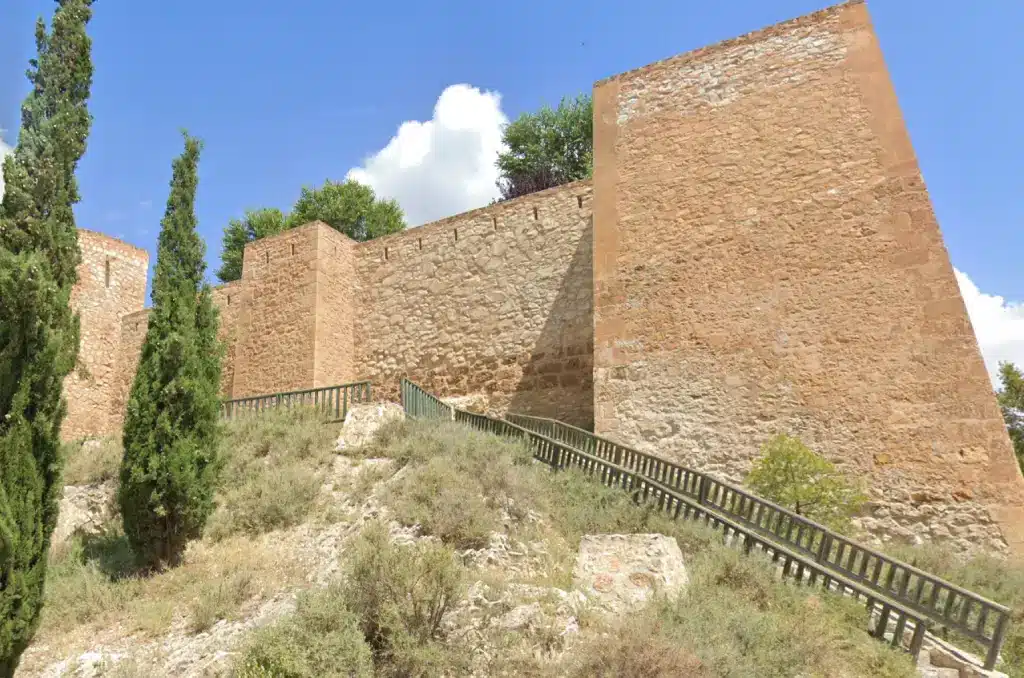
Before entering the Basilica, pause to look at the walls. Their origins are Islamic (10th–11th centuries), and later they became a stronghold of the Order of the Temple and the Order of Santiago. The fortress has 14 towers that have protected the city for centuries. Walking through the walled enclosure is a journey into our frontier past.
Located on the ground floor and in the basements of an old house from the first quarter of the 17th century that belonged to Don Luis de Gadea Sahajosa, which served as a Guardia Civil barracks for many years. Sculptor José Carrilero Gil was born here in 1928, and in this very place the Town Council of his hometown has honored him by creating a monographic space that contains part of his acclaimed work.
José Carrilero’s artistic work is characterized by a constant focus on the human figure, treated in a voluminous way but with soft modulations and delicate textures; cuts; grooves; and drawings that, applied to the volume, achieve a highly original bronze sculpture. Among the works on display, the female torsos stand out, as do the large figures seated or in motion such as The Catwalk and The Balcony, the sketches and anatomical studies of the head and face, as well as the magnificent trio of musicians located on the façade of the Museum itself.
It is the only one of Caravaca’s hermitages that still serves the purpose it was built for: providing religious services to one of the most populous neighbourhoods of Caravaca de la Cruz. Every first Friday in March, the solemn kissing of the foot takes place before the image of Our Father Jesus the Nazarene.
Construction most likely began in the first quarter of the 17th century, as there are references to it around 1632, and it was completed in its current form throughout the 18th century, when it underwent numerous extensions. It is located next to the traditional Plaza de los Caballos del Vino (popularly known as Plaza del Hoyo), where there is a monument to the Caballo del Vino.
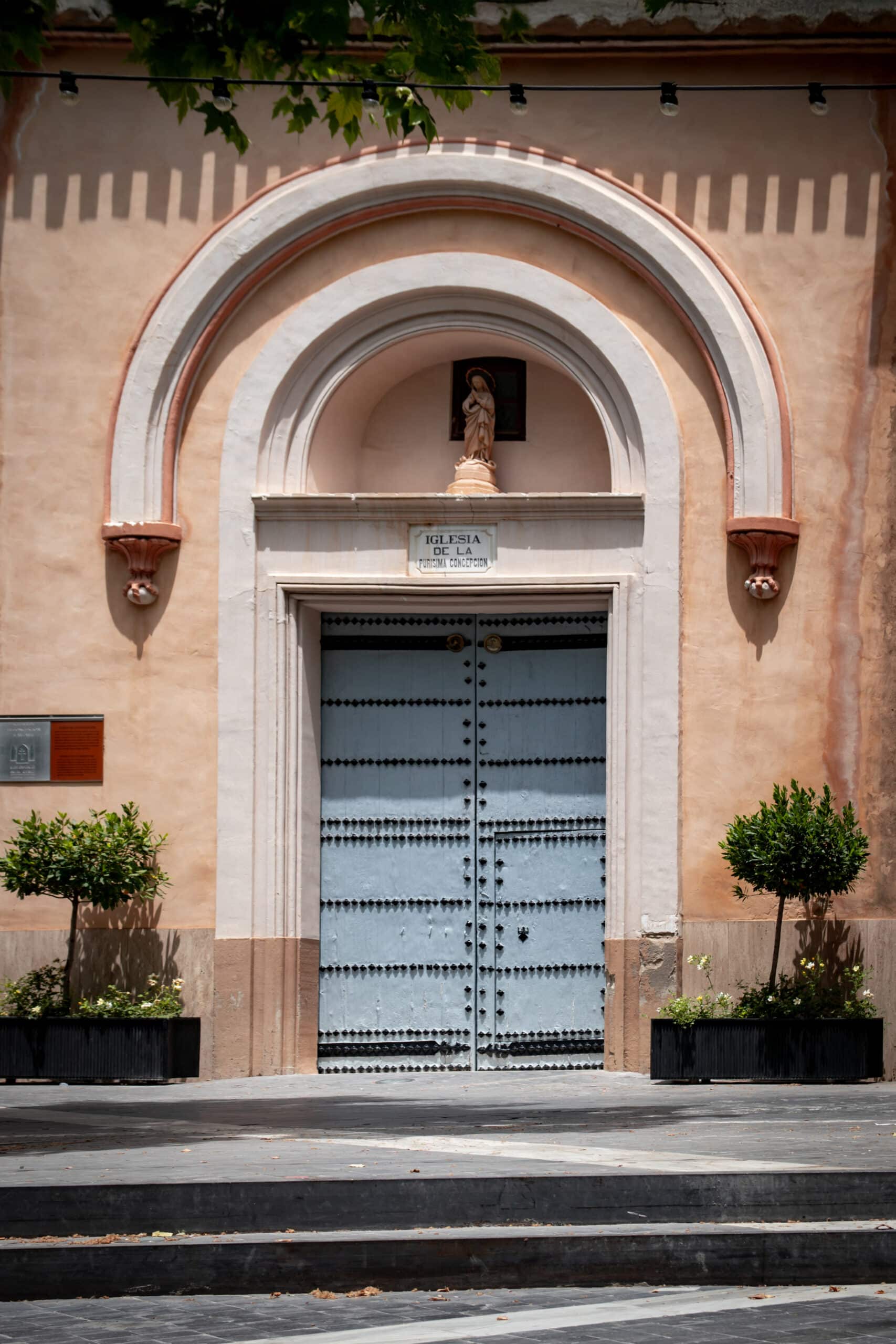
Built in the 16th century over an old chapel, the Church of the Purísima Concepción is a beautiful example of Renaissance architecture. Its Mudejar coffered ceiling stands out as one of the most important in the Region of Murcia, covering the entire main nave and the presbytery. The interior, of great beauty and peacefulness, also houses valuable Baroque altarpieces.
The tower dates back to the 17th century; it rises at the head of the church and consists of four sections.
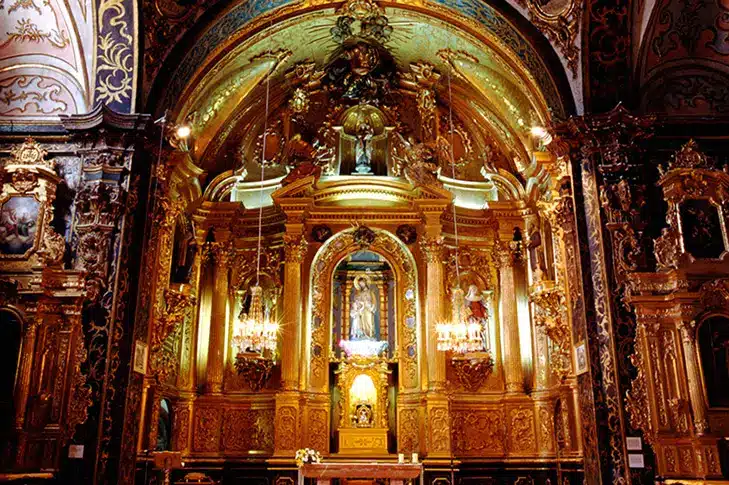
For lovers of religious history, this place is special: it was founded in 1576 during the lifetime of Saint Teresa of Jesus. Its church, built later in the 18th century, is a jewel of Rococo Baroque. Caravaca is part of the "Footprints of Teresa" route thanks to this legacy.
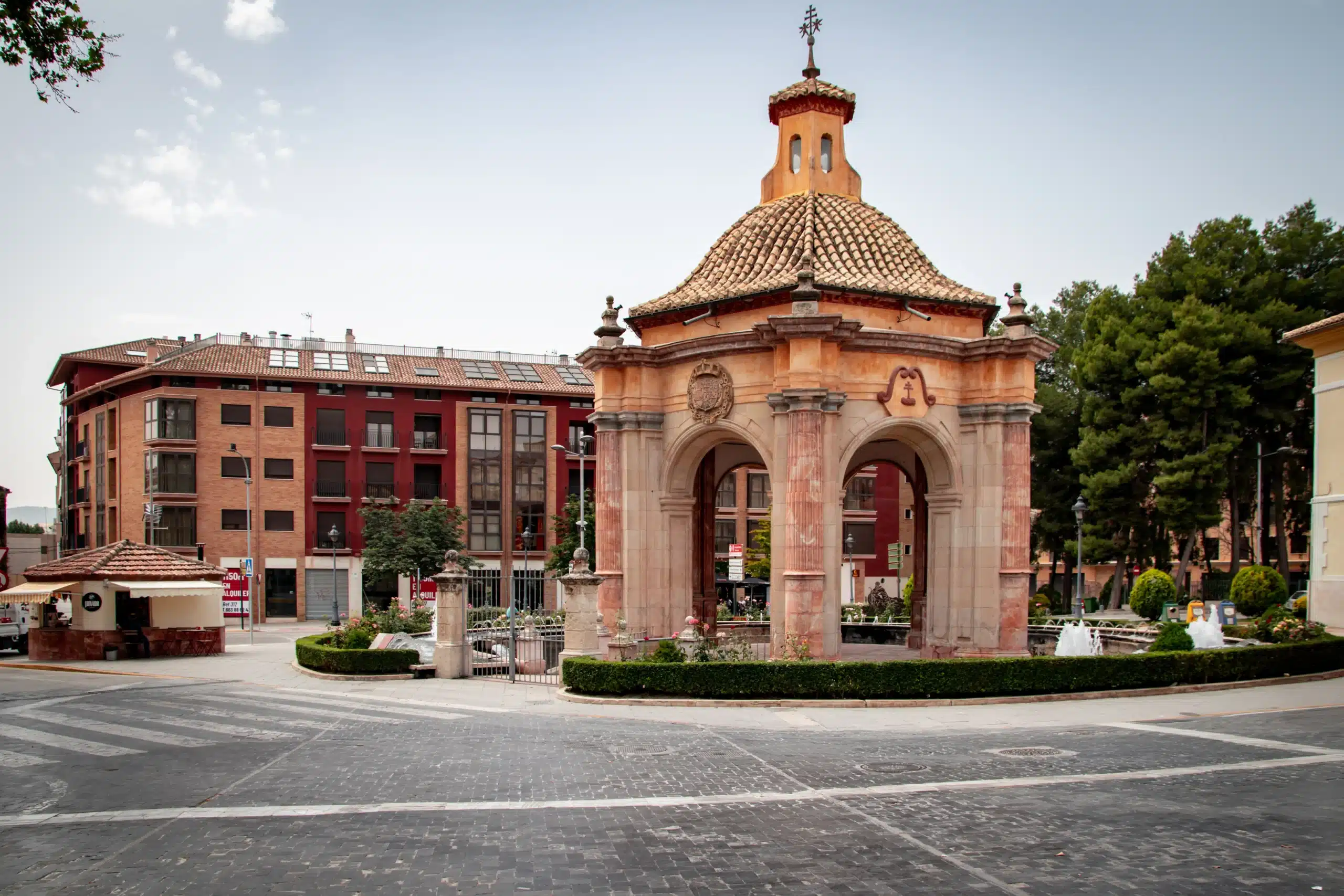
This hexagonal Baroque building is one of the most beloved by the people of Caravaca. Built in the 18th century, it marks the place where every May 3rd, since 1384, the ritual of the Bathing of the Cross takes place—the act that blesses our waters and gives rise to our patron saint festivities.
It is our green lung and the favorite place for locals to go for a walk. Located just 2 km from the town center, it is a natural area listed as a Historic Site full of springs and irrigation channels.
Inside the area you will find:
· The "Sartenes": The crystal-clear water springs.
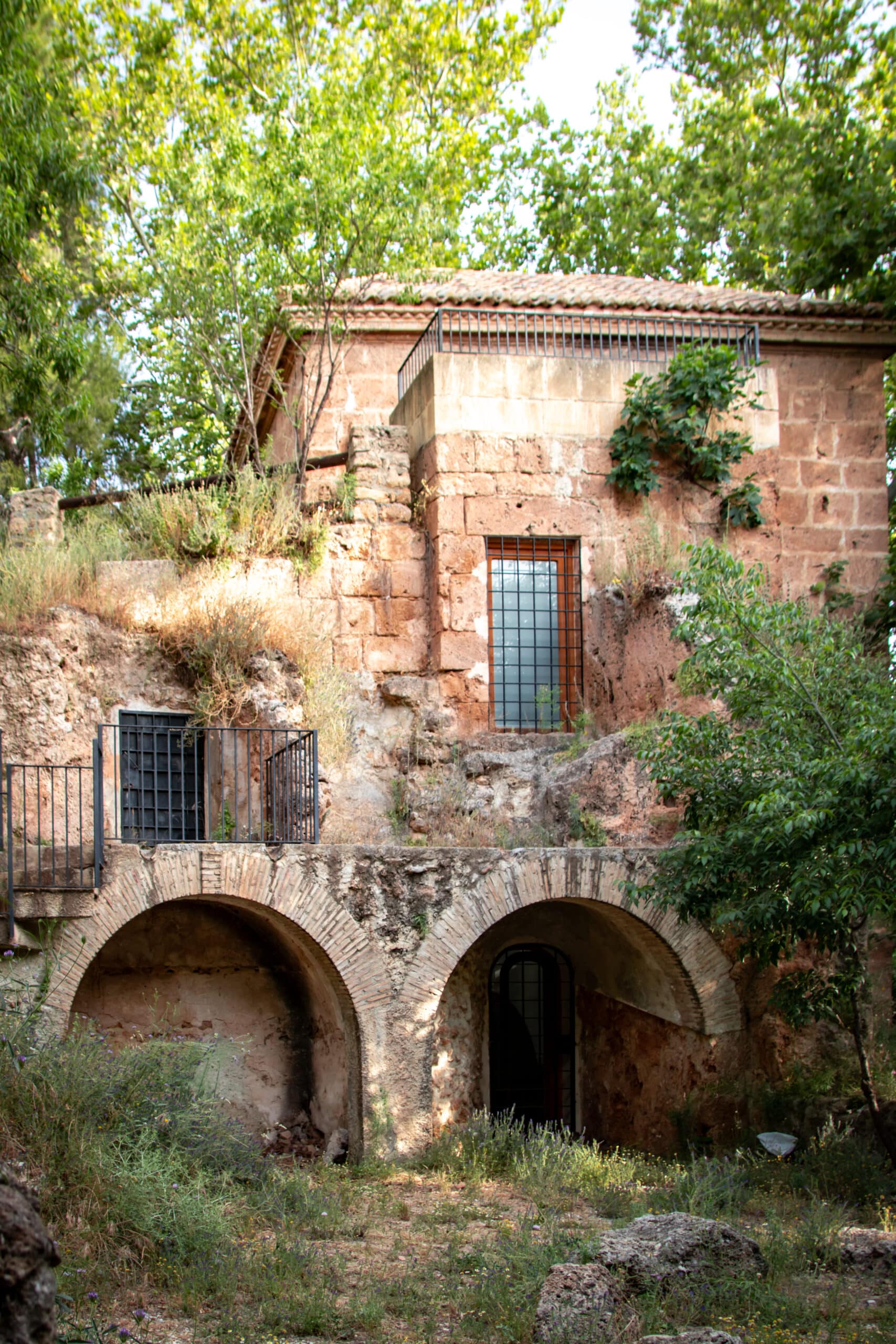
· Torreón de los Templarios: A 17th-century building (built on a possible Templar base) that today houses the Nature Interpretation Center, ideal for understanding the local flora and fauna.
· Cuevas del Marqués: Artificial caves from the Arab period excavated into the rock.
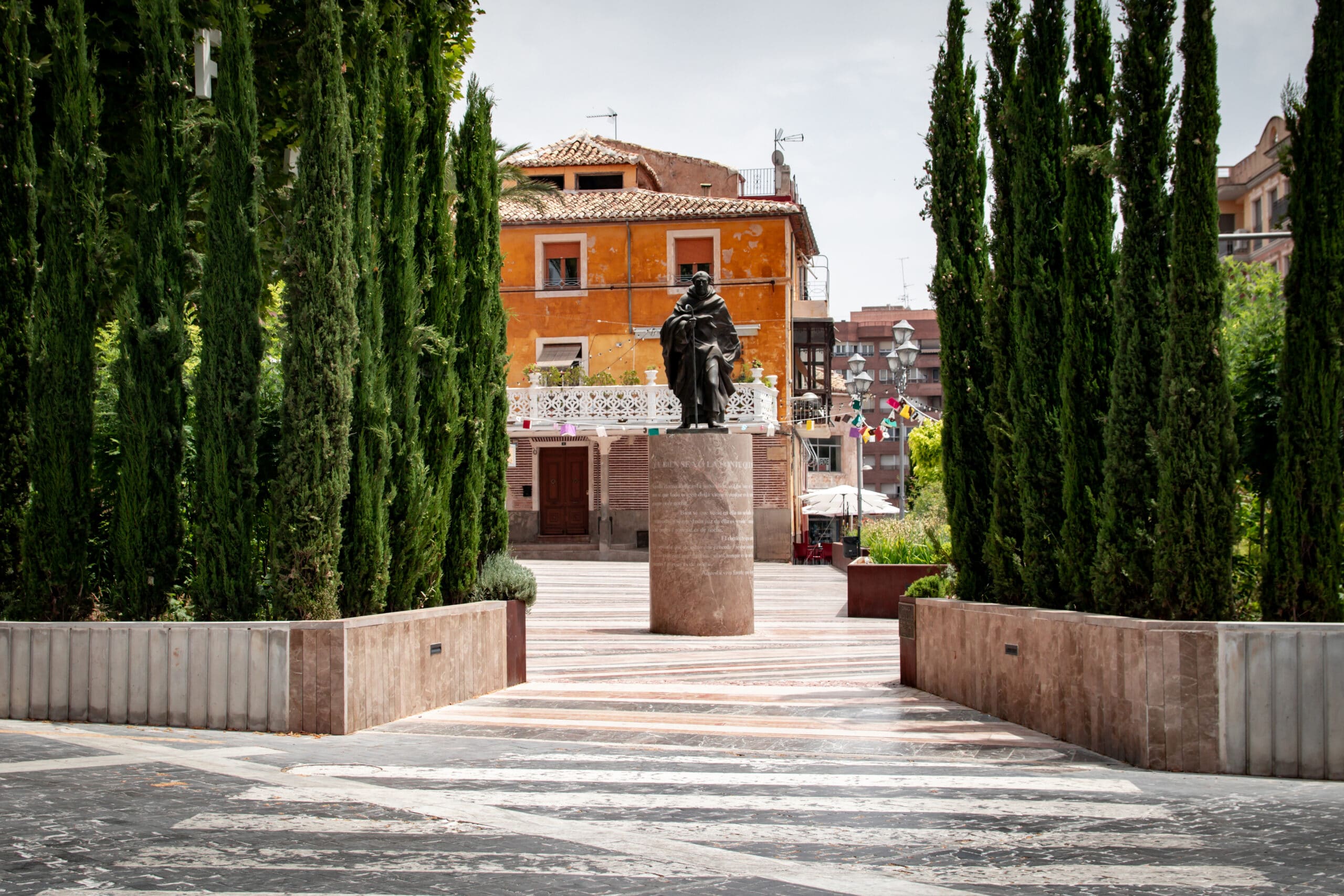
This monument pays tribute to Saint John of the Cross, mystic and poet who founded the Discalced Carmelite convent in Caravaca in 1586.
Saint John of the Cross is a figure of great significance in the city's history, and this monument serves as a permanent reminder of his presence, his spiritual work, and his profound mark on the Caravaca community, consolidating the town's mystical and religious vocation.
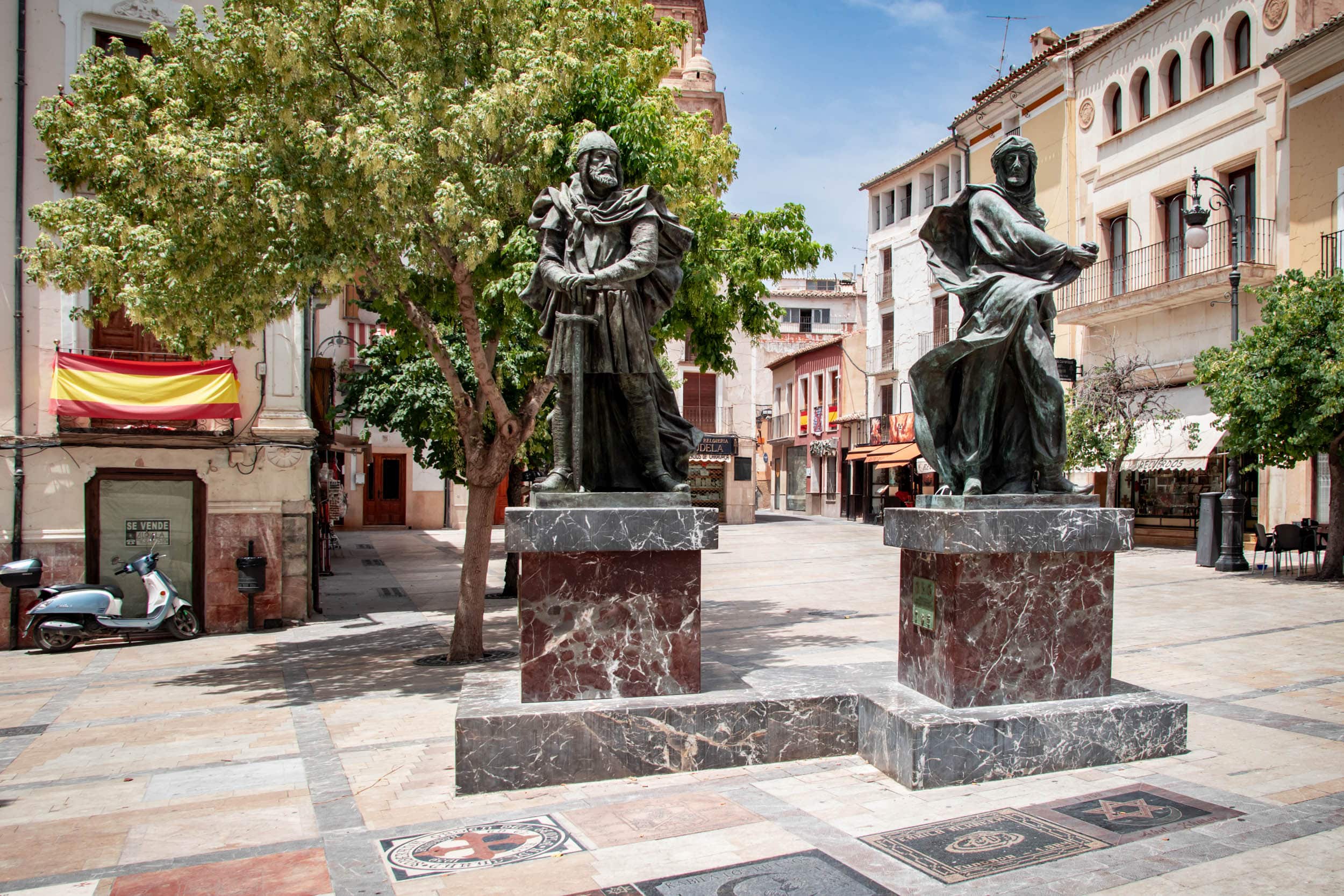
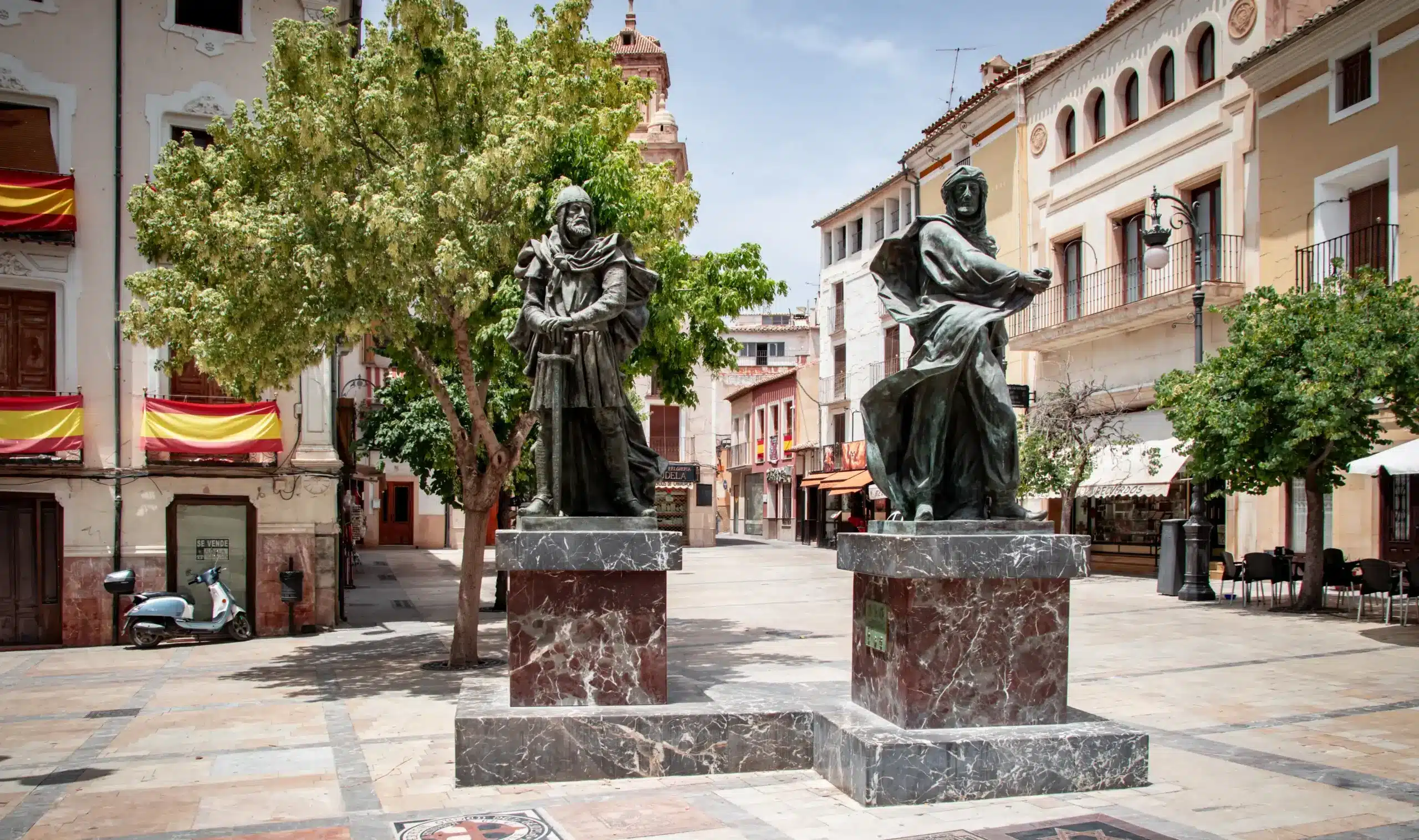
This neo-baroque sculptural ensemble was inaugurated in 1985 and features two figures who are dearly loved by all the people of Caravaca de la Cruz. It is the “Moor and the Christian”, a monument created by the recently deceased Valencian sculptor Rafael Pí Belda, an adopted son of the city.
These two figures are located in the city’s most iconic square, Plaza del Arco. You reach it through the arch that gives it its name; even before you pass through, you can already see the two statues framed within it, with the tall Bell Tower of the Parish Church of El Salvador in the background. From this viewpoint, it looks like a beautiful postcard. They are the ones who greet and welcome all the tourists and visitors who arrive in the city, eager to learn about its history. And no one better than them to tell it, because this pair of sculptures is a true reflection of what happened within its walls in another time.
Just a few minutes away, in the village of Barranda, you will find one of the most important collections in the world. Ethnomusicologist Carlos Blanco Fadol has gathered instruments from five continents and remote cultures, from instruments used for magic to others for courtship. A curious and fascinating visit that surprises everyone.

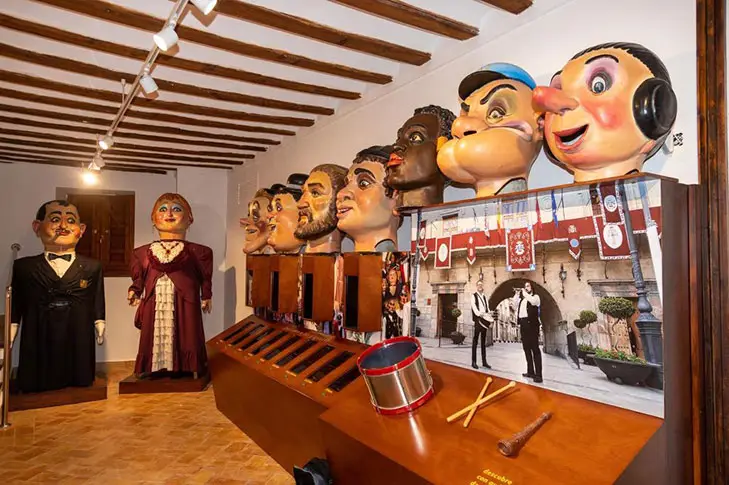
If you don’t visit Caravaca in May, this museum in the Palacio de los Uribe lets you experience our Festivals of International Tourist Interest at any time of year. It showcases the richness of the Christian and Moorish groups, their costumes and weaponry, and also dedicates space to the giants and big-head figures that bring joy to our streets.
Located in the former palatial home of the Mora and Uribe family, very close to the Convent of Santa Clara, it is dedicated to portraying the Patron Saint Festivities of Caravaca de la Cruz, declared of International Tourist Interest, held every year from May 1 to 5. Alongside a space that recalls the religious origins of the celebrations in honor of the Vera Cruz, its rooms display a collection of costumes, accessories and weaponry from the Christian groups and Moorish cabilas, as well as embroidered garments typical of the trappings of the Wine Horses.
Among the pieces on display, it’s worth highlighting the set featuring a fully adorned horse with the four riders who usually accompany it; the recreation of the Historic Horse; the spectacular outfits and capes worn by the Sultans and Kings, for both adults and children; some Moorish and Christian costumes; and the Giants and Big-Heads, represented by the charming characters Nano and Nana.
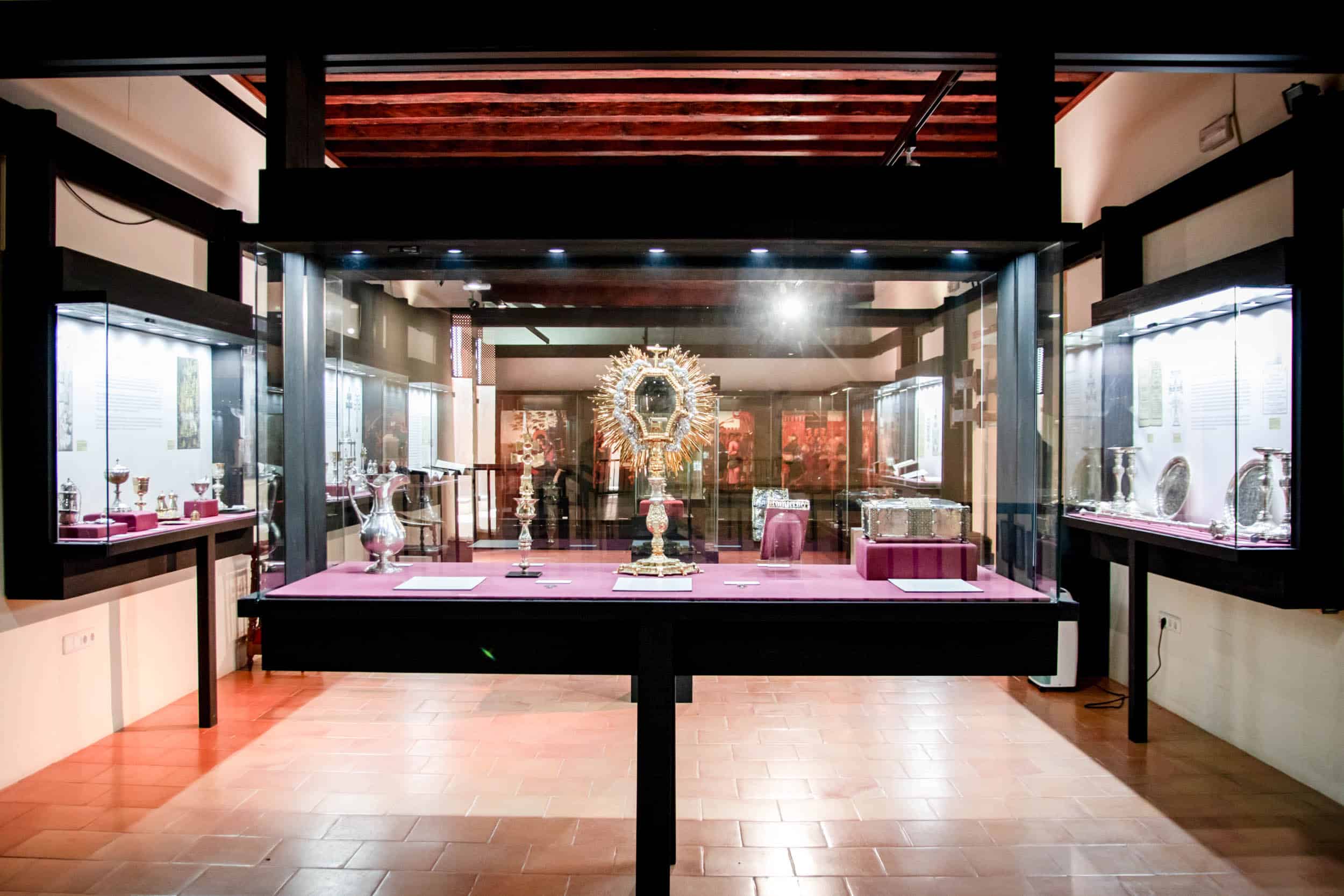
Located within the Sanctuary grounds, in the Chaplain's House. It is essential for understanding the history of the Relic. You can see the Chasuble of Chirinos (linked to the miracle of the Apparition), the medieval reliquary donated by the Order of Santiago, and paintings of great value such as "The Healing of Tobias" by the Caravaca-born artist Rafael Tegeo. Additionally, the visit includes access to ancient areas of the castle, such as cisterns and dungeons.
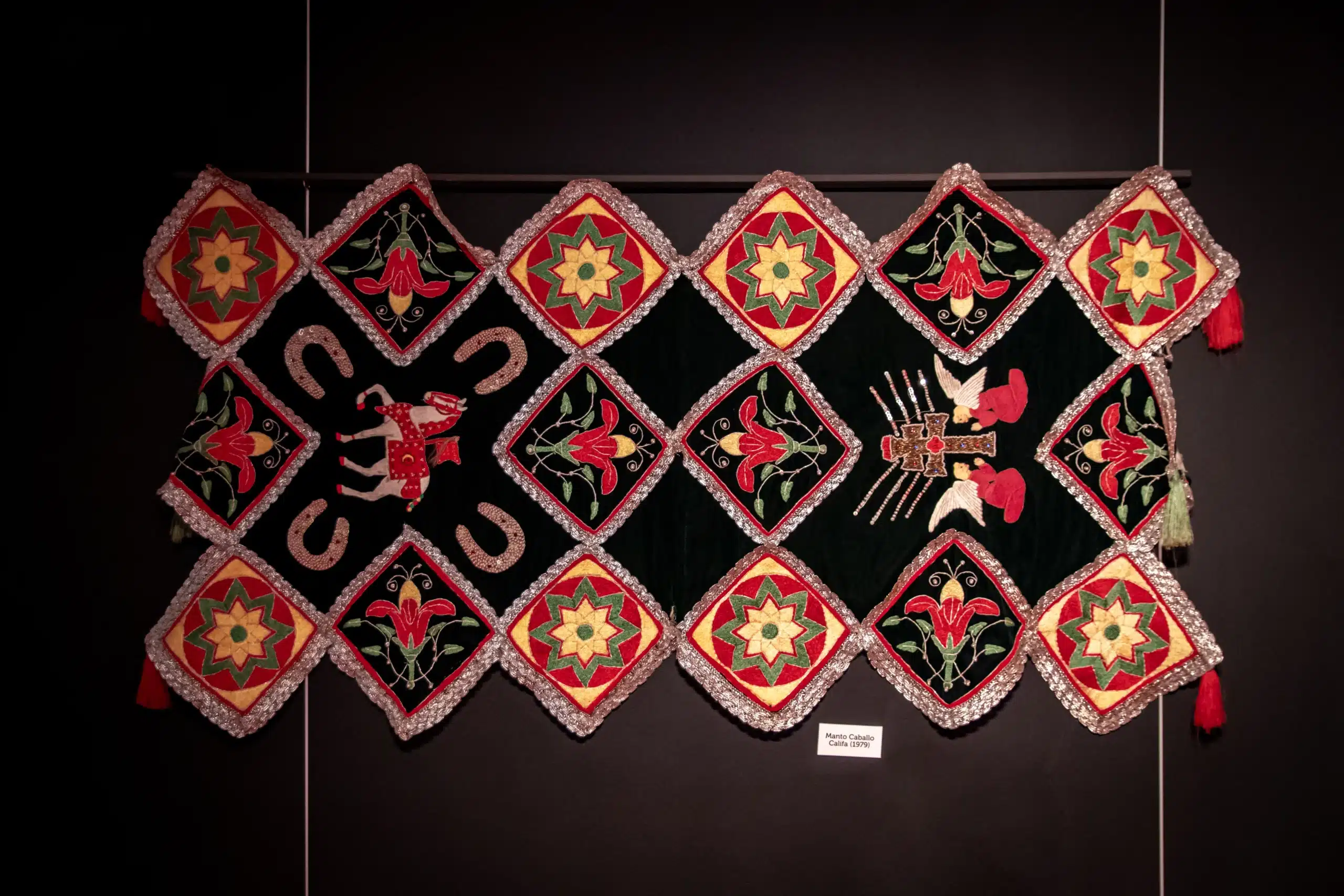
Located in an old 18th-century palatial house in the historic center. This museum is pure passion. Here you will understand why the Wine Horses are recognized as Intangible Cultural Heritage of Humanity by UNESCO. You can admire up close the luxurious cloaks embroidered in silk and gold—true works of art that adorn the horses every May 2nd—and learn about the evolution of this unique celebration in the world.
It is the jewel of Murcian Renaissance architecture and a must-see in the historic center. You will be amazed by its four gigantic Ionic columns, nearly two meters in diameter, supporting ribbed vaults at great height. Although it remains unfinished, its grandeur and tower dominate the skyline of the lower city. Inside, it houses a Baroque main altarpiece from the former Jesuit church and a valuable collection of goldwork and religious imagery.
Popularly known as Plaza del Hoyo and officially as Plaza de los Caballos del Vino, this is one of Caravaca's most iconic spots.
This is where one of the most important events of the Caravaca Wine Horses Festival takes place: the bareback horse competition on May 1st, when the square becomes a hub of people, music, and color.
The rest of the year, it is a large public space that houses the monument dedicated to the horse.
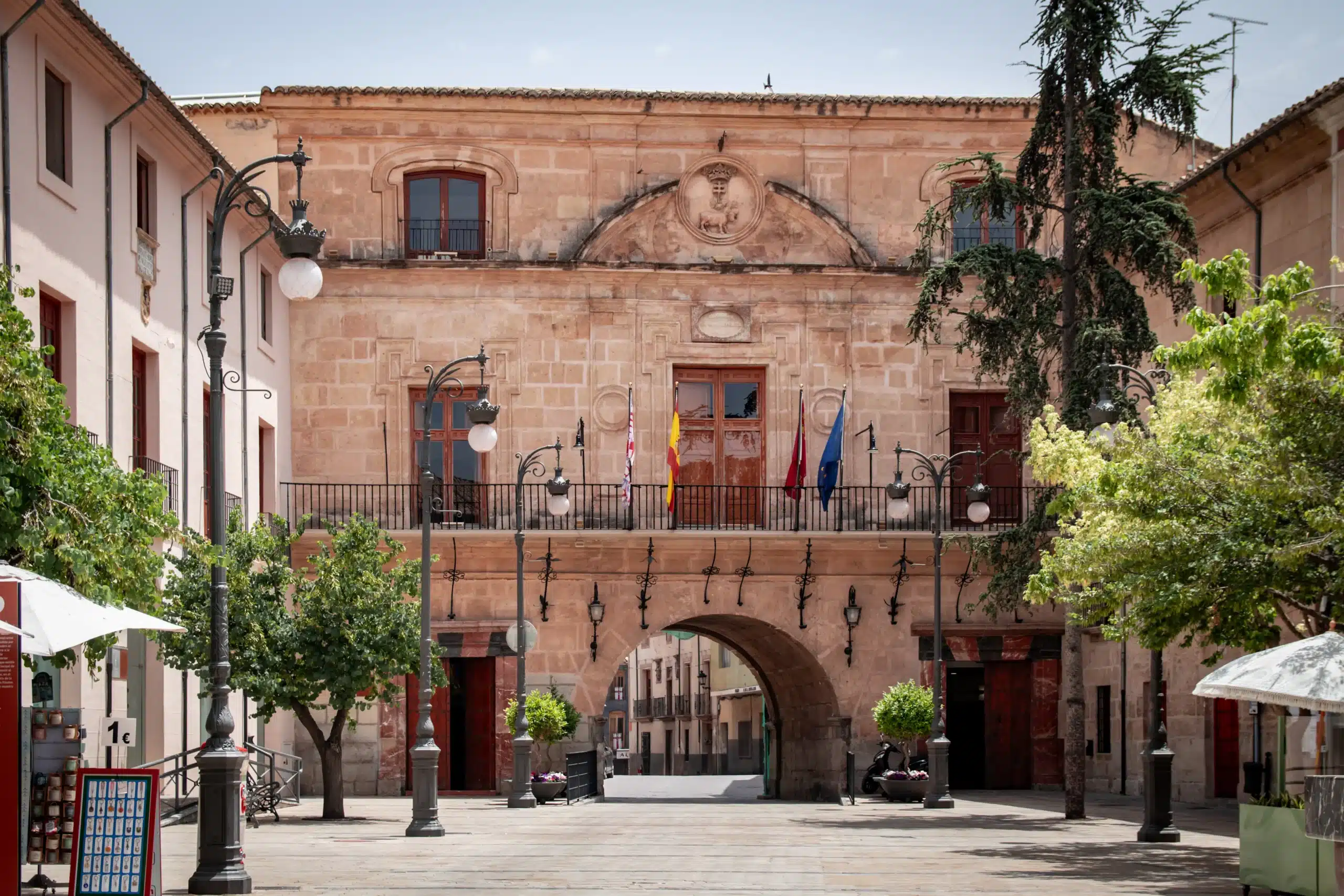
It is the heart of social life in Caravaca, and you can access it through the Arch that gives it its name. Here you will find the City Hall, an 18th-century Baroque building whose original design is by Jaime Bort. Take a look at the old granary and the prison, which are now part of the municipal offices.
It is the perfect place to start or end your walk.
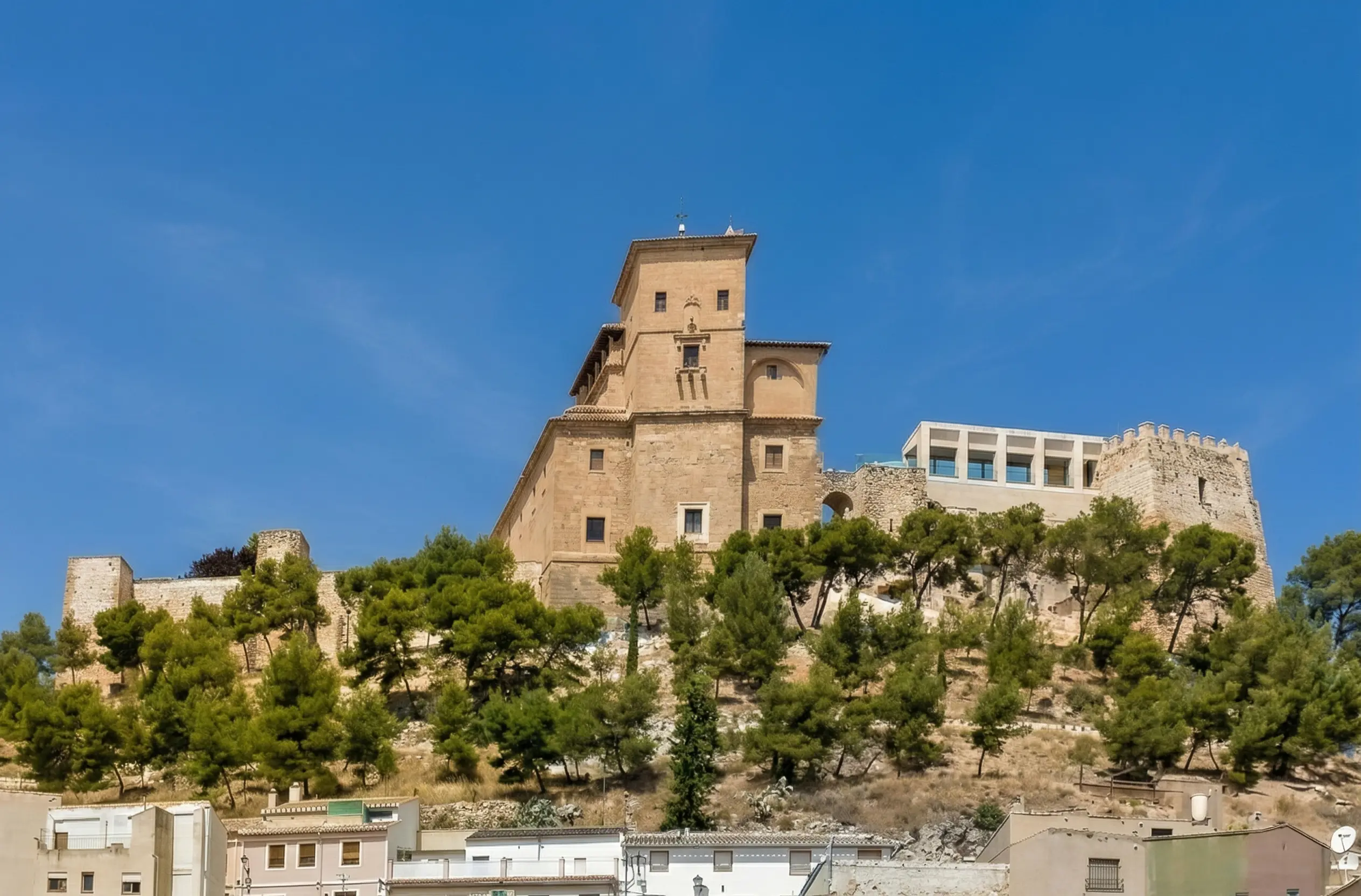
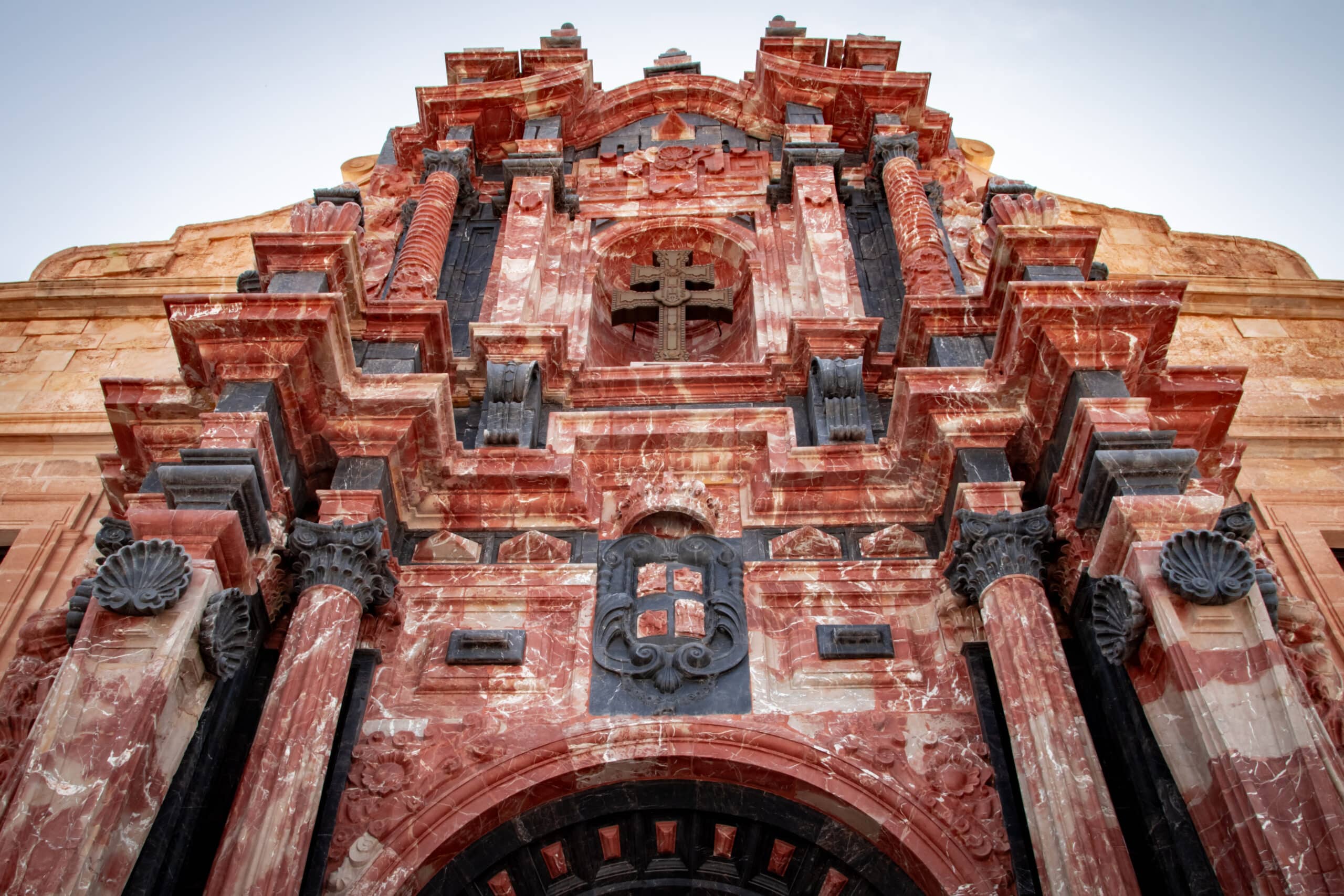
It is our symbol and the reason why we are one of the five Christian Holy Cities in the world. It stands imposingly in the heart of the ancient medieval fortress. Its construction began in 1617 and it stands out for its impressive 18th-century Baroque facade, carved from local marble. Inside, you will not only admire the Herrerian architecture but also feel the devotion as you stand before the Chapel of the Vera Cruz, where we guard the relic and the "Lignum Crucis".
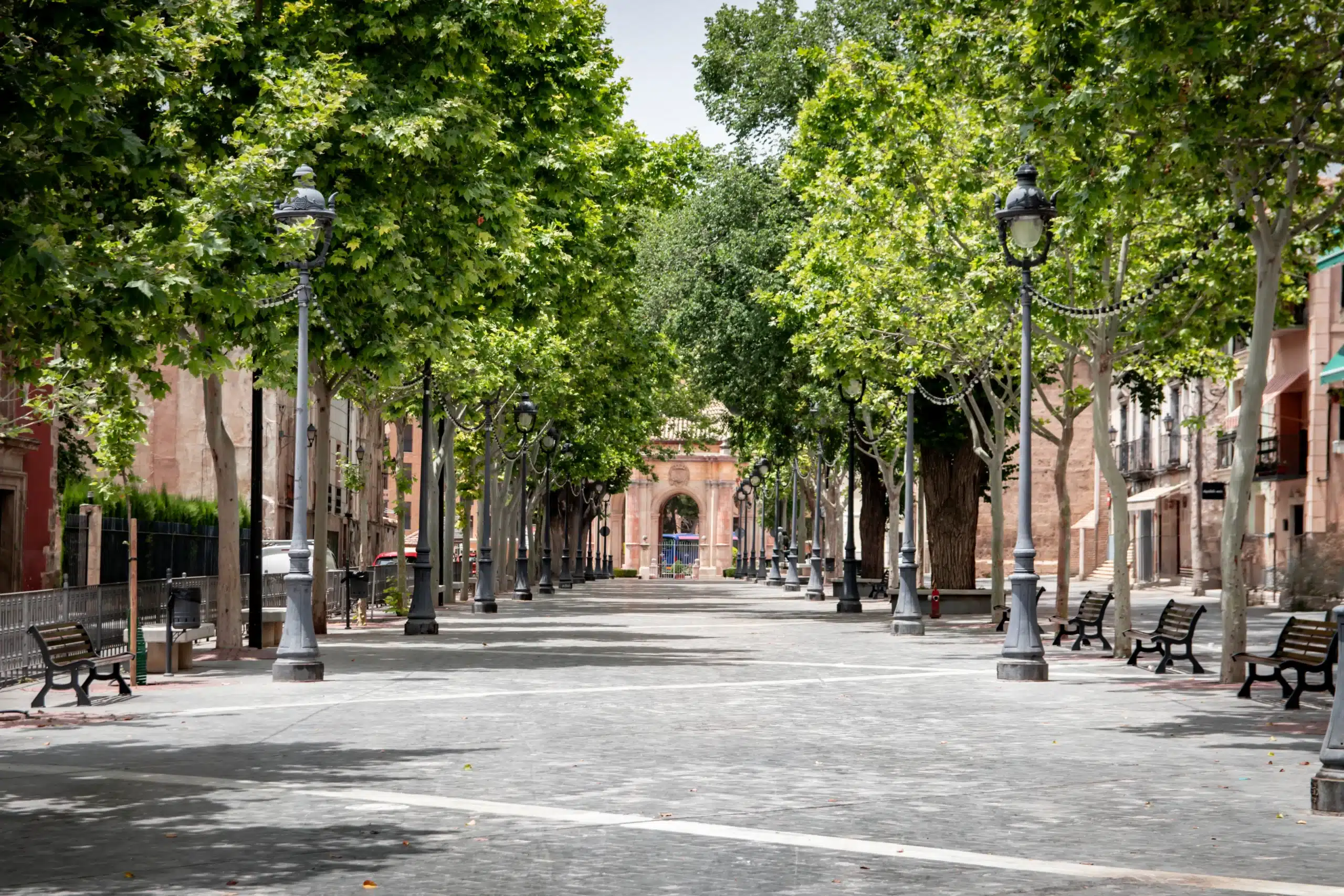
Strolling through the streets of Caravaca's old town is a journey back in time. Narrow and steep streets like Calle Mayor, Cuesta del Castillo, or those of the medieval quarter, preserve the city's original layout. Its stately homes with ashlar facades and noble coats of arms coexist with more humble whitewashed dwellings, creating a harmonious and charming ensemble.
Getting lost in its corners means discovering small squares, arches, and architectural details that speak of the city's rich history, from its Islamic past to its Renaissance and Baroque splendor.
Located in the Fuentes del Marqués natural area, the Templars' Tower is a 17th-century defensive tower. Inside, it houses the Nature Interpretation Center, an educational space that explains the geological richness, flora, and fauna of the Fuentes area.
Located on the slope leading up to the Basilica, this spectacular bronze sculptural ensemble pays tribute to Caravaca de la Cruz’s most iconic festival: the Wine Horses, declared UNESCO Intangible Cultural Heritage of Humanity. The work, by Valencian artist Rafael Pi Belda, captures the exact moment when a richly harnessed horse, accompanied by four young men, makes the fast and daring run up the slope.
It is a symbol of the effort, passion, and tradition that define this unique celebration, and a must-stop photo spot for all visitors.